SK hynix, Nvidia Jointly Developing SDDs For AI Inference: Report
A proof of concept for the new SSDs with promised performance of 100 million IOPS for AI inference workloads on Nvidia Rubin CPX GPUs is under development, with a prototype slated to be available in the second half of 2026.
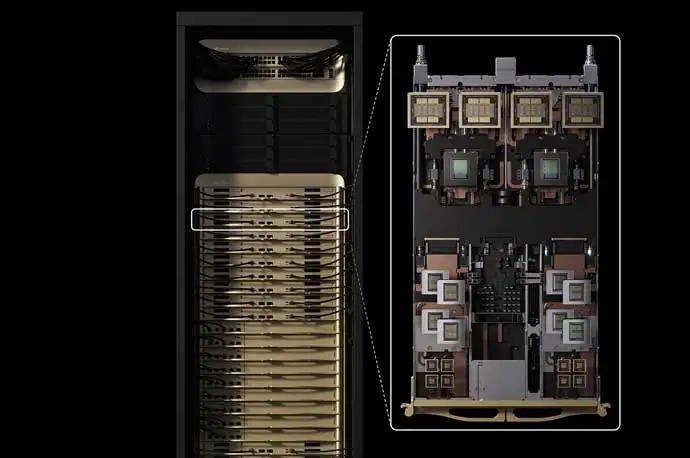
Korean memory and flash storage technology developer SK hynix and AI-focused GPU leader Nvidia are working on a joint project to develop next-generation SSDs focused on AI inference.
Korea-based online publication ChosunBiz Tuesday reported that SK hynix Vice President Kim Cheon-seong said at the 2025 Artificial Intelligence Semiconductor Future Technology Conference, Korea’s largest AI semiconductor event, that his company is developing a new SSD he said will offer 10 times the performance of existing SSDs.
That performance is slated to reach up to 100 million IOPS by 2027, ChosunBiz reported. According to tests in 2025 by Tom’s Hardware, the fastest current SSD on the market, the NN4ME 2-TB model from Japan-based Nextorage, had a random performance of 50,915 IOPS.
[Related: The 2025 Storage 100]
The planned SSDs are apparently being developed with the “Storage Next” name for Nvidia and “AI-NP” or AI NAND Performance for SK hynix.
A proof of concept of the new technology is currently being developed, with a prototype slated to be available by the end of 2026, ChosunBiz reported.
In response to a CRN request for information, Nvidia said via email that the company has no comment. SK hynix did not respond to a CRN request for further information by publication time.
SSD performance is a critical issue when it comes to AI inference. Data storage media can be a bottleneck during AI inference, with low performance throttling the amount of data that can be fed to GPUs and leaving them on idle for too long waiting for data.
For Nvidia, that performance has become a priority. Nvidia in September unveiled its Rubin CPX AI GPU. The Rubin CPX, slated to debut in the second half of 2026, features 128 GB of GDDR7 memory and is targeted at high-value inference workloads with the ability to handle million-token coding and generative video applications.