Trump’s Call For Intel’s CEO To Resign: 6 Big Things To Know
CRN rounds up the most important things to know about President Trump’s demand for Intel CEO Lip-Bu Tan to resign, including the concerns and questions Sen. Tom Cotton outlined in his letter to Intel’s chairman as well as the federal awards that have been allocated for Intel.
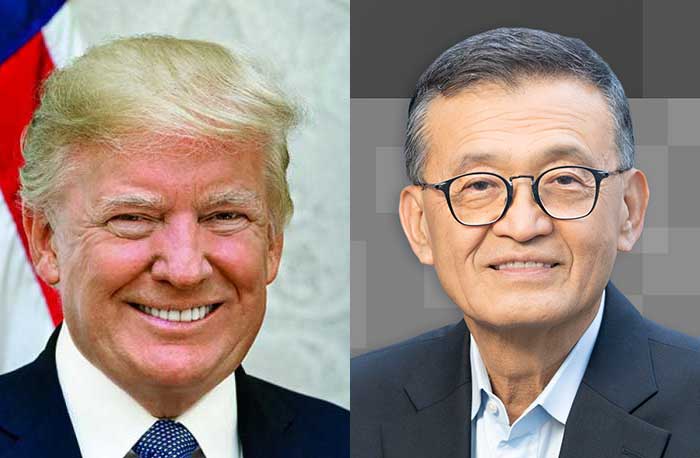
When Intel CEO Lip-Bu Tan gave his first public address in late March, he said he had “been very pleased to see Trump administration focus on [strengthening] the American technology and manufacturing leadership.”
“They [are] asking me, [where] can we help, and definitely, I will come to get their help to do what we need to do. I'm looking forward to [working] closely with them to advance the shared goals,” he said at the Intel Vision event, a few weeks after he started his job as Intel’s new CEO.
[Related: Intel’s Earnings Bombshell: Layoffs, Foundry Warning And Other Things To Know]
Now President Trump is calling for Tan to resign “immediately,” saying the U.S. semiconductor leader is “highly conflicted.”
Trump made the demand in a short, three-sentence post Thursday on his Truth Social website, adding that “there is no other solution to this problem.”
The president didn’t elaborate on why he sees Tan, a longtime tech investor and executive who is leading the chipmaker’s latest turnaround effort, as conflicted.
However, the call for Tan’s removal happened two days after Sen. Tom Cotton expressed concerns in a letter to Intel Chairman Frank Yeary about “Intel’s operations and its potential impact on U.S. national security,” citing a report alleging Tan’s links to Chinese firms and the previous company he led pleading guilty for selling software to a Chinese university that had been on the U.S. Entity List while he was CEO there.
Intel responded to Trump’s resignation call with a pledge to make “significant investments” in the president’s “America First” agenda.
“Intel, the Board of Directors, and Lip-Bu Tan are deeply committed to advancing U.S. national and economic security interests and are making significant investments aligned with the President's America First agenda,” said Intel in a prepared statement released Thursday.
“Intel has been manufacturing in America for 56 years,” the company added. “We are continuing to invest billions of dollars in domestic semiconductor R&D and manufacturing, including our new fab in Arizona that will run the most advanced manufacturing process technology in the country, and are the only company investing in leading logic process node development in the U.S. We look forward to our continued engagement with the Administration.”
The company’s stock price fell more than 3 percent on Thursday.
What follows are six important things to know about Trump’s demand for Tan to resign, including the concerns and questions Cotton outlined in his letter to Intel’s chairman, the relevance of Intel’s Secure Enclave contract with the U.S. Department of Defense, how much funding it has received from the U.S. CHIPS and Science Act, and the big changes Tan has been pushing through Intel as part of its latest turnaround effort.
Senator’s Letter To Intel Preceded Trump’s Demand
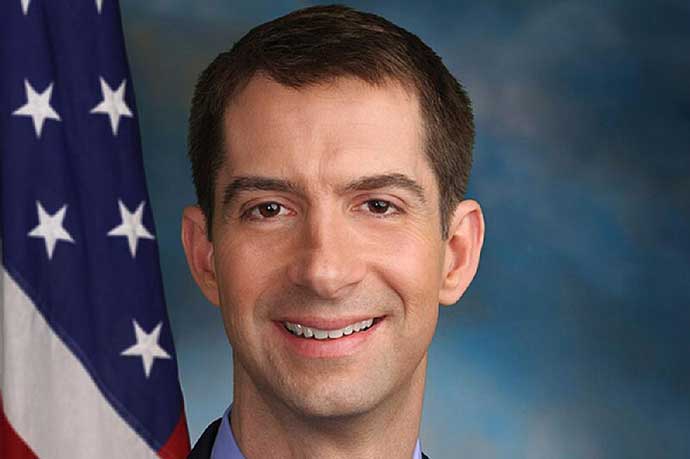
The call for Tan to resign came two days after Sen. Cotton (pictured) expressed concerns about Tan’s leadership of Intel in a letter to the company’s chairman, claiming that Tan “reportedly controls dozens of Chinese companies and has a stake in hundreds of Chinese advanced-manufacturing and chip firms.”
Cotton, a Republican, reportedly appeared on Fox News Thursday morning to discuss his issues with Intel and Tan, minutes before Trump demanded Tan to resign.
Reuters reported in April that Tan “has invested in hundreds of Chinese tech firms, including at least eight with links to the People’s Liberation Army.”
Citing Chinese and U.S. corporate filings, Reuters said that Tan made these investments through his San Francisco-based venture capital firm, Walden International, as well as two Hong Kong-based holding companies.
While Intel declined to comment on Tan’s investments in China at the time, a company spokesperson told Reuters that that the CEO was required to disclose any potential conflicts of interest, and a separate source familiar with the situation claimed to the news outlet that Tan no longer holds positions in Chinese entities.
Cotton Cites Tan’s Tenure At Cadence As Another Concern
In his letter to Intel’s chairman, Cotton also cited Tan’s previous tenure as CEO of chip design tool provider Cadence Design Systems as an issue. He referenced the company last week pleading guilty to criminal charges of violating U.S. export controls by selling electronic design automation software to a Chinese university on the U.S. Entity List. The Entity List prohibits technology purchases from U.S. companies without government approval.
The U.S. Department of Justice, which pursued the case and secured the guilty plea agreement, said that these export control violations happened between 2015 and 2021.
Tan served as CEO of Cadence Design Systems from 2009 to 2021.
“These illegal activities occurred under Mr. Tan’s tenure,” Cotton wrote.
In addition to pleading guilty, Cadence Design Systems paid criminal penalties of nearly $118 million to resolve the charges as part of its agreement with the Justice Department. The company also paid over $95 million in civil penalties to resolve a parallel enforcement action that was brought forward by the U.S. Department of Commerce.
The Chinese university at the center of the case, the National University of Defense Technology, was added to the U.S. Department of Commerce’s Entity List in 2015 “due to its use of U.S.-origin components to product supercomputers believed to support nuclear explosive simulation and military simulation activities in the [People’s Republic of China].”

Cotton Asks Intel’s Board About Due Diligence Of Tan
In Cotton’s letter, the senator cited the nearly $8 billion in funding that has been allocated for Intel through the U.S. CHIPS and Science Act. He alleged that “Tan’s associations raise questions about Intel’s ability to fulfill” obligations connected to the award.
Addressing Intel’s chairman, Cotton asked if the chipmaker’s board was aware of subpoenas the U.S. made to Cadence Design Systems regarding the export controls violations before Tan become Intel’s CEO in March.
He also asked whether Tan (pictured) was required by Intel’s board to divest his holdings in semiconductor firms “linked to the Chinese Communist Party or the People’s Liberation Army” along with any other Chinese firms that could create a conflict of interest.
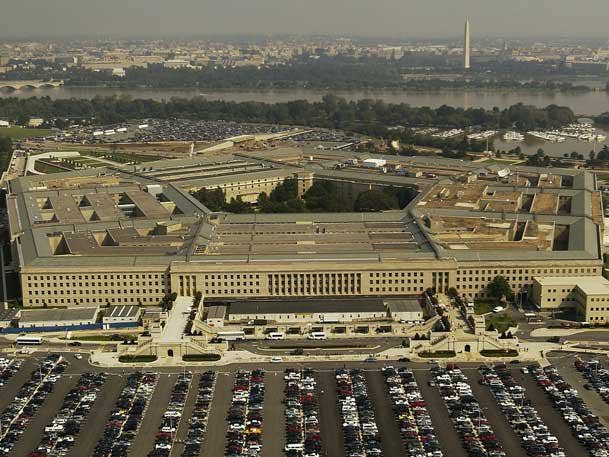
In addition, Cotton asked whether Tan has disclosed “any remaining investments, professional roles or other ties to Chinese companies to the U.S. government” in light of Intel’s Secure Enclave contract with the U.S. Department of Defense.
Tan Is Leading Latest Turnaround Effort At Intel
Tan is leading the latest turnaround effort for Intel after several years of struggles and waning fortunes.
A key part of this turnaround effort involved a 15 percent reduction in Intel’s workforce that he announced two weeks ago. The company at the time said it “plans to end the year with a core workforce of about 75,000 employees,” which means it is expected to lose about 24,500 workers this year through layoffs and attrition, or about one-quarter of its head count.
“These actions are necessary, not just to reduce our operating expenses, but to make the company more agile, collaborative and vibrant, to simplify our business and improve our product and process execution,” Tan said on the earnings call last Thursday.
Among his initiatives, Tan is making one last push for the Intel Foundry contract chip manufacturing business to win over big customers so that it can compete with Asian foundry giants TSMC and Samsung, which are both building manufacturing capacity in the U.S.
Intel admitted in late July that it has been “unsuccessful to date in securing any significant external foundry customers” for Intel Foundry, which was launched in 2021 by former Intel CEO Pat Gelsinger as a key part of his comeback plan and to boost chip-making in the U.S.
The company also warned that it “may pause or discontinue” development of Intel 14A—a manufacturing technology it originally planned to introduce in late 2026—and future leading-edge nodes if it is “unable to secure a significant external customer” for the process.
However, Tan said at the time that he’s confident this worst-case scenario won’t play out.
“The team is laser-focused, and the feedback from the partners and outside is that, ‘Wow, Lip-Bu, the culture is changing, and you guys are really focused on the yield, better than just performance,’” he said on Intel’s second-quarter earnings call last week.
At the same time, Intel said last month that it was slowing down construction for a major manufacturing site in Ohio and canceling projects in Germany and Poland as part of a “new financial discipline” instituted by Tan.
“Perhaps most importantly, we need to build capacity smartly and carefully on a schedule that meets the needs of our customers and supports the economics of our business,” he said.
Tan Has Cited Importance Of US Secure Enclave Contract
In Intel’s second-quarter earnings call late July, Tan cited the military-focused Secure Enclave award the company received from the Biden administration last September as an important step to help its Intel Foundry business gain big customers.
He mentioned this while talking about the company’s progress in making the Intel 18A manufacturing node attractive to external customers for Intel Foundry, its contract chip manufacturing business that has mainly been used to fabricate its own products to date.
Tan said Intel’s progress with Intel 18A gives him “a lot of confidence” that the company can use the launch of Panther Lake, the successor to its Intel Core Ultra 200 chips for PCs, at the end of the year along with the Secure Enclave program with the U.S. government to “have a better attraction to our external customer.”
“I think this is a process to build the trust with the customer,” he said.
Intel said last September that it had been awarded up to $3 billion through the Secure Enclave program, which is part of the U.S. CHIPS and Science Act.
At the time, it said that the Secure Enclave program is an evolution of projects Intel has done with the U.S. Department of Defense, such as the Rapid Assured Microelectronics Prototypes– Commercial (RAMP-C) project.
Chris Geoge, who was head of Intel Federal at the time, said the “ongoing collaboration” will help “strengthen America’s defense and national security systems.”
“Today’s announcement highlights our joint commitment with the U.S. government to fortify the domestic semiconductor supply chain and to ensure the United States maintains its leadership in advanced manufacturing, microelectronics systems, and process technology,” he said in a statement from last September.
The Secure Enclave funding is separate from nearly $8 billion in federal subsidies that had been allocated by the Biden administration for Intel to boost U.S. chip manufacturing and research as part of the CHIPS and Science Act.
Intel Pledges To Make ‘Significant Investments’ Aligned With President Trump’s ‘America First’ Agenda
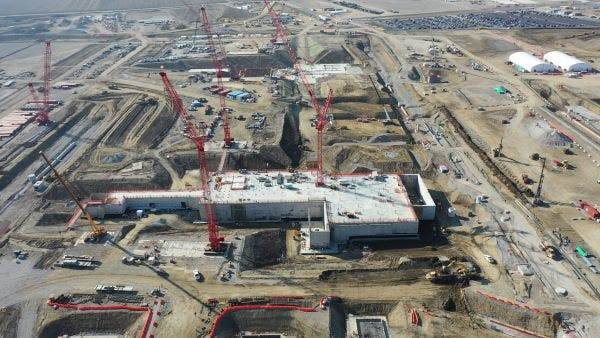
Intel responded to Trump’s resignation call with a pledge to make “significant investments” in the president’s “America First” agenda.
“Intel, the Board of Directors, and Lip-Bu Tan are deeply committed to advancing U.S. national and economic security interests and are making significant investments aligned with the President's America First agenda,” said Intel in a prepared statement released Thursday.
“Intel has been manufacturing in America for 56 years,” the company said. “We are continuing to invest billions of dollars in domestic semiconductor R&D and manufacturing, including our new fab in Arizona that will run the most advanced manufacturing process technology in the country, and are the only company investing in leading logic process node development in the U.S. We look forward to our continued engagement with the Administration.”
So far, Intel has received $2.2 billion in subsidies so far from the U.S. government as part of the CHIPS and Science Act to support its domestic chip manufacturing expansion efforts.
The company made this disclosure in its quarterly filing with the U.S. Securities and Exchange Commission in late July.
In the filing, Intel admitted that there is uncertainty over whether it will continue to receive funding under the Trump administration.
“We expect to continue to benefit from government incentives, though recent US government actions create uncertainty as to whether the US government will fulfill its obligation under our CHIPS Act agreements, and support future awards in the US,” it wrote.
The company said that it had not yet been reimbursed for $850 million in claims related to the CHIPS Act funding agreement at the end of the second quarter.
“To the extent we delay or cancel capital investments or otherwise are unable or fail to comply with the terms of the agreements, there may be a delay in our receipt of, or we may forfeit or be required to repay, the associated government incentives,” it added.