Best AI PCs 2026: Top Business Laptops And Workstations
AI PC adoption within customers has been led by innovators, and ‘those innovators can come from any department,’ says Mark III Systems, Vice President of Sales Chris Bogan.
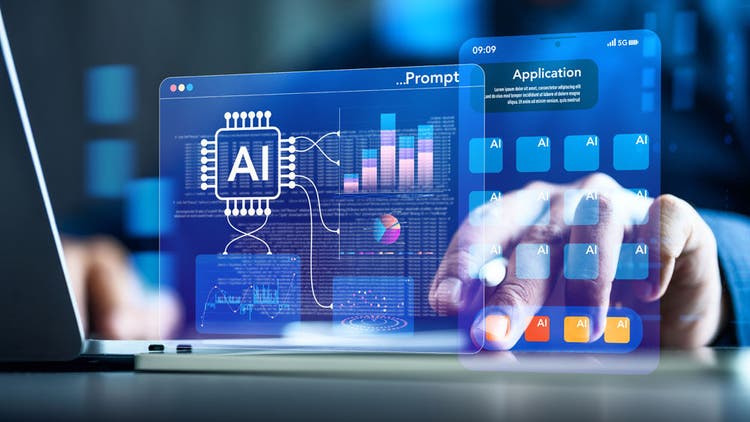
As solution providers explore new artificial intelligence PCs on the market for internal use and for selling to their customers, they have a plethora of options from the likes of Lenovo, Dell Technologies, HP, Microsoft and more.
In time for CRN’s Global AI Week 2026, we are diving into some of the most compelling offers for AI PCs to identify the most important capabilities and specifications and hopefully save you time on your next device-purchasing decision.
Selling AI PCs to customers is a focus area this year for Houston-based solution provider Mark III Systems, Vice President of Sales Chris Bogan told CRN in an interview. The company partners with some of the biggest vendors in the space including Nvidia, Dell and Lenovo.
Solution providers hold a key role in educating customers and fostering change management around the new AI PCs, whose potential transcends job roles to even nontechnical workers, Bogan said.
“Those innovators can come from any department,” he said. “Marketing, product development, IT, app development. Any of those things. Even a lot of business users are doing that. Even the finance folks as well and the line-of-business and business analysts.”
[RELATED: AI Week 2026]
AI PC Market Growth Accelerates In 2026
Early signs of growth in the AI PC market are emerging. During HP’s latest quarterly earnings call in May, company executives disclosed that AI PCs increased from more than 35 percent to 44 percent of shipment mix in the quarter.
In April, IT distributor Ingram Micro said that AI PCs are about a quarter of its overall PC base and growing, according to a call transcript. Improved AI PC pricing could help broaden demand, with a wider AI PC adoption potentially extending the device refresh cycle and smoothing some of the historical cyclicality of the traditional endpoint market, according to a William Blair report in June.
Gartner said worldwide PC shipments totaled 62.8 million units in the first quarter of 2026, up 4 percent year on year. However, the research firm attributed the increase to customers trying to get ahead of price hikes. Lenovo held the highest market share at 26.5 percent followed by HP at 19.3 percent and Dell at 16.5 percent. Lenovo saw 9.5 percent growth year on year and Dell experienced 7.6 percent growth. HP saw a 4.9 percent decline year on year, according to the April report.
A report by International Data Corp. and sponsored by chip vendor Advanced Micro Devices (AMD) showed that 60 percent of organizations are piloting or have already deployed AI PCs–with 33 percent of organizations already piloting the devices. And 21 percent of organizations plan to deploy AI PCs within 12 months, the companies said in April.
Read on for some of the best business-focused AI PCs solution providers should explore for internal benefits and moving customers further along their AI journeys. And be sure to check out other AI Week articles including 10 AI use cases driving real MSP productivity gains right now.
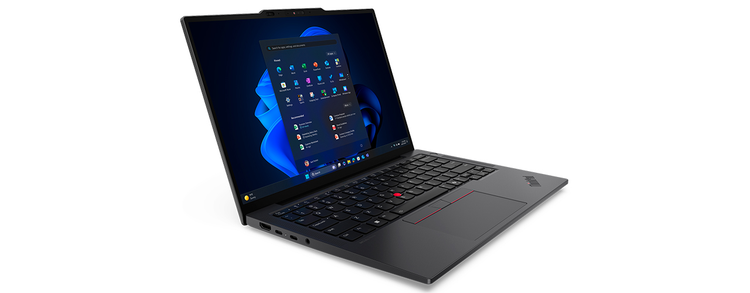
Lenovo ThinkPad X13 Gen 7
Lenovo made its seventh-generation ThinkPad X13 available in May with a $1,499 starting price.
This PC by the Beijing-based computer maker weighs in at about 2 pounds, making it one of the lightest ThinkPads available. Users can choose Intel Core Ultra Series 3 processors or AMD Ryzen AI Pro 400 Series processors to power their devices for business workloads and integrated AI capabilities, according to Lenovo.
The X13 offers Universal Serial Bus Type-C (USB-C), USB-A and High-Definition Multimedia Interface (HDMI) ports with optional 5G connectivity and Wi-Fi 7 support. The PC also has a 5-megapixel infrared camera and enhanced audio processing for clearer communication in hybrid work environments.
Users can replace the battery, solid state drive (SSD), wireless wide area network (WWAN) module, and D cover to extend device lifecycle and simplify maintenance, according to Lenovo.
Lenovo has about 120,000 partners worldwide, according to CRN’s 2026 Channel Chiefs.
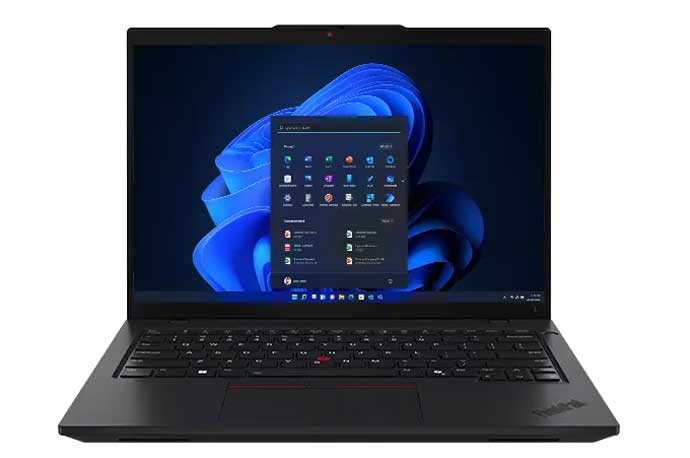
Lenovo ThinkPad L14
Lenovo’s seventh-generation ThinkPad L14 became available in May.
The 14-inch computer offers up to 64GB2 DDR5 memory and up to 2TB2 SSD storage, according to Lenovo. These computers have 5MP RGB and IR camera options, Dolby Atmos audio with advanced voice processing and brighter display panels. They support Wi-Fi 7 and WWAN connectivity plus USB-C, USB-A, HDMI and RJ45 ports.
IT teams can replace the keyboard, battery, accessible memory (DIMM), SSD, WWAN, speaker and other components to improve maintenance and reduce downtime.
Buyers might also check out Lenovo’s third-generation 16-inch ThinkPad L16, also now available.
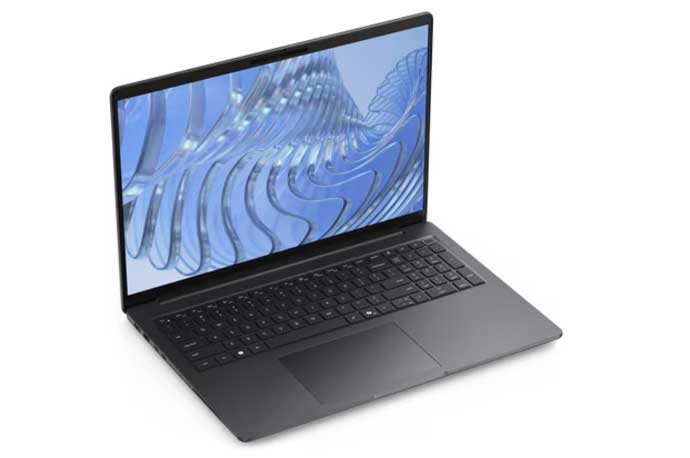
Dell Pro 5
Dell Technologies made its 14-inch and 16-inch Pro 5 devices available in May and put a new Micro option on the market in March.
The Round Rock, Texas-based computer maker makes the Pro 5 systems configurable across a selection of Intel and AMD processor, display, memory and storage choices to fit workflow requirements and IT standards, according to Dell. Dell Pro 5 promises that it is up to 12 percent thinner than the previous generation and up to 21 percent thinner than competing designs.
The Pro 5 Micro marks Dell’s first Copilot+ PC mainstream desktop, delivering 50 tera operations per second (TOPS) neural processing unit (NPU) for low-power acceleration of AI workloads and supports memory speeds up to 7,200 mega-transfers per second (MT/s) for improved multitasking.
The Micro brings an ultra-compact form factor for space-constrained environments, giving users integrated Type-C connectivity up to 100W power delivery-in to power the Micro directly from a USB-C monitor.
Dell even offers a Pro 5 Wired Fingerprint Enhanced Sign-in Security (ESS) Mouse with advanced, hardware-level protection for Windows Hello authentication, providing more security and an alternative to long, complex passwords.
Dell’s top channel goals for the year include enabling partners to develop an AI strategy and sell AI solutions plus increasing the amount of professional services going through partners, according to CRN’s 2026 Channel Chiefs.
Dell Pro 14 Premium
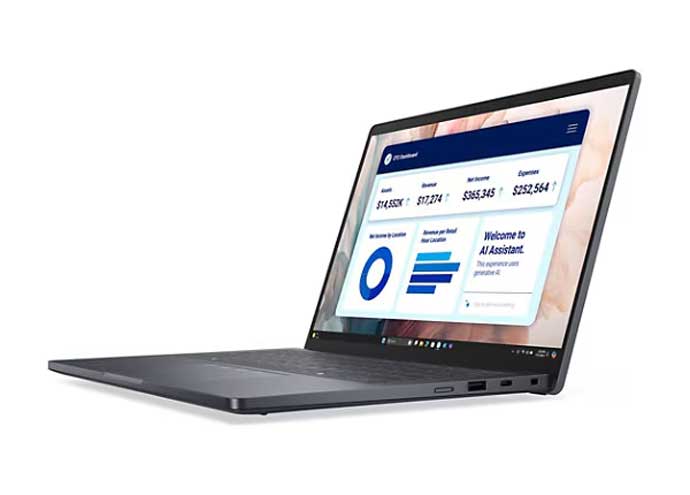
In March, Dell made its Pro 14 Premium available for executives and customer-facing managers on the go and marked the lightest Pro laptop to date at 2.54 pounds.
The computer maker advertises the 14 Premium as 7 percent thinner than the last generation, measuring .66 inches to .78 inches. It also comes in at 12.25 inches wide by 8.53 inches deep. It has a magnesium alloy chassis, Tandem OLED display option that is 24 percent more power efficient and 49 percent lighter than traditional rigid OLED displays.
The Pro 14 Premium has an 8MP high dynamic range (HDR) camera, according to Dell. It has up to 500-nit display panels and mini-LED battery-saving backlit technology that can reduce the keyboard's power usage by up to 75 percent, increasing battery life up to four hours.
Pro 14 Premiums have series 3 and 3H Intel Core Ultra processors for on-device AI and giving this Copilot+ PC up to 50 TOPS. Memory speeds reach 8,533 MT/s, and its "collaboration touchpad” allows quick access to Zoom and Microsoft Teams ’controls for mic, camera, screen share and chat.
HP ZBook 8 G2i
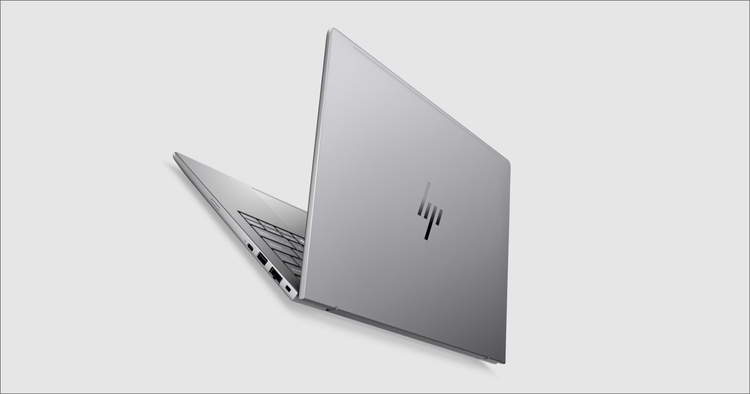
In April, HP launched its ZBook 8 G2i Intel-powered and G2a AMD-powered AI workstations.
The Palo Alto, Calif.-based computer maker positions the workstation as a lightweight option for mobile workers with AMD and Intel options, integrated or discrete graphics, scalable memory and improved portability without sacrificing battery life, according to HP.
ZBook 8s promise fast 3D design capabilities with an up to 70-watt max system thermal design power (TDP) and a compact form factor with a new GaN adapter that’s up to 40 percent smaller and 50 percent lighter. The G2i and G2a have 14-inch and 16-inch versions.
G2a offers up to an AMD Ryzen AI 9 HX 470 Pro processor with integrated Radeon unified memory graphics, a Copilot+ NPU2 and up to 64GB of RAM3. The G2i offers up to an Intel Core Ultra 9 central processing unit (CPU) with Copilot+ NPU2 and advanced Intel Arc pro graphics and optional NVIDIA RTX Pro 500 Blackwell graphics processing unit (GPU).
HP’s top channel goals for the year include increasing the amount of net new accounts coming through partners and working together with channel partners to continue reshaping the way customers work, according to CRN’s 2026 Channel Chiefs.
HP Z8 Fury G6i
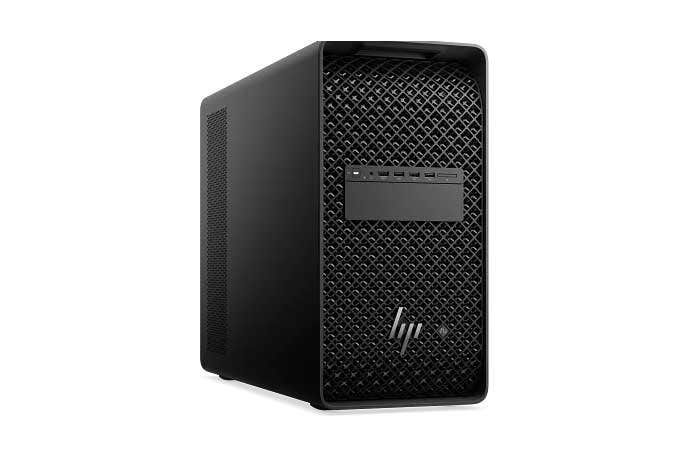
HP’s Z8 Fury G6i is meant for the most demanding compute and AI workloads, supporting up to four Nvidia RTX Pro 6000 Blackwell Max-Q Workstation Edition GPUs and up to 86 cores in a single Intel Xeon 600 CPU.
The computer maker advertises this Z8 as tailor-made for advanced AI development, visual effects and simulation workloads. It can host GPU resource sharing through HP Z Boost and users can leverage the HP Max Side Panel chassis expander to increase internal volume by 15 percent. That panel also works with HP Z4 workstations and allows users to install larger graphics cards tool free with maintained thermal performance and IT serviceability.
This behemoth can deliver up to 2 terabytes of fifth-generation Double Data Rate memory operating at of 6,400 mega-transfers per second (DDR5-6400) with error-correcting code (ECC) for fast rendering, simulation, machine learning and video editing plus up to 104TB of storage. It supports nine Peripheral Component Interconnect Express (PCIe) slots.
Acer TravelMate P6 14
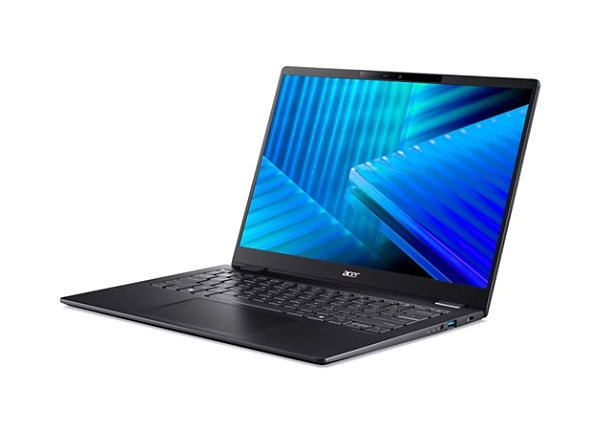
Coming this August in North America and Europe, the Middle East and Africa (EMEA) is Acer’s TravelMate P6 14 AI Windows 11 Copilot+ PC.
This business laptop from the New Taipei City, Taiwan-based computer maker is powered by Intel Core Ultra Series 3 processors with Intel vPro, delivering 150 TOPS and up to 30 hours of battery life, according to Acer.
The P6 14’s chassis weighs less than about 2.2 pounds (1 kilogram) and offers a 71-watt-hour battery that supports fast charging, Wi-Fi 7 connectivity and Thunderbolt 4 for rapid data transfer and external displays and peripherals integration.
The TravelMate P6 14 AI includes Acer ProShield Plus encryption for data security, an optional Chassis Intrusion Alarm that goes off if the casing is opened without authorization and a built-in camera shutter for physical privacy, according to Acer.
These devices come with AI-enhanced camera features to magnify on-screen details up to four times through Acer Display Lens, review meeting highlights in slow motion and capture on-screen QR codes without interrupting meetings. A 5-megapixel IR camera with Acer PurifiedView allows for smart filters on video calls.
The display supports variable refresh rates (VRR) for onscreen content to help save battery life.
Acer’s top channel goals for the year include improving partner profitability and increasing the amount of net new accounts coming through partners, according to CRN’s 2026 Channel Chiefs.
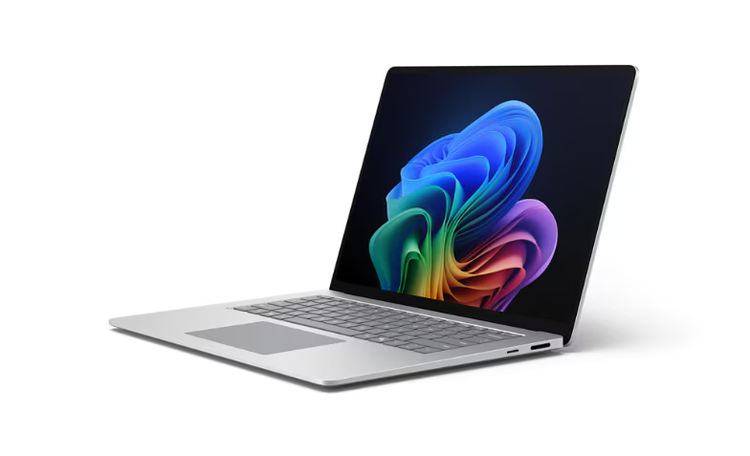
Microsoft Surface Laptop Ultra
Coming later this year is what Microsoft bills as its most powerful Microsoft Surface Laptop yet–the Ultra.
The Redmond, Wash.-based technology giant advertises the Ultra as less than 18 millimeters thick and weighs less than 4.5 pounds. It comes in platinum with a 15-inch LED PixelSense Ultra touchscreen, 262 PPI and up to 2,000 nits of peak HDR brightness, according to Microsoft. The Ultra’s charger is small enough for a jacket pocket while the touchpad is more than 30 percent larger than Surface seventh edition laptops.
The chip unites local AI agents and AI-powered abilities in a platform for Windows experiences. And running AI models locally on a device should alleviate pressure on token use when experimenting. The Ultra has USB-C, USB-A, HDMI, headphone jack and full-size SD card reader ports. Its Nvidia chip combines CPU and RTX GPU for 1 petaflop of AI compute, according to Microsoft.
The GPU allows for AI-powered noise reduction, intelligent masking, video upscaling and on-device code completion, according to Microsoft. The Ultra promises up to 128GB of unified memory for larger AI models and datasets on device with more privacy and lower latency.
And a specially designed thermal system promises nearly three times the capacity of seventh-edition 15-inch Surface Laptops. Users can leverage internal wayfinding for straightforward repairs and keeping devices in service through published repair guides and replaceable parts, even a replaceable SSD. The device also comes with Windows Hello for password-free facial recognition to sign in.
Microsoft continues to expand the Surface brand for businesses and the AI age, with plans to make enterprise and commercial versions of its new 13-inch Surface Pro and Surface Laptop options with Qualcomm Snapdragon X2 processors available starting July 14.
It also made new Surface Pro for Business and Surface Laptop for Business devices powered by Intel Core Ultra Series 3 processors available last month and expects to make its Surface RTX Spark Dev Box compact developer PC available later this year.
Microsoft has about 500,000 partners worldwide, according to CRN’s 2026 Channel Chiefs.
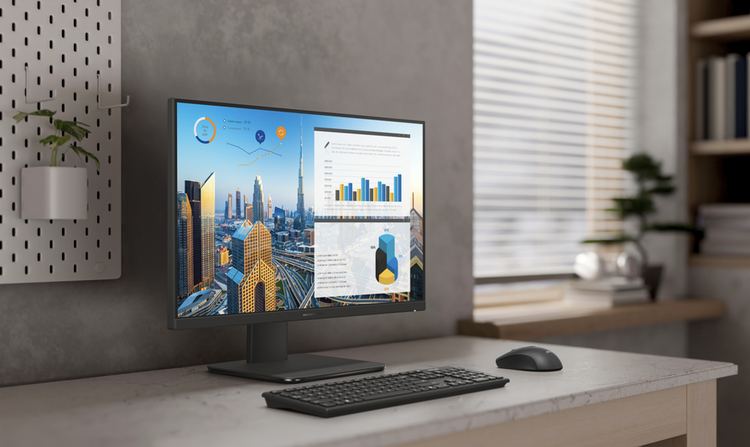
Asus ExpertCenter P600 AiO 27 Inch
Asus in March introduced new 27-inch and 24-inch versions of its ExpertCenter P600 AiO Copilot+ PC designed for AI performance for businesses.
The Taipei, Taiwan-based computer maker powers the 27-inch PM640GA and 24-inch PM670GA with AMD Ryzen AI 7 processors with up to 50 NPU TOPS, according to the vendor. The PCs offer edge-to-edge touchscreens, adjustable stand options and built-in security features with full high definition (FHD) panels, 178-degree-wide viewing angles and 99 percent sRGB color accuracy.
Asus ExpertGuardian promises users a security suite for critical data from hardware to firmware and software. It has a NIST SP 800-155-compliant BIOS with five years of update support, integrated biometric login with FIDO authentication, optional TPM 2.0 and one-year McAfee+ Premium membership.
The ExpertCenter P600 AiO PCs have a Kensington lock slot and adaptive lock with infrared camera to recognize when the user is present, logging them in automatically and locking the system once the user moves away.
They support up to 64GB DDR5 memory and dual storage with up to a 2TB SSD. Users should find that AI workloads process more efficiently, data moves faster and plenty of storage for large files and applications, according to the vendor.
ExpertCenter P600 AiO supports WiFi 7 connectivity and integrates the Asus MyExpert feature that leverages AI for simplifying tasks, optimizing system performance and supporting improved work experiences. The devices offer AI noise-canceling technology to filter out backgrounds and a built-in AI camera that automatically adjusts lighting and framing.
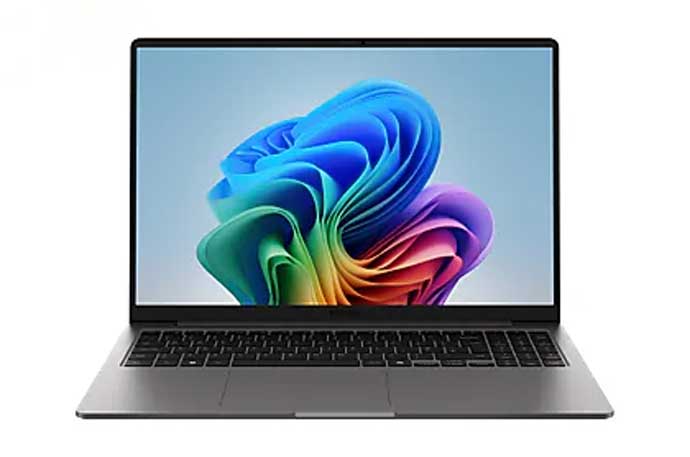
Samsung Galaxy Book6 Enterprise Edition
Samsung specifically designed this edition of its Galaxy Book6 for enterprise environments, promising top-tier performance, security and manageability to modern workplaces.
The South Korea-based computer maker powers these Book6 devices with Intel Core Ultra Series 3 processors and Intel vPro. They aim to simplify deployment and configuration through custom operating system imaging, BIOS configuration, logo customization, asset tagging and access to Windows Autopilot.
The devices have biometric authentication with a built-in fingerprint sensor and IR camera, allowing password-free sign-in through Microsoft’s Windows Hello, according to Samsung. It has cryptographic functions through a discrete Trusted Platform Module (dTPM). Samsung Knox helps to build a multi-layered approach to security and privacy.
Their NPUs are capable of up to 49 TOPS with integrated Galaxy AI features spanning quick translation and contextual recognition directly from the screen, meeting note summarization, high-quality image preparation and file searching through content descriptions.
Users can also transfer files between Galaxy devices quickly, control multiple devices with a single keyboard and mouse and gain an additional display using Galaxy Tab if they choose. Users have options for 14‑inch and 16‑inch models capable of up to 24 hours of video playback and fast charging that restores up to a third of the battery in around 30 minutes, according to Samsung.
Samsung’s top channel goals for the year include adding more qualified partners and migrating partners to more cloud solutions, accordingto CRN’s 2026 Channel Chiefs.