The 10 Biggest Dell Technologies News Stories Of 2025
Major departures, additions and shifts in C-suite executives, a PC rebranding, a security hack, expected memory price surges and a boom in AI server sales were some of the big changes that impacted the present and future of Dell Technologies in 2025.
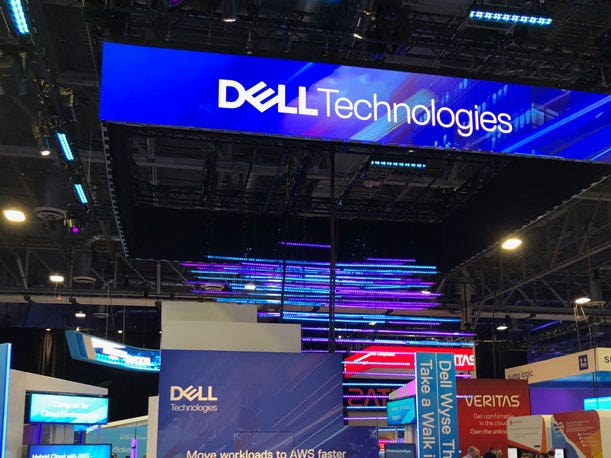
Dell Technologies spent 2025 making it clear the company is no longer easing its way into the AI era. Instead, it reorganized, retooled and even ripped up legacy approaches to position itself to be a long-term winner as enterprise AI spending accelerates.
From sweeping leadership changes and portfolio shakeups to a targeted acquisition and aggressive AI server forecasts, Round Rock, Texas-based Dell in 2025 reset priorities and signaled its commitment to change to customers, partners and competitors.
At the center of that reset was AI. It wasn’t a single product line addition, but an organizing principle for Dell’s client, infrastructure and storage businesses. Throughout the year, Dell executives changed the company’s business approach based on how enterprises are actually deploying AI today and how those deployments are expected to scale in the future.
[Related: Dell Technologies COO Clarke: ‘The Opportunity In AI Is Enormous’]
That focus showed up everywhere, from the introduction of new AI PCs and GPU-dense servers to the expansion of Dell AI Factory and the company’s growing emphasis on bundling hardware, software and services.
But 2025 was not just about technology. It was also a year of notable personnel changes, particularly among senior leaders and key channel-facing executives. Dell reshuffled responsibilities in its Client Solutions Group, saw long-time finance and accounting leaders depart and lost some well-known sales and channel executives to competitors. Those moves came against the backdrop of internal job cuts and broader efforts to streamline operations, underscoring how seriously Dell is taking the need to align talent and cost structures with its next phase of growth.
On the product side, Dell made several bold moves. The company rebranded its sprawling PC lineup into a simpler “good, better, best” framework, publicly acknowledged pricing pressure tied to a worsening memory shortage, and began steering customers and partners away from VxRail—once a cornerstone of its hyperconverged strategy—toward more flexible, disaggregated infrastructure options. Dell also showed its confidence around AI server demand, raising its forecast for fiscal 2026 AI server sales from $15 billion to $25 billion over the course of the year.
Dell also leaned heavily into partnerships and silicon diversification, touting its early support for Intel’s Gaudi 3 accelerators, expanded its relationship with Nutanix, and positioning its PowerStore and PowerFlex storage portfolio as a key growth engine.
For Dell, 2025 was a time to place big bets and move quickly as AI reshapes enterprise IT. The year was less about incremental progress and more about laying the groundwork for the future.

10. Big Personnel Changes
2025 saw several major changes in the company’s roster of employees, including Dell personnel both in the C-suite and in the field, including:
- In July, Dell Technologies Chief Operating Officer Jeff Clarke (pictured) assumed leadership of the company’s Client Solutions Group, taking over the duties of Dell CSG President Sam Burd, who moved into a corporate strategy job.
- Dell’s Chief Financial Officer and 28-year Dell veteran Yvonne McGill in September unveiled plans to leave the company by October 31, to be replaced on in interim basis by David Kennedy, senior vice president for global business operations and finance. Kennedy was named permanent CFO in November. McGill left just a month or so after being named the CFO AI-Champion of the Year winner in the 2025 Gartner Finance Awards.
- Just one month earlier, Dell’s chief accounting officer, Brunilda Rios, stepped down. She was replaced by Richard Sharp, who has worked for Dell since 2012, most recently as vice president of corporate accounting and reporting.
- Dell sales superstar Scott Millard said in September that he was leaving the company after he was named chief revenue officer at software company Sprinklr. Millard, who left Dell its senior vice president of global AI sales, noted via LinkedIn that he spent “100 quarters” with Dell.
- Wade McFarland, Dell’s vice president of North American channel sales and a 23-year Dell veteran, left the company in August for rival Lenovo, where took over as that company’s vice president of North American channels.
- Rob Bruckner, who in April was appointed head of Intel’s Platform Engineering Group, left that company in October to join Dell and lead the commercial side of its Client Solutions Group.
The changes at Dell came after the company carried out a round of job cuts that included its “new logo” account acquisitions team and a number of sales positions, sources told CRN.
9. Dell Rebrands Its PC lineup
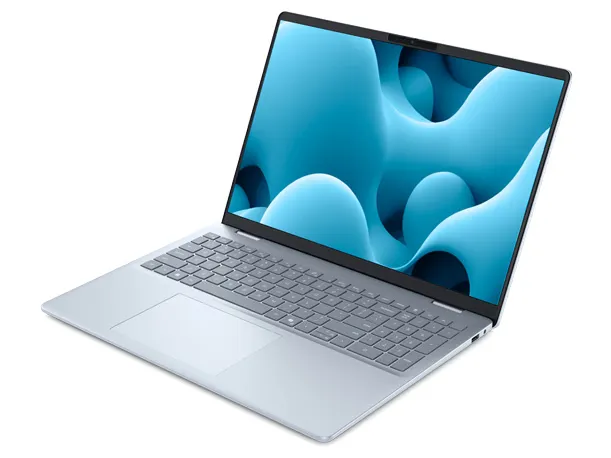
Dell in January introduced a “good, better, best” naming convention for its previously more complex PC branding. With the move, nearly all of Dell’s PC models are designated with one of three new brands: Dell, Dell Pro and Dell Pro Max.
The goal was to instill clarity around each product’s capabilities ahead of a projected widespread customer PC refresh thanks to Microsoft’s move to end support for Windows 10 in October.
Dell’s PCs are now branded “Dell” for school, fun and work; “Dell Pro” for professional-grade PCs; and “Dell Pro Max” for high-performance workstations, CAD, engineering and similar applications. Dell previously used such brands as XPS, Inspiron, Latitude and Precision.
The company is still continuing to use the Alienware brand for its gaming PCs.

8. Dell Demo Environment Hacked
Dell in July said hackers broke into one of the company’s environments used to demonstrate products for commercial customers. However, the company said, the data used there is “synthetic” and is separated from customer and partner systems.
“A threat actor recently gained access to our Solution Center, an environment designed to demonstrate our products and test proofs-of-concepts for Dell’s commercial customers,” according to a statement Dell shared with CRN. “It is intentionally separated from customer and partner systems, as well as Dell’s networks, and is not used in the provision of services to Dell customers.”
The primary purpose for the solutions center is for Dell’s direct sales force and its selling partners to showcase Dell’s infrastructure solutions to customers, which includes building custom proof-of-concept environments ranging from a single server to more complex and sophisticated solutions.
7. Dell Brings Gaudi 3 PCIe To Market
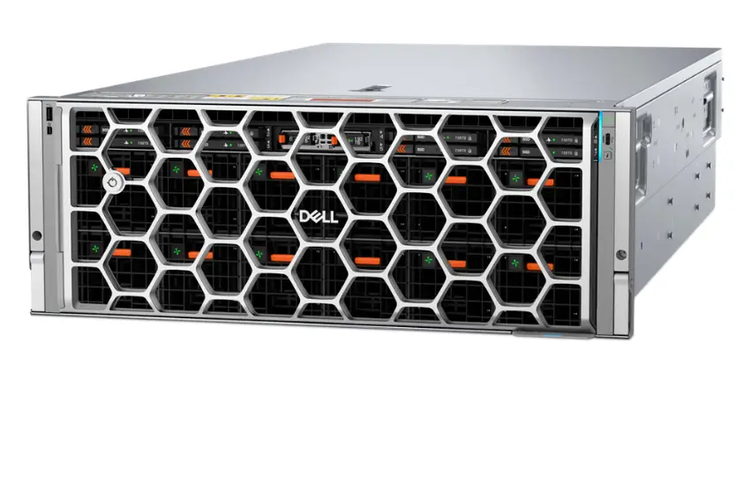
Dell in September claimed to be the first server vendor to bring Intel’s latest Gaudi 3 PCIe AI accelerators to market inside an integrated server configuration. The new offering, which can house eight of the processors, costs less and draws about half as much power as the market-leading GPUs, Dell said.
Dell said the Gaudi 3 PCIe AI accelerators allow for fast inferencing, silicon diversity and capital expense management for enterprises leveraging AI workloads. The new accelerators have a thermal design power rating of 600 watts, according to Intel’s spec sheets, compared to Nvidia’s Blackwells, which are rated at 1,200 watts, according to that manufacturer.
Dell said the Gaudi 3 can come installed on the Dell PowerEdge XE7740 rack server, a 4U device capable of fine-tuning AI models for specific workflows, and run high-performance inferencing. The XE7740 can accommodate Gaudi 3 PCIe accelerators in either a double-wide or a four-way bridged configuration.

6. Dell Warns Of Price Increases Due To Memory Shortage
Dell Chief Operating Officer Jeff Clarke said in November that he expects memory price increases in the wake of the “unprecedented” memory shortage that’s gripping the technology hardware market.
“We have a lot of experience with this. This isn’t our first DRAM cycle. There have been seven, I think, in the last 40 years,” Clarke told investors on the company’s third-quarter earnings call in November. “[Founder, chairman and CEO] Michael [Dell] and I have been here navigating the organization in various ways through that time.”
Clarke said the company is focused on mitigating the looming memory shortage, which he sees impacting its product pricing across the board. This includes reworking product configurations and product availability in the coming quarters.
5. Michael Dell Says VxRail ‘No Longer A Thing’
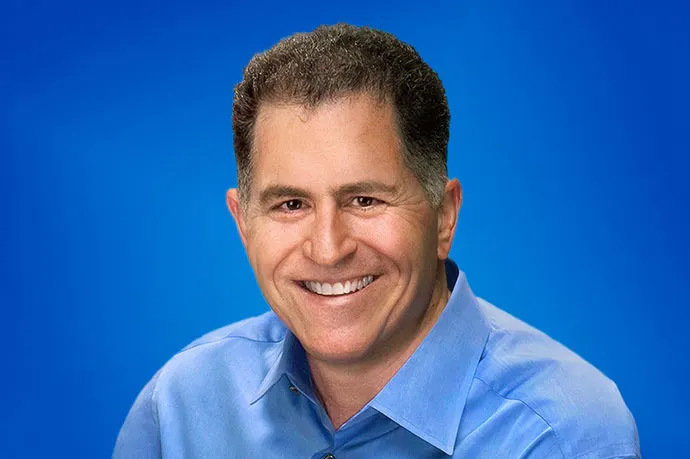
Two years after Broadcom closed its $69 billion acquisition of VMware, Dell CEO Michael Dell (pictured) said in November that VxRail “is no longer a thing.” Instead, Dell is incentivizing its partners to move customers off VxRail, which was once a stalwart hyperconverged infrastructure offering that combined Dell storage with VMware’s virtualization technology and gave partners a sticky, reliable offering for customers.
“I think the thing you need to look at there is VxRail is no longer a thing,” Michael Dell told CRN when asked about growth in its storage portfolio. “It was a thing a couple of years ago, and it’s a lot less of a thing now. And so the thing that’s been growing tremendously is the Dell IP in storage. And you could say, more accurately, the Dell EMC IP in storage.”
Dell Private Cloud is being combined with Nutanix AHV, Microsoft Hyper-V, Red Hat or VMware and used to transition customers from VxRail to a disaggregated infrastructure stack that is built on PowerStore or PowerFlex, both of which are Dell storage products, while the Dell Automation Platform is helping them make the switch.

4. Dell Acquires Dataloop
Dell in December acquired Dataloop for a purchase price of $120 million, as reported by the Israel-based news site Calcalist, often referred to as Ctech.
“We’ve talked about continuing to pursue small-scale, tuck-in, IP-accretive M&A that accelerates our product roadmaps,” said Dell in an emailed response to CRN when asked for comment.
Dataloop offers an AI development platform with an enterprise-grade data engine that ensures developers and the AI applications they build have access to huge volumes of high-quality, relevant data from diverse sources. The platform is particularly targeted toward vision AI applications that use unstructured data such as video, images, audio and text.
The Dataloop platform, according to the company’s website, allows teams to “manage and automatically pre-process data, pipe it into a variety of existing AI models (or build your own), insert human feedback into the loop and rely on pre-built RAG, RLHF/RLAIF and Active Learning solutions with an end-to-end, extendible and modular AI development platform.”
3. Dell, Nutanix Expand Storage Partnership
Dell in September said its PowerStore storage technology in 2026 will support the Nutanix Cloud Platform in a partnership designed to capture pent-up demand for hypervisor options in large storage deployments as customers look for ways to lower the cost of their virtualization environments.
Dell’s flagship PowerStore enterprise storage product features a dual-controller architecture and fits in with traditional three-tier architectures. It has multiple models to address storage needs between entry-level and high-end but is primarily focused on the midrange storage market.
PowerStore is also one of Dell’s best-selling and fastest-growing products with six consecutive quarters of double-digit growth, much of that coming through the channel and Dell’s Partner First For Storage initiative, Dell said. The new PowerStore featuring the Nutanix Cloud Platform is slated for general availability in spring 2026.
2. Dell Mounts Massive AI Product Offensive
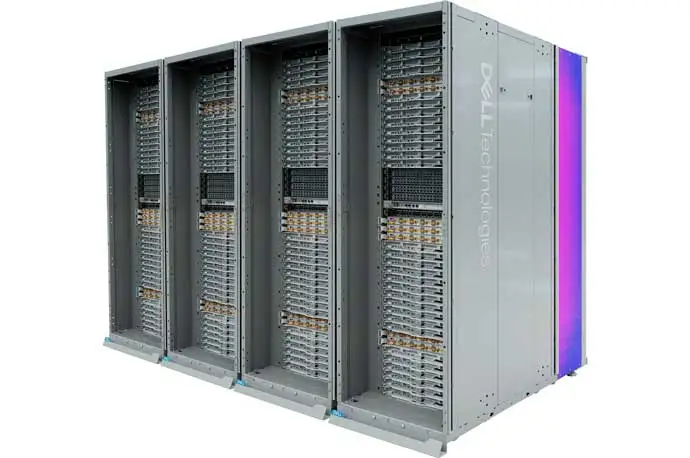
Dell mounted a full-court AI product offensive in 2025, starting with a breakthrough Dell AI Factory lineup that included new PowerEdge XE9780 and XE9780L servers.
The PowerEdge servers feature both air-cooled and liquid-cooled varieties, incorporating either AMD or Nvidia GPU architectures.
“Dell is the infrastructure, the backbone enabling enterprises to think faster, to act smarter and to dream bigger,” Dell CEO Michael Dell told attendees at Dell Technologies World in May. “Today we have now more than 3,000 customers running Dell AI Factories with a lot of success. The Dell AI Factory is up to 60 percent more cost-effective than the public cloud. Now with agents, and test time compute and deep reasoning, the models are helping us think, and they’re thinking and acting on their own with autonomy.”
Dell also launched the new Dell Pro Max lineup of desktops and notebooks to drive the AI revolution forward. Those devices incorporated Qualcomm chips to power the CPU as well as Nvidia GB300s to tackle the AI or graphics workloads.
In addition, the company introduced the Dell AI Data Platform with what it called “Project Lightning,” which it described as the world’s fastest parallel file system.
The AI data platform integrates vector search for direct data set creation and querying within the Dell Data Lake House, which helps eliminate external systems for those capabilities.
Dell also built query functions around SQL-accessible LLM functions, text summarization and sentiment analysis, with all of it baked into a customer’s instance of Dell’s AI Data Platform.
Finally in November, it used the Supercomputing 2025 conference to show enhancements to the Dell AI Factory including updates to Dell Automation Platform to streamline enterprise AI deployment, new data management technology to optimize performance and accelerate decision-making, enhanced Dell PowerEdge servers, new advanced networking and Dell’s Integrated Rack Scalable Solutions for smarter and more resilient infrastructure.
1. AI Server Sales Booming
Dell COO Jeff Clarke said in November that Dell expects to reach $25 billion in AI server sales for fiscal 2026, up from previous guidance given a month earlier that AI server revenue would hit $20 billion for the year.
"AI server demand remained exceptionally strong,” Clarke told investors during the company’s quarterly financial results call, adding, “Our strong orders and customer base expansion clearly show customers value our unique ability to design, deploy and maintain large at-scale AI Factories, especially our engineering and rapid deployment capabilities.”
“We booked $12.3 billion in orders in the quarter, bringing year to date orders to $30 billion, both record figures,” Clarke said, noting that the company’s five-quarter pipeline continues to grow sequentially across neocloud sovereigns and enterprises.
The momentum behind Dell’s AI server sales built throughout the year as the company continually upped its forecast for fiscal 2026.
In March during the company’s full fiscal 2025 financial conference call, Clarke said that Dell was “optimistic” about AI adoption by cloud service providers and enterprises as it planned to sell $15 billion in AI servers in fiscal year 2026.
Dell is winning those deals with its all-in-one approach that includes not just hardware, but set-up, services and financing. He said the lessons Dell learns as it stands up AI deployments with the “top 30 or so” cloud service providers helps Dell scale to the enterprise.
O’Ryan Johnson, Steve Burke, Dylan Martin and Mark Haranas contributed to this story.