Top Dell Sales Exec Pete Trizzino On ‘Best-In-Class’ Supply Chain, Building ‘Trust’ In The Field With Partners
‘It’s trust in the field that really makes a difference. It’s how our teams show up every day in each other’s offices. It’s how they show up together in front of a customer. It’s the commitments that they make to each other,’ Pete Trizzino, Dell’s president of global sales, modernization and go to market, tells CRN.
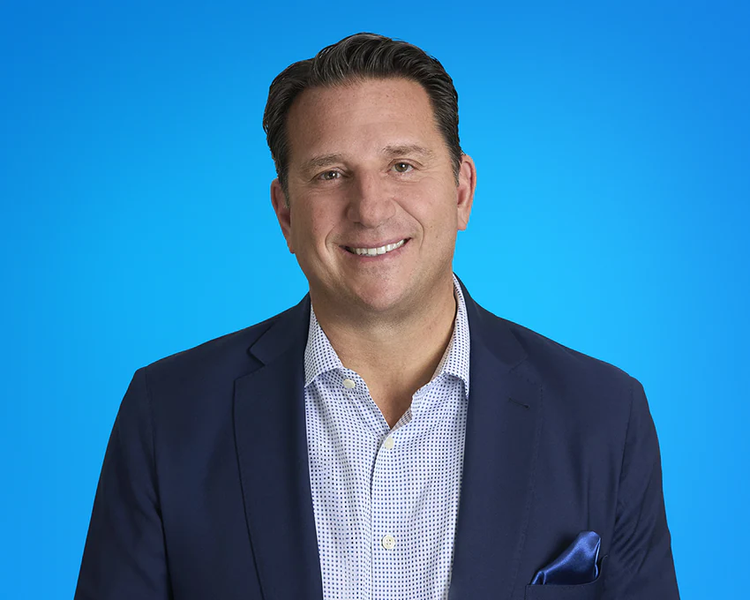
Dell Technologies’ “best-in-class” supply chain, backed up by a steely resolve to communicate proactively on shipment delays and price increases, has led to deeper “trust” between the company and its partners, said Dell President of Global Sales, Modernization and Go To Market Pete Trizzino.
“If something’s going to be late, we communicate to the partner and the customer,” said Trizzino in an interview with CRN. “It’s been all about communication. That’s why we’ve built the trust that we have, especially over the past nine months. We continue to see ourselves in an opportunity to serve our customers and our partners as best in class.”
Trizzino, a 26-year Dell and EMC sales veteran who has received plaudits from partners for his longtime channel advocacy, said there is “no question” that Dell’s supply chain prowess has made Dell a trusted and reliable partner to the channel.
“We were telling our partners and our customers early about the constraints that we were seeing,” he said. “We were continuously communicating on price increases based on the supply. I think we earned a lot of trust and credibility across our customer base and our channel because we were communicating early.”
Trizzino said Dell’s strong supplier relationships and 42-year history navigating memory supply chain ups and downs have been critical to its success.
“We’ve seen these memory cycles,” he said. “We’ve got the relationships with these suppliers. We buy across compute, client, storage, networking, and we’ve got a very robust customer base across all markets and in all regions.”
Trizzino, who is known for his partner mantra “Work Together, Win Together,” said success in the sales trenches with partners ultimately comes down to “trust” in the field between Dell’s sellers and channel partners.
“It’s trust in the field that really makes a difference,” he said. “It’s how our teams show up every day in each other’s offices. It’s how they show up together in front of a customer. It’s the commitments that they make to each other. It’s a ground game. It needs to be done in the field. At senior levels we can say whatever we want, we can put [in place] whatever programs we want, but if that trust doesn’t exist in the field, the channel program is not going to be successful.”
What are you seeing in terms of sales traction for Dell and its partners?
It’s been a great year, and we continue to deliver incredible outcomes for our customers. We’ve never been more relevant in the history of our company than we are right now. We’re square in the middle of the biggest IT and business challenges that customers have right now.
The opportunity is absolutely massive. It’s a $6 trillion market opportunity. We’ve got, I believe, the strongest hand in the industry right now. I’ve been here 26 years, and we’ve never been this relevant to our customers by a far stretch. We’ve got an opportunity to really continue this acceleration because of our end-to-end world-class engineering and the innovations we’re bringing to market, our resilient and globally advantaged supply chain, our go-to-market team, inclusive of our incredible partner system and our unmatched global services. This is a really exciting time to be in our industry and an incredible time and massive opportunity to be at Dell. I couldn’t be more excited.
How important is the channel to Dell’s continued scale and growth as you tackle this $6 trillion opportunity?
Now more than ever, customers want outcomes. They don’t want to buy products. They want to buy complete solutions, and they want to work with fewer, more strategic vendors. They want to work with their most trusted partners, who are working together on their behalf.
Customers are being pressed daily by their boards and by senior leadership to deliver value faster, and speed has never been more critical to what we can do, and we believe we can be faster with our channel partners. Budgets are being expanded in some aspects and are being reallocated in others. Many of our customers are investing in infrastructure and AI ahead of their own plan. We need partners to help us deliver that full outcome. We’ve got the infrastructure. We’ve given them the ‘easy button,’ but we need them to pull together the entire solution.
How important is it that the channel invest in the forward deployed engineer model to be successful building AI solutions for customers?
The forward deployed engineer is not something that’s unique to Dell. It’s an industry set of resources. To be successful in AI, forward deployed engineers are going to be critical to success, whether they’re inside Dell or within our partner ecosystem. We believe firmly in that model, and we’re going to continue to invest there and move our top resources into those roles.
What do you need to see from partners to ensure they are aligned with Dell to be successful in the AI era?
I get this question a lot. What does winning look like? First off, being students of the industry and students of our customers’ business is going to be critical. The more technical resources, the more hybrid technical sellers that our ecosystem can bring to the table, the better for us. The more resources that understand the customer’s business and the industry vertical, the more valued they’re going to be.
We need these partners, in conjunction with the Dell sellers, to really understand the challenges that our customers are facing and then map the Dell solutions and the total solution to helping solve that challenge.
The strongest partners that we have lead with outcomes, and they know how to connect those outcomes to preferably Dell Technologies solutions and oftentimes, most of the time, that is actually what it is. That is across infrastructure, services and life-cycle support.
The other element that I’m seeing that is increasingly more important and more valued from customers is speed. I mentioned that earlier: Helping customers realize value faster is always going to be a winner. So when I look at partners on where to engage and where to leverage, those are the elements that I’m looking for.

Why is the speed the channel can bring so important?
We’re seeing customers move [faster] from pilot to production. That is where speed really matters. That’s where we’re seeing customers apply AI at scale. Why I think that is important and why we believe we can help our partners out is because we’re calling our Dell AI Factory the ‘easy button.’ It’s a self-contained compute network and storage integrated system.
There are 6,500 [Dell AI Factory] deployments and growing. What’s critical there is it took about eight quarters to get the first 3,200 [Dell] AI factories, and only the last three quarters to get 3,300 more. That is really accelerating for us. From a speed standpoint, that easy button is really helping customers deploy on-premises. That’s something that we believe in wholeheartedly.
We’re seeing more and more customers wanting to do on-premises [Dell] AI factories, and we’re making it as easy as possible for them.
What differentiates the Dell AI Factory versus the competition when it comes to the success you have had with customers?
There’s really no other, I would say, competitor that has got the depth and scale that we have across all the elements of the [Dell AI] Factory. Look at the compute, network and storage that we bring to the factory. … We’re making it as easy as possible for our customers. They don’t have to manage multiple supply chains. They can do it all from one organization, and that’s why we’ve got the advantage.

As you look forward with direct and indirect sales and co-selling, what is your philosophy on scaling sales as you go forward with partners?
What I’ll say here is the opportunity in front of us is massive. Back in 2024, there were some predictions. The AI spend in 2026 was predicted in 2024 to be $249 billion. The current forecast right now is $800 billion.
Worldwide AI spend was predicted in 2024 for 2028 to be $632 billion. The current forecast is now $1.6 trillion. The U.S. data center demand was 54 gigawatts and now is projected by 2028 to be 133 gigawatts. Those are three or four times what they were predicted to be in 2024.
Also, the token generation by 2030 is 1,000 [times] what it was predicted at in 2024.
So these signals suggest massive scale and, as the leader of sales at Dell, we can’t do that on our own. We need the partner ecosystem that we have to try to capture all that demand. The best partners are going to help us do that.
Has Dell become a more trusted partner to the channel because of the supply chain crisis?
There’s no question about that. We were telling our partners and our customers early about the constraints that we were seeing. We were continuously communicating on price increases based on the supply. I think we earned a lot of trust and credibility across our customer base and our channel because we were communicating early. The other thing I would say is Dell has been in business 42 years. We’ve seen these memory cycles. We’ve got the relationships with these suppliers. We buy across compute, client, storage, networking, and we’ve got a very robust customer base across all markets and in all regions. As a result, we’ve got a world-class supply chain.
If something’s going to be late, we communicate to the partner and the customer. It’s been all about communication. That’s why we’ve built the trust that we have, especially over the past nine months. We continue to see ourselves in an opportunity to serve our customers and our partners as best in class.

What are you telling customers about how long the supply chain crisis could go on?
We say for a while. We don’t really truly know. I talked to you a little bit about the demand signals we’re seeing across that spend and those predictions.
Agents are driving more and more data. Data is driving more compute and storage. We are seeing this demand continue. If the demand continues the way it is projected, this supply constraint environment will last for a while. I can’t give you a date. I don’t think anybody can sit here and give you a date. We all know when the memory suppliers are bringing fabs online. They still need to get to full yield. Providing this demand continues, we are going to be in this environment for a while.
How important is the scale that Dell provides as you look at how the channel and AI sales are going to evolve?
There’s no question about the scale that we have. You have seen our earnings and our market share and all of those things that show that we’re winning. When you’re winning, you tend to get the supply that’s needed for you to scale. We believe and have full confidence that we’re going to continue to win and be in the best position to supply our customers and partners.
Have you made any changes to make sure the direct and channel engine are firing on all cylinders?
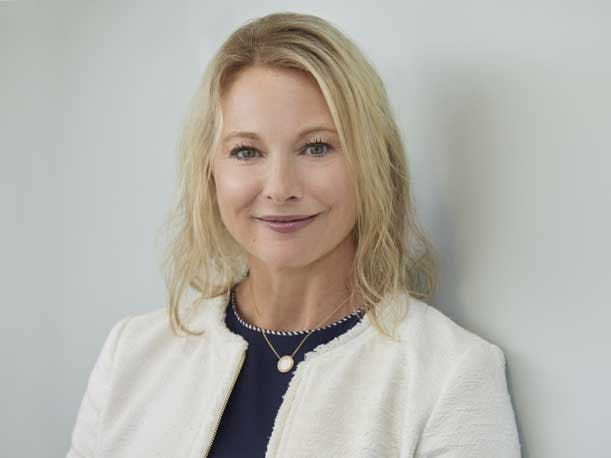
You can make a lot of changes to programs. [Dell Chief Partner Officer] Denise [Millard] (pictured) has done a phenomenal job of making sure that the programs for the partners allow us to do both.
My fundamental belief is it comes down to trust. It’s trust in the field that really makes a difference. It’s how our teams show up every day in each other’s offices. It’s how they show up together in front of a customer. It’s the commitments that they make to each other. It’s a ground game. It needs to be done in the field. At senior levels we can say whatever we want, we can put in whatever programs we want, but if that trust doesn’t exist in the field, the channel program is not going to be successful.
Do you see Dell as the No. 1 company in terms of sales engagement in the field?
What I can tell you is that Denise and her team have done an incredible job across the Partner Advisory Boards, whether it’s Access to the Future, which is global, or the regional Partner Advisory Boards.
Denise is participating in every single one of them. I participate in as many as I can. When I ran North America, I sat through every single one. That’s where we learn. That’s where we listen. That’s where we make the changes we need to, whether it’s programs and/or engagement.
I think the discipline that we’ve had around our Partner Advisory Boards has really changed the game in how we’re showing up for our partners, I think that’s very unique as far as what we have done.
Denise and I have been loud about whatever the strategy is going to be, let’s make sure we decide what it is going to be early so there are no surprises.
Dell has invested more in redefining the sales process with AI with One Dell Way to move faster. Some partners fear that everything is going into the AI black box. What do you see as the impact of One Dell Way?
I don’t know if I’d call it the ‘black box,’ but what I will say is that everything that we’re doing around One Dell Way is to make us smarter and faster, and you need to be smarter and faster if you’re going to be competitive and win in the market.
Things like automated deal registration and dynamic, transparent pricing are AI-powered tools that are designed to help partners spend less time navigating the process and more time with customers.
Ultimately, any of the AI efficiencies that we’re gaining is because we want our team and our partners to spend more time in front of the customers, developing more opportunities. Operational excellence is something that is going to be critical to our success, allowing us to be faster to respond, having clearer pricing, and just really improving the execution cycles.
From everything I’ve seen early with the soft launch here, it’s going to be better on the other side for not only our seller experience, but also our partner experience, and ultimately our customer experience. So we’re really bullish on One Dell Way. I think it’s going to make us smarter and faster.
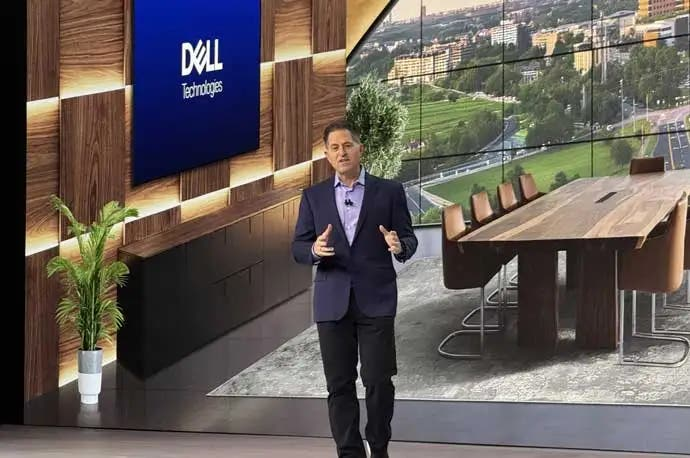
How critical has Chairman and CEO Michael Dell been to the company’s success driving sales growth?
Michael is a special founder and business leader. He has great passion. The purpose of Dell is to create technologies that advance human progress. That is what Michael fundamentally believes, and that’s how he lives. He has great passion around what we do and how we help customers and how we help the world. That is where he gets his energy. That’s where he gets his drive. And that’s why he sees so many customers every single day. It is a privilege working with him, and it’s inspirational every single day to see him operate with our customers and team members. He is a special, special leader.
How important is Michael’s involvement as a sales leader?
Having somebody like Michael at your side in a customer meeting has been incredible for every Dell team that’s had the opportunity to work with him. It’s a luxury to have a leader and CEO of this caliber as a founder being as involved with customers and partners as he is. … We’re in a very privileged position to have him doing what he does every single day.