8 New AI Tools Aimed At Transforming An MSP’s Operations
AI is rapidly becoming the operating core of modern MSPs as major IT service management vendors roll out copilots, automation and agentic workflows that can execute real work—not just assist.

AI is no longer a side feature inside MSP platforms, it’s quickly becoming the operational core of the modern MSP business.
Over the last year, a number of IT service management vendors have rolled out AI-powered automation, copilots, agentic workflows and autonomous service delivery capabilities aimed at transforming how MSPs operate.
The shift is happening because MSPs face mounting pressure from every direction. Clients expect faster response times, stronger cybersecurity protections and lower operational costs, while MSPs themselves continue to struggle with staffing shortages, rising labor expenses and tool fatigue.
The latest generation of MSP AI tools goes beyond chatbot-style assistance. Vendors are embedding AI directly into ticketing systems, remote monitoring and management platforms, documentation tools, cybersecurity operations and billing workflows. Many are now pursuing agentic AI models where AI systems not only recommend actions but autonomously execute them. Password resets, ticket triage, patch management, on-boarding workflows and remediation tasks are increasingly being handled without technician intervention.
For MSPs, these capabilities and others reshape what kind of customers they can serve as smaller IT providers have the chance to gain enterprise-scale automation capabilities.
[RELATED: MSP Week 2026]
Corey Kirkendoll, president and CEO of Dallas-based 5K Technical Services, has integrated AI tools across customer support and internal operations and said the biggest immediate improvement has come from better documentation and more consistent communication from engineers.
“Providing consistent and accurate documentation has always been a challenge,” he told CRN. “AI helps our technicians clearly scope issues and create updates that the whole organization can understand and support.”
The company has also deployed an AI-powered receptionist that answers calls, routes customers and handles basic triage. Reactions from customers, Kirkendoll said, often depend on their age.
“The younger people love it because it keeps things moving,” he said. “The older customers, especially over 50, tend to push back more. But it turns into a conversation about how they can enable AI in their own business. The reality is buyers are getting younger, and people increasingly want self-service experiences.”
Beyond customer service, AI is also helping 5K Technical Services monitor employee burnout and workflow inefficiencies. By analyzing operational data, the tools can identify where technicians are struggling from repetitive tasks to gaps in training.
“We don’t have the human power to manually look through all that data,” Kirkendoll said. “AI can quickly tell us where people are getting bogged down so we can fix the root problem.”
Following are eight new AI tools from IT service management vendors.
Atera Robin
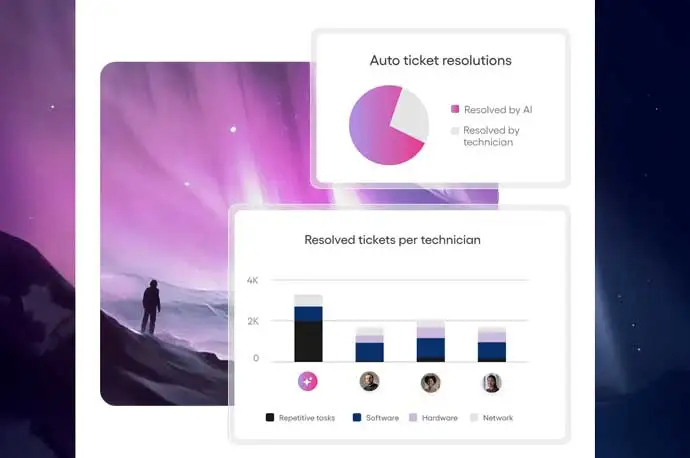
Atera’s Robin platform is built on Microsoft Azure OpenAI technology and functions like a virtual junior technician embedded into collaboration platforms such as Slack and Microsoft Teams.
Tel Aviv, Israel-based Atera’s Robin can autonomously resolve up to 40 percent of Tier 1 IT tickets including password resets, printer failures and common support requests. The AI-powered platform executes remediation workflows and responds directly to user issues in real time.
ConnectWise AI-Powered PSA
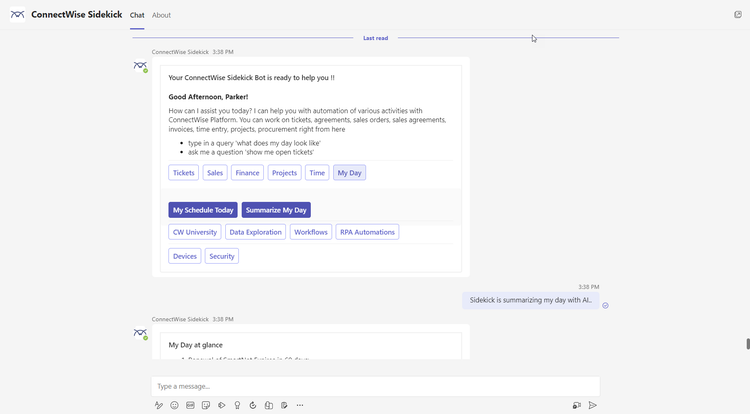
ConnectWise last year unveiled an AI-powered, modernized PSA built on its Asio platform, which marked a major step toward a more automated and intelligence-driven MSP operating model. The platform introduced real-time operational dashboards, a fully unified interface across PSA and RMM tools, and embedded AI capabilities designed to streamline service delivery.
At the center of it all is the Tampa, Fla.-based company’s ConnectWise Sidekick, an AI companion built to assist MSPs with faster problem resolution as well as automate complex workflows.
The growing suite of AI-powered capabilities across the ConnectWise ecosystem include Sidekick-driven AI scripting for RMM automation, AI-enhanced search across ConnectWise University and natural language bot creation through ConnectWise RPA Pro. Together, the tools bring agentic, AI-driven automation into everyday MSP operations.
Halo AI-Powered Ticket Triage
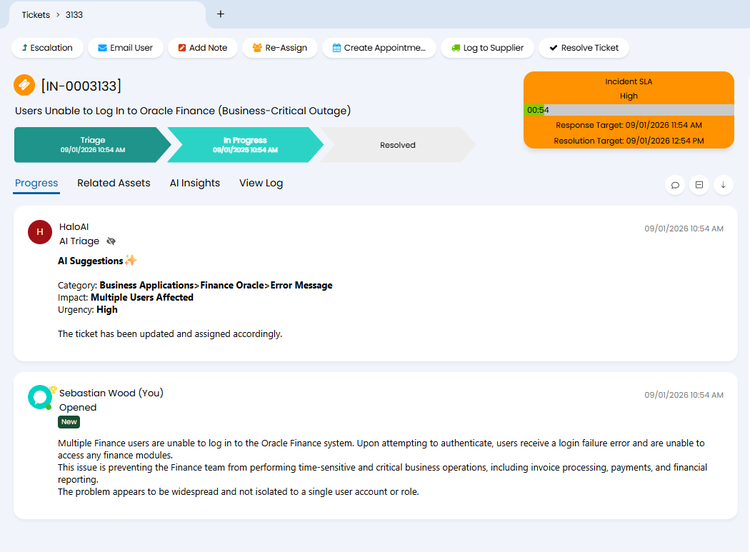
Halo expanded its AI-driven automation capabilities to help MSPs streamline service delivery, reduce manual effort and standardize core IT workflows across the service desk.
One of the key capabilities is AI-powered ticket triage inside the Halo service desk. Incoming tickets can be automatically categorized and routed without relying on historical data. An AI agent then evaluates each request to determine whether it represents an incident or a service request. This allows MSPs to turn on intelligent ticket handling immediately and begin automating intake from day one.
Kaseya Agentic AI Platform Powered By Kaseya Intelligence
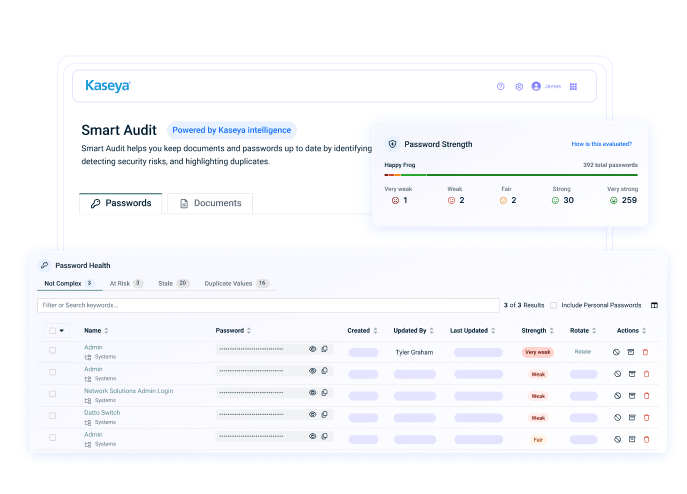
Kaseya’s first agentic IT management platform, powered by Kaseya Intelligence, autonomously manages IT operations, cybersecurity and cyber resilience workflows without requiring constant technician intervention.
The platform combines unified operational data with an execution layer capable of taking action automatically. The platform can triage tickets, contain security threats, verify backups, optimize workflows and execute remediation tasks from a single interface.
At the center of it is a new category of AI-powered “Digital Specialists,” which are autonomous agents handling high-volume operational tasks. The first release, Ticket Triage Digital Specialist, automatically categorizes and routes service tickets, helping MSPs reduce manual errors, improve workflow consistency and accelerate resolution times.
The vendor also introduced a Model Context Protocol-based AI interface, creating a chat-style experience that connects data across tools. This allows MSPs to query systems, analyze operational data and trigger actions across multiple platforms from a single AI layer.
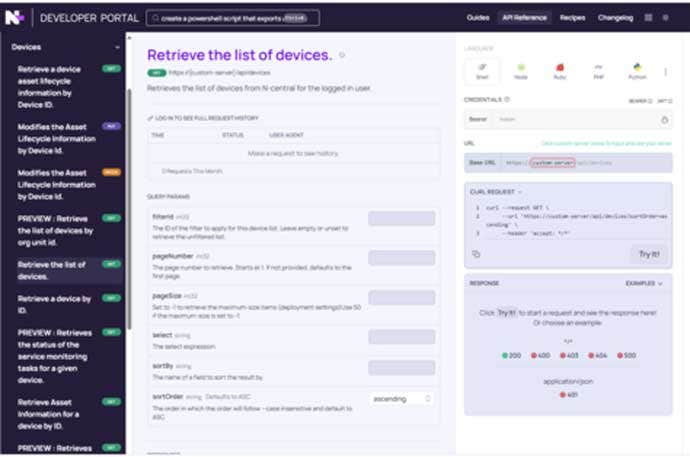
N-able AI-Powered Developer Portal
N-able’s AI developer portal simplifies API integrations and automates scripting tasks to reduce friction inside MSP tool stacks.
One key differentiator is democratization. Many MSPs lack developers, making advanced API integration difficult to implement. N-able’s AI tooling aims to lower the technical barrier to automation by helping users generate scripts and integration more efficiently. This initiative aligns with the broader industry demand for open ecosystems.
By embedding AI into integration workflows, N-able aims to position itself as a flexible automation platform.
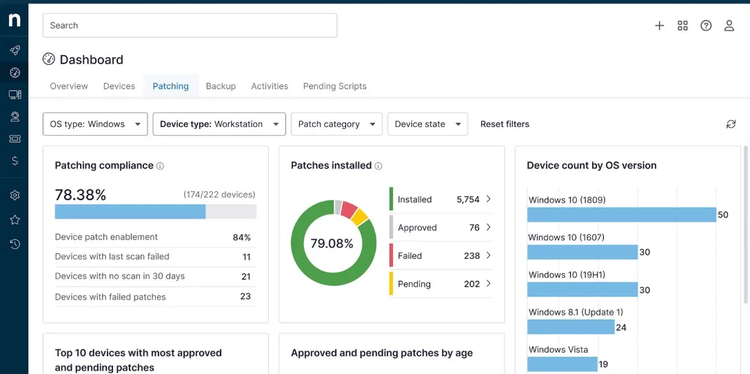
NinjaOne AI-Native Vulnerability Management Platform
NinjaOne’s AI-native vulnerability management offering is built directly into its Unified IT Operations Platform, giving MSPs automated remediation and centralized reporting from a single interface.
The platform uses AI to continuously identify software vulnerabilities across environments without relying on scheduled scans. The system delivers vulnerability insight by leveraging millions of endpoint and inventory data points already collected inside the NinjaOne platform.
Vulnerabilities can be automatically prioritized and remediated through AI-driven patch deployment workflows across Windows and Linux systems.
SuperOps Monica
SuperOps’ AI companion Monica is embedded into its PSA, RMM, ticketing and automation workflows. Rather than functioning as a stand-alone chatbot, Monica acts as an assistant helping MSPs automate routine tasks, accelerate ticket resolution and improve technician efficiency across the platform.
Monica’s capabilities include AI-generated ticket summaries, script generation, email summarization, profitability reporting, workflow automation and recommended remediation steps based on contextual awareness across devices, tickets and customer environments. The platform is designed to reduce technician workload by surfacing insight and automating repetitive tasks.
Monica can autonomously handle ticket routing and patch deployment while using predictive intelligence to identify issues before they become larger problems. According to the company, as much as 40 percent of routine IT operations can now be resolved autonomously through Monica-powered workflows.
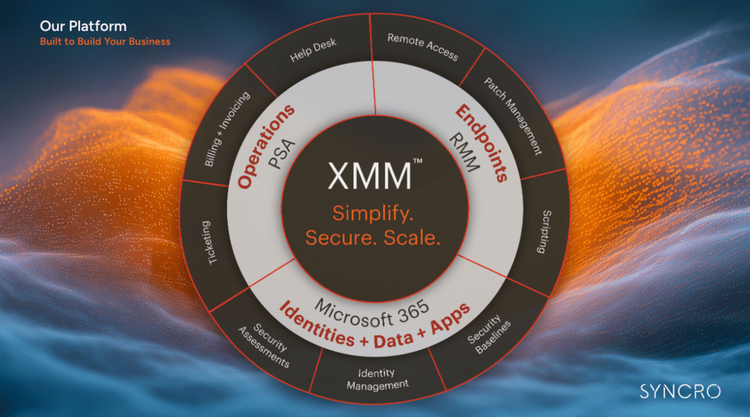
Syncro AI-Enhanced XMM Platform With Microsoft Integration
Syncro XMM (extended monitoring and management) is a unified IT and security management platform developed in collaboration with Microsoft to simplify operations for MSPs through AI-enhanced automation and centralized management.
The cloud-based platform combines RMM, PSA and Microsoft 365 multitenant administration into a single operational interface.
A major focus of the platform is AI-driven security and operational intelligence. XMM includes AI-enhanced threat detection and automated ticket triage capabilities to help MSPs identify issues faster and prioritize risks more effectively.
Additional automation features include integrated ticketing workflows, service automation capabilities and centralized visibility across device management, security compliance and Microsoft 365 administration from a single pane of glass.