10 CEOs On How AI Is Changing The Networking Game
Many of the world’s foremost networking leaders agree that AI won’t just be a workload in 2026, but rather, the backbone of the entire networking ecosystem.

Leaders in the networking arena agree that AI is fundamentally reshaping infrastructure requirements and creating unprecedented demand for high‑performance, low‑latency, secure and scalable networks.
Whether it’s some of the industry’s leaders, such as Cisco Systems or HPE, or cloud networking, telecom and security standouts such as Alkira, Fortinet, and Lumen Technologies, these CEOs emphasize that AI workloads are pushing networks to behave more like integrated fabrics than traditional architectures. This shift is driving innovation in areas such as AI‑ready networking, private 5G, secure AI data centers, and edge architectures. As a result, there’s a few things that customers have in common: they need predictable performance, seamless data movement between clouds and edges, and improved security models as AI expands attack surfaces and accelerates traffic patterns. It’s safe to say that in 2026, AI won’t just be a workload. Rather, it’s becoming the backbone of the entire networking ecosystem, with partners at the center working hard to bring scalable, secure, and production‑ready AI to the table for their end customers.
Read on to hear what 10 of the world’s biggest CEOs had to say about the impact AI will have on the networking space. In written responses as part of CRN's 2026 CEO Outlook project, check out what more CEOs had to say about the upcoming year.

Amir Khan
President, CEO and Founder
Alkira
In 2026, the biggest opportunity lies in enabling enterprises to build and operate the networks that power the next generation of AI. Training clusters, large scale inference, edge AI, and intelligent physical systems all depend on moving massive amounts of data across data centers, clouds, and edge locations with predictable performance, low latency and strong security. These environments are far more demanding than traditional enterprise IT, and they require a network that behaves more like a fabric than a patchwork of individual links. Channel partners are uniquely positioned to help customers adopt a network delivered as a service that can support these high throughput, latency sensitive, and globally distributed workloads. Together, we provide a secure and programmable network fabric that makes it possible to deploy and operate AI infrastructure at scale without the operational drag of legacy networking. This is about giving customers the foundation they need to take AI from the lab into real production environments across the world.

Shlomo Kramer
Co-Founder and CEO
Cato Networks
In short, AI transformation. While the AI security category is still young, the trajectory is clear. AI adoption is being measured in months, not years, and enterprises need to control AI interactions. That urgency is why Cato Networks made its first-ever acquisition in September 2025 (Aim Security, an AI visionary leader). What that means for partners is that they will be able to offer Aim’s AI security capabilities to customers — first as a standalone product and eventually converged into the Cato SASE Platform in early 2026.

Rajeev Shah
CEO and Founder
Celona
In 2026, our technology investments will focus on using AI to simplify deployment, operations, and troubleshooting of private 5G networks. As these networks become more central to how industrial systems are designed and deployed, reducing complexity for both customers and partners is critical. We are also investing in more flexible deployment models that allow customers and partners to scale networks up or down based on the area footprint, support, and infrastructure availability through flexible deployment options. That includes fully integrated, AP-only architectures that reduce on-site complexity and make it practical to extend private 5G across a wide range of environments. Another key focus is simplifying the product to deploy at scale, bringing deployment times down from weeks to just a few hours. These investments are designed to make private 5G practical to roll out consistently, without introducing unnecessary challenges as networks grow. Finally, we will invest further in tighter integration across the industrial AI stack, particularly at the edge. As more data is processed closer to where it is generated, the network must integrate cleanly with edge compute and enterprise security frameworks.
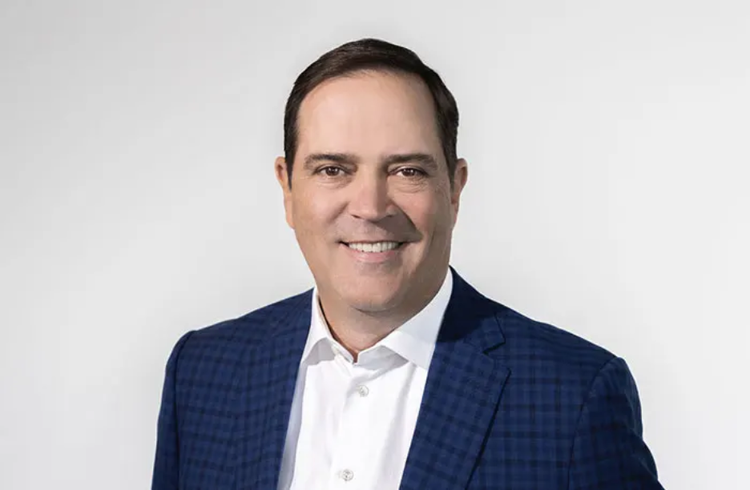
Chuck Robbins
Chair and CEO
Cisco
Undoubtedly, the AI transition remains the most significant market for 2026 and beyond. As organizations race to build AI-ready infrastructure for generative AI and advanced workloads, they need scalable, low-latency, highly secure systems to connect GPUs and enable hybrid architectures. As the only company offering AI-ready networking and security solutions, Cisco is in both a unique and advantageous position to help partners create and deliver on that vision for our customers.

Ed Meyercord
President and CEO
Extreme Networks
The focus is helping customers drive ROI out of AI investments. AI will reduce complexity, accelerate decision-making, and give customers clearer insights across their environments, freeing IT teams to focus on higher-value, strategic work. Ultimately, AI is about making networks easier to run, more reliable, and more aligned to business outcomes. Productivity gains will be massive.
Our new Partner AI Assistant is already delivering significant value to our partners. We’ve taken thousands of pages of product documentation, case studies, competitive intelligence, etc. and collapsed them into single conversational assistant. Instead of spending hours searching for answers, our partners can simply say “respond to this RFP” and get an answer in minutes. Ultimately, AI will make it faster and easier for our partners to win business and stand out in the market.
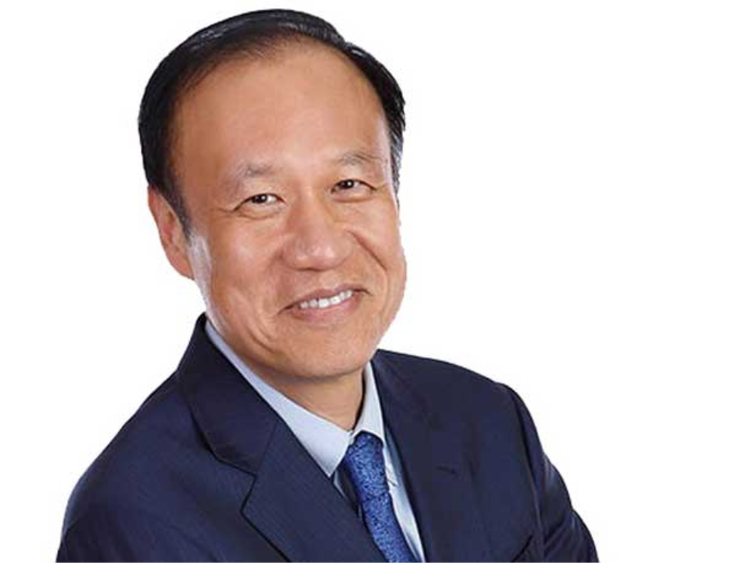
Ken Xie
Founder, Chairman and CEO
Fortinet
AI has been a core component of the Fortinet Security Fabric, security services, and threat intelligence for more than a decade — powering real-time protection and strengthening security operations against increasingly sophisticated threats. FortiAI, our generative AI (GenAI) assistant, is now embedded across multiple flagship products, including FortiAnalyzer, FortiManager, and FortiSIEM, bringing context-aware GenAI directly into SecOps and NetOps workflows to automate threat analysis, response, and operational tasks. In parallel, Fortinet is extending AI-driven security into the data center with our Secure AI Data Center solution. Built to protect modern AI factories, this architecture integrates security directly into accelerated compute environments through close collaboration with NVIDIA, embedding segmentation, policy enforcement, and threat protection into the AI infrastructure itself. Additional work with Arista Networks and MPS further strengthens this solution by delivering high-performance networking and semiconductor-driven infrastructure designed for the scale and performance demands of AI workloads. In 2026, we will continue expanding FortiAI across more solutions and advancing secure AI infrastructure, enhancing automation, performance, and resilience while enabling our partners to deliver differentiated value and helping customers securely operationalize AI at scale.
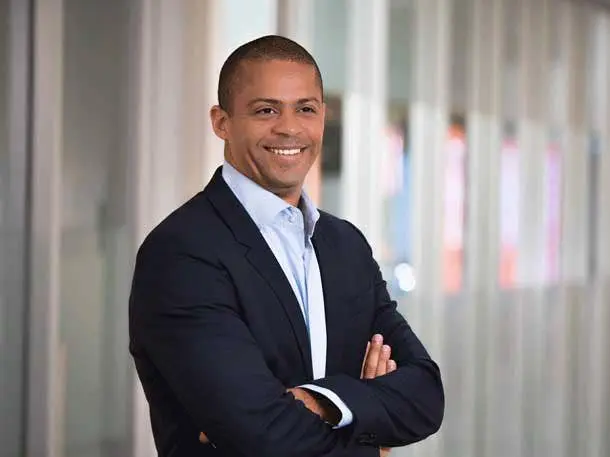
François Locoh-Donou
President and CEO
F5
AI applications require unmatched performance and security. With 96 percent of organizations already deploying AI models, AI is a clear growth opportunity for us and our partners. For 30 years, we have built deep expertise in moving large amounts of data quickly and securely — a foundation that’s critical for AI’s scale and resilience demands. Today, with our partners, we’re focused on supporting three critical AI use cases: AI data delivery, AI runtime security, and AI factory load balancing. Through organic innovation and strategic acquisitions like Calypso AI, F5’s partners have a broad range of AI solutions to help customers navigate the AI era.

Antonio Neri
President & Chief Executive Officer
HPE
My top priority for 2026 is: solving customer problems through bold innovation in networking, cloud, and AI. To execute against this priority, we will accelerate innovation across every layer of infrastructure, deliver secure AI-native networks, create smarter and more flexible cloud-native environments, and lead customers into the next generation with fast, scalable AI adoption. This approach will help HPE win market share, empower our channel partners to grow, and enable our customers to compete and win in their industries.

Kate Johnson
President and CEO
Lumen
AI will be the biggest accelerant to how we and our Connected Ecosystem partners create value together because it changes both what customers need and how fast they need it. Because AI pulls more demand through the stack, customers will need trusted, high-performance connectivity to move data between clouds, data centers, the edge, and AI workloads with far less tolerance for latency, risk, or downtime. It will also shift the partnership model from integration to outcomes. That means more repeatable, validated joint solutions we can co-sell and deploy quickly, including security, data protection, real-time analytics, AI-enabled operations. And inside Lumen, we’ll use AI to take friction out of network delivery, automating provisioning and support so customers see value faster. The bottom line is that you’ll see bigger deals, faster cycles, and stickier relationships because AI raises the bar, and partnerships are the way we can meet it.
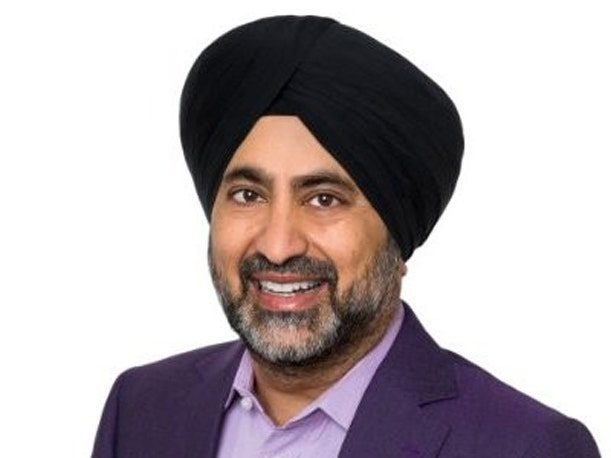
Kelly Ahuja
CEO
Versa Networks
The promise of AI for productivity and efficacy is driving adoption across every business, but with caution. As AI adoption accelerates, enterprises are facing a new reality: expanded attack surfaces, increased risk of data leakage, exploding data volumes, and faster attack cycles. They are also confronting more distributed traffic patterns and entirely new security and governance challenges related to AI usage. This creates an inflection point that requires a fundamental rethink of the underlying infrastructure architecture for the AI era. This environment favors platforms that bring networking and security together by design. With VersaONE, Versa’s Universal SASE platform, our partners are uniquely positioned to lead this transformation by helping customers simplify operations while strengthening security and performance for enterprises and service providers globally. A strong example is our partnership with Swisscom, where Versa’s platform combined with Swisscom’s local service expertise addresses regulatory and performance requirements in market — a model that is increasingly relevant worldwide. A core opportunity for Versa and our channel partners in 2026 is helping enterprises modernize their architectures while reducing operational complexity. Enterprises are turning to Versa solutions for connectivity-driven SASE, sovereign SASE to build and operate isolated infrastructure for regulated industries and critical infrastructure, and private SASE for companies wanting dedicated infrastructure without managing it themselves.