Cisco’s Jeetu Patel On The ‘Golden Age’ Of AI Opportunity For Channel Partners
‘Partners are an essential ingredient for us in being able to get the next phase fully harnessed so that we can get the most amount of benefit from AI,’ Cisco Chief Product Officer Jeetu Patel told CRN on the importance of the channel in the AI era.
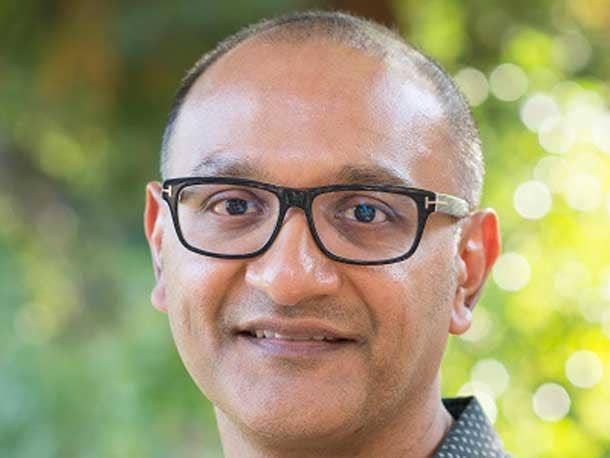
Cisco’s President and Chief Product Officer Jeetu Patel has been working diligently to unify Cisco’s wide portfolio of products and services into a next-generation tech platform fit to meet the moment of AI for customers.
An important piece of this puzzle is the company’s cadre of channel partners. Cisco’s massive partner community is more important than ever as the company works to arm enterprises with the infrastructure and solutions they’ll need to drive the AI era. It’s one of the reasons behind the “why now” of the fully revamped Cisco 360 partner program launching January 25. The tech giant wants to help partners capitalize on AI opportunities, particularly in data center builds and edge computing, according to Patel. Cisco, he said, is addressing a supply-constrained market by fostering its ecosystem of partners.
Patel sat down with CRN to talk about Cisco’s role as a critical infrastructure provider for AI and the importance of long-term strategic investments and collaboration with partners.
Here are excerpts from the conversation.
Cisco has said that enterprises are rethinking decisions made over last few years in infrastructure as it relates to AI. How can partners capitalize on this trend?
The buildouts that are happening for data centers right now are starting from hyperscalers, but they’re very soon going to go into enterprises, and they’re going to go into the edge of the enterprise. I think there’s a lot of opportunity for services and value-add and architectural services and making sure that you have use cases for AI. There are two to three vendors that are going to be there. Whenever there’s two or three vendors, there’s an opportunity for a partner to add value. I feel like if the partners have positioned themselves in the right way by getting their teams to really get skilled with AI, I think this is a golden age for them, but it requires that you lean in all the way. You can’t be tactical about this stuff. You have to be very strategic and say you’re just going to make sure—even if that means no short-term profitability for them—that they get the entire organization trained up, that they do that. I think [many partners] are doing that today.
Cisco channel chief Tim Coogan said that AI will be biggest part of partner business in the next three to five years. How big do you believe the AI opportunity is for Cisco and its partners?
Oh definitely, and I think it will be for [the next] decade. These aren’t one-year [opportunities] where we say: OK, the agentic era is next.’ This is not a one-year activity, it’s going to be multiple years, and I feel like that also gives you the long-term nature of this business, where you have to sustain for the long-term and not just be transactional. We’ve been at it now for [about] five years. Interestingly enough, in a lot of the areas, we’re early. We’re early in how security architecture is changing and we’re early on how edge AI is going to progress. I think part of the reason for that is we’re working with hyperscalers, and they tend to be early. Neo cloud providers too, and they tend to be early.
How is Cisco enabling partners in AI through Cisco 360?
Let’s take a step back. I think the thing that’s exciting right now is that we are purely supply-constrained in this market. There’s such a massive shortage of infrastructure that the reason that OpenAI is not 1.6 billion users right now—it’s 800 million users right now—is not because there’s no demand for 1.6 [billion], it’s because they just don’t have enough compute, networking [or] power to go out and serve up demand from an infrastructure standpoint for 1.6 billion users. This entire play is going to be an ecosystem play because it requires multiple players coming together to serve up the demand and to deliver supply. So, in my mind, I feel like wow, this is a gold mine for partners right now. What I think we have to do is just make sure that the partner programs and the incentives are completely aligned with what the customers need right now, which is rapid, speedy execution of the buildout of infrastructure in a trusted way. The beauty about this is our networking business, our security business and our Splunk business are completely aligned with the AI movement. When I explain this to someone, they don’t have to scratch their head saying: ‘Oh, you’re trying to fit something into something else.’ This is a very natural thing. Machine data is going to be very relevant to AI with agents proliferating, the trust cap is real with AI and if you don’t actually get these GPUs interconnected in the right way, you won’t have the capacity to serve up AI, and partners are going to be critical to every single one of these areas.
What do you want partners to know about Cisco in 2026?
I think it’s more true now than ever before that we are a partner-first company. I think this next phase of AI is not going to be [executed] nearly as effectively without partners. So, partners are an essential ingredient for us in being able to get the next phase fully harnessed so that we can get the most amount of benefit from AI. I think one of the smartest decisions we’ve ever made is becoming a partner-first company, where we wanted to make sure that everything we did we did with our partners, and they were No. 1 in our thinking as we were going through this. One of the commitments that we want to make to them is that the smartest decision they have made is choosing Cisco as a partner. I feel very good saying it now, because I feel like we’ve got so much momentum. We’ve got so much tempo. There’s a spring in the step of the employees, and internally, there’s innovation that’s happening. You can feel the energy, and that’s hard to fake.