Cisco CEO Chuck Robbins: ‘The Partners Who Can Represent The Entire Architecture’ Will Stand Out
“I think at a high level, everything that our customers are trying to do is not even viable without our partners helping them,” Cisco CEO Chuck Robbins tells CRN as he lays out the partner opportunity around AI, infrastructure refreshes, Cisco 360 and Splunk.
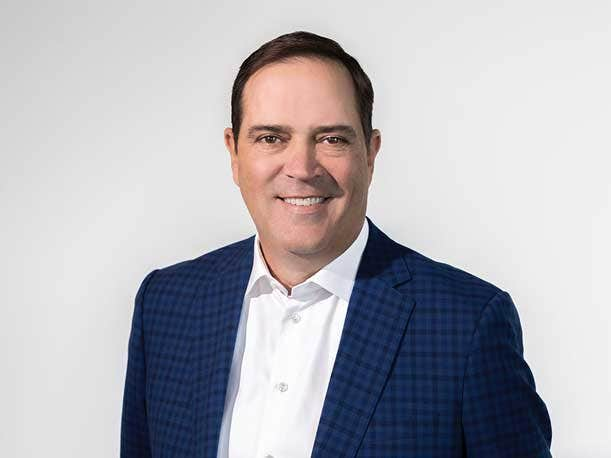
Cisco CEO Chuck Robbins said the tech giant’s focus on AI, services and resilient infrastructure represents a significant opportunity for partners to build more profitable, recurring revenue practices, while also capitalizing on a massive technology refresh cycle.
And the opportunities couldn't come at a better time, because these big transitions are making Cisco’s partner ecosystem more important than ever, according to Robbins.
In an exclusive interview with CRN at Cisco Partner Summit 2026, Robbins discussed how the recently revamped Cisco 360 program is rewarding partners for their capabilities and customer value, why Cisco IQ and Splunk could expand the services opportunity, and how partners can help customers modernize aging infrastructure despite budget, staffing and operational constraints. Robbins also detailed the competitive advantage he believes Cisco’s networking, security, silicon, optics and observability portfolio gives partners as customers ready themselves for an agentic AI future.
Here’s what Robbins had to say about partner profitability in an AI world, Splunk and the capabilities that will define the successful Cisco partner of the future.
Cisco is asking partners to evolve around AI, services and resilient infrastructure. What is the company doing to ensure that this evolution translates into greater profitability for partners, and not just more complexity and investment?
I think at a high level, everything that our customers are trying to do is not even viable without our partners helping them. Just the scale and the speed at which all this needs to happen, we have to leverage this partner ecosystem and our customers are going to need this partner ecosystem first and foremost. So, by definition, there’s a set of services that are going to be required for all of this stuff that will contribute to the profitability. Then you think about the tools like Cisco IQ and what Liz [Centoni, Cisco's chief customer experience officer] and her team is putting in their hands now will certainly contribute to their profitability. I think just by definition, the new technology that we have put out there, all the opportunities for refresh and new security architectures, those will help them with their profitability. And then, based on positive feedback that I receive from partners, clearly the 360 program seems to align with this next wave of value. I’m not an expert on the program by any stretch, but when some of the biggest partners we have tell us that they were worried early on, and two of those people who actually said that were at the first Partner Summit in 1996, so they have a high degree of autonomy to say what they feel, and they believe that the program is working really well for them. And that’s a statement on how good Tim Coogan is and how beloved he is. I think there’s a lot of trust there.
As Cisco developed Cisco 360, how did you think about evolving the partner program to reflect where the market is going while still protecting partner profitability?
What I would tell you is that since I’ve been CEO, every time we’ve gone through any sort of transition relative to software licensing, recurring revenue, AI, the conversation has always been: I don’t know how we’re going to do this, but we have to do it with our partners.
We built the [original partner] program back around 2000-ish. The one that was in place before, it was tweaked along the way, but it was generally what we put in place then. That was when we really began to build our programs with a deep focus on profitability aligned with the value that was being delivered to the customer. Before that, it was just volume-based, in the day, that was a simple approach. I think evolving that to recognize the ecosystem holistically, to recognize the fact that multiple partners are going to be working together in these customer accounts, and how do you make sure that happens effectively? We launched deal registration [about] 20 years ago, and launching this ecosystem influence-type registration program—which we piloted a long time ago, but actually getting it out, I think, is a big deal. But it’s just an evolution of what we had in place already, with a real recognition on capability, and I think that’s how partners should be rewarded.
What percentage of a partner’s Cisco-related profit should come from recurring services as opposed to traditional product resales?
I don’t know the answer to that. But I think that right now the issues that our customers are facing are so critical. I think there’s probably a good opportunity to position an ongoing [service]. Like in healthcare, you want to be in that preventative mode and not reacting to issues. If you’re able to go in and solve customers’ problems, then there’s probably a great opportunity at that point to say: “Hey, why don’t we put a process or agreement in place that's kind of an evergreen thing in this world of AI and threats?” The challenge that partners are going to have is how do you scope it given how things change every three to six months. I think it’s certainly something that all the partners would like because it drives a lot more predictability on the revenue and profitability front.
We have both as a company. We were roughly 50-something percent recurring before the big hardware explosion in the last couple of years, so we’re probably somewhat below that now, but we do both, and the fact that we maintain both businesses I think is a big contributor to why we’re being successful today, so I think that’s what partners are going to do as well. They’re going to have an aspect of their business that is going to be the traditional refresh, integration, deployment, and then there’s redefining security architectures. It’ll be a combination of all those, and I think that’s a healthy way to think about their business, because you certainly don’t want to miss out on the refresh and all the equipment that needs to be replaced right now.
Speaking of that massive infrastructure refresh opportunity happening right now, what’s driving it and how can partners help customers navigate it?
It’s certainly creating a sense of urgency, and I think that customers today are struggling with a number of urgent demands that they’re facing, both from a time perspective, the ability to have operational downtime to actually make some of these changes, and budgetary [considerations]. Budgets are growing, but there’s so many things that they’re being asked to do. It’s just hard to fund all of it at the same time, and you don’t have the people to actually execute it, or the mental cycles to deal with it all, or the ability to take the infrastructure out of commission for the amount of time. I mean, when you think about all the patches, all the equipment. This is the quandary that the IT organizations are facing right now, and we and our partners need to really help them think through it. How do we help them build something that gives them security while it buys them time? That’s what we’re trying to accomplish. And I think the partners painting that vision and helping them get there in a multi-phase plan is a big opportunity.
Leading with resilient infrastructure rather than individual technologies, why do you think that’s the right motion for this kind of AI era?
Because the way that you’re going to actually unleash the power of this is through an integrated architecture. The way you’re going to defend against it is using machines with an integrated security architecture. So, you may have to go through deploying it in phases, but you have to have an agreement on the in-state vision beforehand. Certainly, customers will make a decision: “I’m going to do a wireless upgrade throughout my infrastructure” because they need to do a wireless upgrade, but I think if you’re solving for some of these bigger issues, like agentic readiness or cybersecurity readiness for agentic in a post-Mythos world and all those things, I think you have to have an end architecture in mind when you begin to build.
Where do you think Cisco has the most meaningful advantage over competitors that partners can monetize?
I think the complete stack. There’s several areas that I would call out. I think having our own silicon, our own optics, and being able to control the architecture of the platforms, and perhaps today most importantly, the efficiency of our supply chain by owning that ourselves is a big differentiator for us. I think having the network and security is a very unique differentiator for us. I’ve said on many occasions, none of my networking competitors have a robust security portfolio, and none of my security competitors have a robust networking portfolio. So, if you really believe that the only way to deal with these issues long term is for the network and your security architecture to be fused together, then that’s a big competitive differentiator.
Then I would say, the acquisition of Splunk was for a variation of the vision that we see today, but I think this agentic observability, automation, and agentic SOC capability that’s going to be required to actually deal with the security threats that are happening, and the observability of the agents operating in your infrastructure, that’s another competitive differentiator for us. Those are very hard to replicate. That’s the third acquisition that we did for a certain set of reasons that turned out to be super powerful for a different set of reasons, which is great. We’ll take luck along the way too.
What has surprised you the most about the opportunity that Splunk has created for Cisco partners?
I think the thing that’s not surprised me so much, but the applicability of the Splunk platform to this agentic AI era. We had no way of really understanding that completely when we made [the acquisition], I’d love to tell you I saw it coming, but I’m just going to tell you, we bought it for reasons that were very similar to it. What we really believed was that we had the ability to expose insights from the technology infrastructure and our customers in ways that no one else could. When you talk about security on the endpoint, email security, network security, network traffic analysis, collaboration activity. All that stuff can get loaded up into a platform, including logs and traces and all the other things, and if you could correlate that effectively — that’s why we wanted to buy them—then you can give the customer greater insights than anybody else. Now all of a sudden, that moved from being a nice-to-have to being a must-have and I think that’s the big positive surprise, is that it’s become such a must-have.
As AI changes the market, what does the ideal Cisco partner look like in 2030?
I’m not sure that there’s a substantive difference between partners who are successful today and partners who are going to be successful then, other than capability just continuing to evolve. I think the things that’ll be different are rapid learning, business model agility [and] embracing these new technologies fast. I think they have to have everything they have today, but then they've got to be rapid learners, be very agile on how they evolve their business model and build capabilities, and just you have to stay on top of the changes that are occurring in AI. I think that’s what’s going to determine success. And probably have solid capabilities across the whole stack. It’s going to be, not impossible, but I think the partners who can represent the entire architecture, because that’s how customers are going to be thinking, I think that will be a differentiator as well.
What has surprised you the most about being a CEO during this AI moment?
I think the thing that has surprised me very positively [and] I’ll give you two answers. One, there’s an internal answer, which is the speed at which our team has embraced it and has evolved our portfolio, and to put us in a position to really win during this era. It’s not a surprise, but it’s something I’m super proud of. I think equally, from a pride perspective, my peers in the U.S. and around the world, I think the ability of senior executives to live in a world that is so dynamic and so unpredictable, and still be able to run businesses, make decisions, make changes, be successful, and stay calm. I think it’s a real testament to leadership. I think in the U.S. in particular — there’s examples all around the world but I spend more of my time with U.S. CEOs — the ability of the CEO community in the U.S. to actually manage through this is pretty astounding.