Cisco Wants To Be The ‘Switzerland’ Of Enterprise AI
Cisco is betting that an open, vendor-agnostic approach to AI models and agents can differentiate it from rivals while giving partners more ways to win.
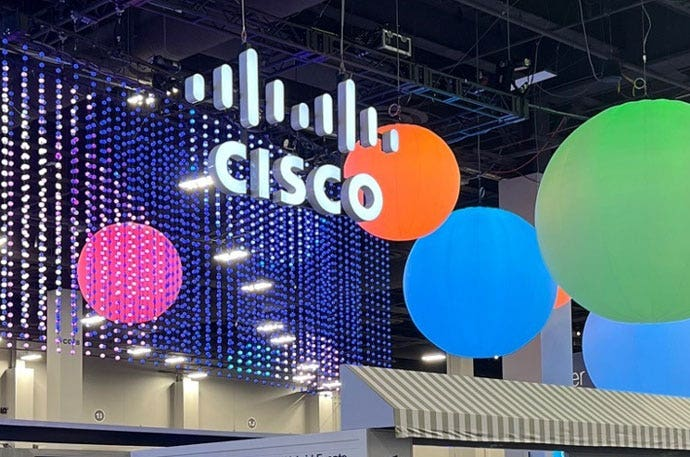
While some vendors are increasingly pushing proprietary AI ecosystems, Cisco wants to position itself as the neutral orchestration layer that connects competing AI models and agents.
If Cisco succeeds in its strategy, essentially networking for AI agents, partners won’t have to choose one AI winner, the company believes.
Cisco executives during WebexOne 2026 earlier this month repeatedly emphasized the tech giant’s support for third-party models, bring-your-own-LLM flexibility and agent interoperability and openness. The company is pitching itself as the agnostic layer where enterprises can work with AI regardless of whether the underlying model comes from companies including Google, Anthropic or OpenAI.
That strategy extends to Cisco’s emerging agentic AI vision, according to Snorre Kjesbu, senior vice president and general manager of Cisco Collaboration.
“Cisco is going to be Switzerland when it comes to working with a lot of players,” he said.
Cisco is already there in the collaboration space, pointing to the company’s interoperability with competing vendors. “We’re thinking the same way also on the agent side, but we need to push innovation as well at the same time,” Kjesbu said.
[Related: 8 New Cisco Workplace And AI Innovations Unveiled At WebexOne 2026]
Cisco is backing that strategy with support for third-party AI models and agents inside its Webex platform, including bring-your-own-LLM capabilities, agent-to-agent interoperability and integrations with external AI providers rather than locking customers into a Cisco-only stack.
Cisco’s integration with Claude, OpenAI-related tools, and other assistants is a shift in strategy for the tech giant, according to Joe Berger, vice president of digital experiences for longtime Cisco top partner World Wide Technology, Maryland Heights, Mo.
“They’re not going to win everything, but they can work with most of the vendors to supply components of it. I think it’s the right approach because I don’t think there’s a winner right now that’s been clearly defined,” he said.
Cisco’s willingness to work across competing platforms is a departure from its longtime approach to the market that’s been evident until recently, Berger said.
“If you look back five years ago, that was a hard pill for them to swallow, being agnostic, and now I think they’re winning more collab deals because they are working with Microsoft and Zoom and now Google. I think that’s the approach they have to take with the broader Cisco portfolio,” he said.
Cisco has realized it has to meet the customers where they are, and the customer might be with a competitor, Berger added.
“If they have that customer-first mindset, ideally, it still brings business to Cisco, whether it’s in a day or in two years. I think it sets them up to be well positioned," he said.
Cisco said it doesn’t want to own the underlying AI model and instead believes its opportunity lies in providing the networking, security, observability and management layers that sit on top of multiple AI platforms. It’s an approach that could be a win for partners, which won’t have to bet their business on one AI model and will be able to build services around multiple models, the company believes.
In fact, Cisco could carve out a unique role for itself as a neutral AI platform because the tech giant isn’t competing with the model vendors, said Lane Irvine, director of strategic alliances for Calgary, Alberta-based Long View Systems, a longtime Cisco partner.
“They want to be the overseer of AI,” Irvine said.
Customers right now are mixing and matching AI models, and because they aren’t standardizing on one, the opportunity exists for an agnostic AI player. It’s similar to the approach that Cisco is taking with its Cloud Control agentic AI platform that became generally available earlier this year, he said.
“They’re going down the path of allowing [Cisco Cloud Control] to control third-party devices. ... They’ll have competitive [vendors] in there and want to be the platform for all of it,” Irvine said.