10 Top Cybersecurity CEOs On AI’s Impact In 2026
From agentic-powered security to emerging AI opportunities for partners, here’s what the CEOs from 10 leading cybersecurity vendors are expecting this year.

AI And Security In 2026
In 2026, CEOs at major cybersecurity vendors are continuing to accelerate their deployment of AI across their product portfolios, with a strong focus on bringing agentic-powered security to the fore. At the same time, the continued spread of AI-driven social engineering—and first signs of attacks that are almost entirely autonomous—are underscoring why cyber defense needs to move even faster to stay ahead of the threats, according to top cybersecurity CEOs.
[Related: The 10 Hottest AI Security Tools Of 2025]
As part of CRN’s CEO Outlook 2026 report, CEOs from 10 top cybersecurity companies—including both established giants and fast-growing startups—provided their perspective on AI’s impact on the market and AI channel opportunities 2026.
Many warned that the AI-powered intensification of attacks is just getting started. And yet the increased volume of attacks is already overwhelming stretched security teams, the CEOs noted.
At the same time, the rise of autonomous agents that can handle entry-level security tasks creates a massive opportunity for organizations to automate more of their security—which many customers will be looking to solution and service provider partners to enable.
All in all, “a major challenge for partners in 2026 will be achieving strong go-to-market alignment with vendors equipped to counter the surge in AI-driven email and cyberattacks,” said Evan Reiser, co-founder and CEO at Abnormal AI, in written comments provided as part of CRN’s CEO Outlook 2026 report. “As these risks intensify, the demand for effective defenses will only accelerate.”
SentinelOne Co-founder and CEO Tomer Weingarten, meanwhile, put it this way: “In 2026, AI will be the ultimate force multiplier for our partner ecosystem.”
Among the other CEO respondents from top cybersecurity vendors were Zscaler CEO Jay Chaudhry, Fortinet CEO Ken Xie, Cloudflare CEO Matthew Prince and Darktrace CEO Jill Popelka. CRN posed the question: What impact do you expect AI to have on the business you and your partners do together in 2026?
What follows are the written answers provided by 10 top cybersecurity CEOs.

Evan Reiser
Co-Founder and CEO
Abnormal AI
AI will intensify both threats and defenses in 2026. We can expect cybercriminals to keep upleveling their use of AI as they automate reconnaissance, profile victims, and craft communications with impeccable grammar and spelling, eliminating the traditional red flags employees are trained to spot. Beyond email, we can also anticipate an uptick in a variety of other AI-enabled attacks, like deepfakes. These evolving threats will outpace the detection capabilities of many traditional security tools, demanding that organizations adopt more advanced solutions. The good news is, defenders are leveraging AI’s potential as well. The adoption of AI within security operations centers is picking up pace, enabling faster, more accurate threat detection and empowering teams to offload manual tasks like phishing email triage and false-positive management. This shift is allowing security professionals to focus on higher-impact activities that can truly make a difference for their organizations. A major challenge for partners in 2026 will be achieving strong go-to-market alignment with vendors equipped to counter the surge in AI-driven email and cyberattacks. As these risks intensify, the demand for effective defenses will only accelerate. Our partner base grew by 40 percent this past year, and since launching our focus partner strategy, we’ve made the largest MDF investments in those partners to drive growth and expand market reach, providing dedicated account teams and joint business plans. We’re building on this momentum in 2026 with our new enablement framework and even greater MDF investment to ensure our partners are equipped to meet this growing demand.

Matthew Prince
Co-Founder and CEO
Cloudflare
When you look at organizations of all types, the adoption of AI is growing faster than they can manage operationally. Now think about the security needed on top of this. Partners have a unique opportunity to not only guide but also secure customers by using the Cloudflare for AI suite. Beyond our infrastructure for AI inference and tools for developers -- the Cloudflare for AI suite empowers businesses of all types to seamlessly integrate AI capabilities, discover how they are contributing to AI, and puts protections in place to mitigate the rising and evolving threats that come with AI. We’re putting these capabilities in the hands of our partners to equip businesses across the globe. The adoption of AI is forcing customers to rethink how data is used and moved, how identities are protected, and how applications connect across cloud environments. Every organization will be examining AI across their organization, and they will have the choice between working with the truly modern innovators to the legacy providers that may fall behind. AI will undoubtedly evolve in 2026 and Cloudflare will remain nimble with our partners knowing that’s the only way to help our customers modernize their AI environments at-scale.

David Primor
Founder and CEO
Cynomi
AI will fundamentally redefine how MSPs and MSSPs deliver cybersecurity and compliance services. Instead of spending countless hours on assessments, reporting, or compliance documentation, service providers will focus on strategic conversations and client value. AI already reduces manual effort by 50 percent or more, and makes advanced security expertise accessible to every service team, even those without senior cybersecurity staff. In 2026, I expect AI to accelerate service delivery, open new markets for partners, and elevate the role of the MSP/MSSP from tactical provider to strategic advisor.

Jill Popelka
CEO
Darktrace
AI has fundamentally changed cybersecurity for defenders and attackers. Security teams are overwhelmed, talent remains scarce, and the volume and speed of threats continues to rise. At the same time, attackers are using generative AI to make social engineering more convincing, more personalized, and harder to spot through traditional approaches. In 2026, AI will be essential to helping customers keep up by automating investigation, prioritization, and response at machine speed. For partners, this creates a shift in where value is delivered. Customers will increasingly look for outcomes rather than tools: fewer disruptions, faster containment, and clearer understanding of what happened. AI also brings new expectations around trust and governance. As AI becomes embedded into business processes and begins to act with greater autonomy, security is no longer just a technical concern -- it becomes a business and board-level issue. Customers will want help putting the right guardrails in place as AI becomes embedded into business processes and cloud platforms, and as early forms of agent-based automation become more common. Partners who can help customers scale AI with confidence -- not hesitation -- by combining security, visibility, and governance will be in the strongest position.

Ken Xie
Co-Founder, Chairman and CEO
Fortinet
AI has been a core component of the Fortinet Security Fabric, security services, and threat intelligence for more than a decade -- powering real-time protection and strengthening security operations against increasingly sophisticated threats. FortiAI, our generative AI (GenAI) assistant, is now embedded across multiple flagship products, including FortiAnalyzer, FortiManager, and FortiSIEM, bringing context-aware GenAI directly into SecOps and NetOps workflows to automate threat analysis, response, and operational tasks. In parallel, Fortinet is extending AI-driven security into the data center with our Secure AI Data Center solution. Built to protect modern AI factories, this architecture integrates security directly into accelerated compute environments through close collaboration with Nvidia, embedding segmentation, policy enforcement, and threat protection into the AI infrastructure itself. Additional work with Arista Networks and MPS further strengthens this solution by delivering high-performance networking and semiconductor-driven infrastructure designed for the scale and performance demands of AI workloads. In 2026, we will continue expanding FortiAI across more solutions and advancing secure AI infrastructure, enhancing automation, performance, and resilience while enabling our partners to deliver differentiated value and helping customers securely operationalize AI at scale.
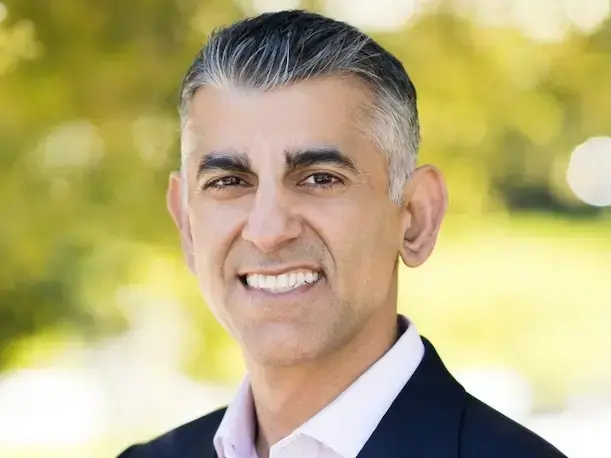
Sumit Dhawan
CEO
Proofpoint
AI represents both a new risk domain for customers and a significant growth opportunity for our partners. Proofpoint helps customers defend against AI-driven threats, adopt GenAI and AI agents securely with strong data protection, and use Proofpoint Satori AI Agents to automate low-value work and improve response times. These capabilities align directly with customers’ top priority -- adopting AI to drive operational efficiency and innovation without introducing new risk. For partners, this creates clear opportunity. They can protect customers more effectively, deepen strategic relationships, and drive new revenue as trusted advisors in secure AI adoption.

Joe Levy
CEO
Sophos
AI is a dual-use technology, meaning it will accelerate both attackers and defenders. On offense, the biggest change won’t be new techniques, but speed and volume, which makes getting the basics right more important than ever. For partners, the real impact of AI is automating what doesn’t differentiate, so they can focus on what does. For MSPs and MSSPs, AI companions and agents reduce alert fatigue, speed investigations, surface the right context at the right time, and automate routine response through integrated workflows. That allows human analysts to focus on judgment, customer context, and outcomes. Human+AI teaming is the winning model. For our resellers, AI improves ease of doing business. Faster quoting, cleaner handoffs, and better deal support reduces friction so sellers can spend more time with customers. And for distributors, AI accelerates deal flow and support by making pricing, availability, and program details easier to access and act on across thousands of partner transactions. Bottom line, AI makes security operations more scalable for service-led partners and makes selling and transacting simpler for commercial partners. That’s how it helps the channel grow services while delivering better customer outcomes.

Tomer Weingarten
Co-Founder and CEO
SentinelOne
In 2026, AI will be the ultimate force multiplier for our partner ecosystem. While AI-driven threats are increasing complexity, we are equipping our partners with autonomous, AI-powered defense to stay ahead of the curve. This allows our partners to scale their services without linearly increasing headcount, delivering faster, more effective security outcomes to customers while improving their own operational efficiency.
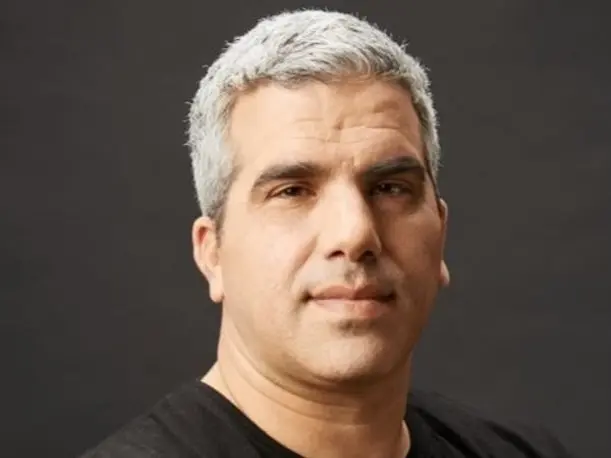
Ofer Smadari
Co-Founder and CEO
Torq
It will redefine partner value, from implementation to strategy. AI is no longer an add-on. It is the core architecture of the modern SOC. In 2026, Agentic AI will fundamentally change the channel model. Because autonomous agents now handle the Tier 1 and Tier 2 operational load, partners no longer need to focus on low-level integrations or alert management. Instead, they can offer high-margin, strategic services -- helping customers govern AI, design autonomous defense architectures, and focus on threat hunting. This shift empowers partners to become true strategic architects rather than just tool implementers.

Jay Chaudhry
Founder, Chairman and CEO
Zscaler
AI accelerates the speed, scale, and frequency of attacks, as well as the potential damage. We must counter by using AI to fight AI: to detect and respond faster, to automate data protection, and most importantly, to compress the time it takes to deploy solutions and deliver value for our customers. This is a gigawave of disruption, akin to the industrial revolution. Incumbents that don’t adapt will be overtaken by startups that harness AI better. For Zscaler and our partners, that means leaning into AI-driven security, rapid deployment playbooks, and managed services that help customers adopt AI safely and realize value quickly.