20 Coolest AI And Security Products At RSAC 2026
At RSAC 2026 this week, top industry vendors and startups are showcasing an array of new tools for securing AI and agents.

Cool New Products At RSAC
While AI remains the dominant theme at RSAC 2026 as it has been for the last few conferences, the aperture has widened this year as organizations of all sizes grapple with a pressing challenge: how to secure AI agents. The fast-rising adoption of agents for productivity poses massive, unprecedented security risks to organizations due to their potential to access sensitive data and operate autonomously. The large proportion of unsanctioned “shadow” agents is among the biggest threat with the new technology—and cybersecurity industry vendors have made that a central focus of their product announcements at RSAC 2026.
[Related: 10 Hot New Cybersecurity Tools Announced At RSAC 2026]
Underscoring the focus on enabling secure adoption of agents, RSAC 2026 kicked off in San Francisco Monday with an array of new AI and security products launched by top players including Palo Alto Networks, CrowdStrike, Cisco Systems and Google-owned Wiz.
Then on Tuesday, vendors debuting cool new tools for securing AI and agents included Cyera, HPE and Tenable. Meanwhile, numerous companies—including publicly traded players such as Netskope and venture-backed startups such as Torq and Chainguard—unveiled major new AI and security products just ahead of RSAC 2026.
CRN is on hand at RSAC 2026 and following the product announcements as they come out, and we’ve collected the details on 20 cybersecurity products at the conference that have been on our radar this week.
What follows are 20 of the coolest new AI and security products being showcased at RSAC 2026.
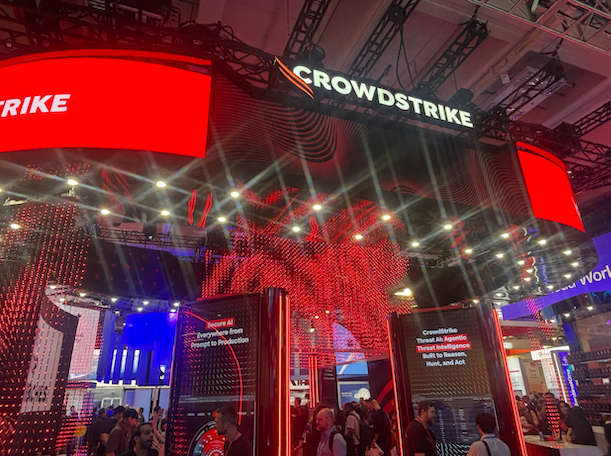
CrowdStrike Falcon Data Security
During the second day of RSAC 2026, CrowdStrike debuted an array of new products and capabilities including the launch of the new Falcon Data Security offering. Falcon Data Security provides a “unified architecture spanning identity, endpoint, SaaS, cloud and AI,” the company said in a news release. Key capabilities include AI-driven classification for sensitive data as it’s in motion, protection of sensitive GenAI data, runtime visibility into cloud data and automated enforcement. Meanwhile, CrowdStrike also debuted the next generation of its MDR (managed detection and response) offering with the launch of Agentic MDR, which utilizes AI agents to “automate high-friction security workflows and stop breaches at machine speed,” the cybersecurity giant said in a news release. In addition, CrowdStrike updated its Falcon Cloud Security offering with the introduction of industry-first capabilities for “adversary-informed” cloud risk prioritization, the company said.
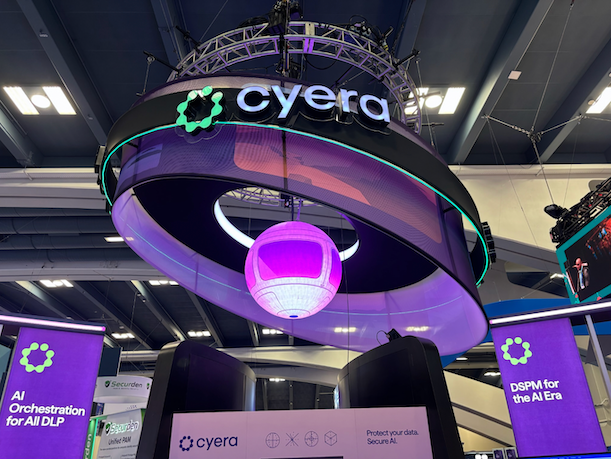
Cyera: Browser Shield For AI
Cyera announced Tuesday at RSAC that it’s launching a set of new capabilities for protecting AI adoption, including its new Browser Shield tool. The offering delivers real-time visibility and discovery for AI used within browsers—whether those tools are managed or unmanaged, Cyera said. Browser Shield also provides visibility into identities and connected accounts and ultimately provides “prompt-level alerting and blocking” that can prevent leakage of sensitive data and unethical AI usage, the company said in a news release. Meanwhile, Cyera also introduced a new data lineage product for automatic mapping of agent activities—including how the agents move and impact sensitive files—providing security teams with greater visibility into agent behavior. In addition, the company launched Cyera MCP, which can enable the creation of data security agents through connecting AI tools to data security insight from Cyera, the company said.
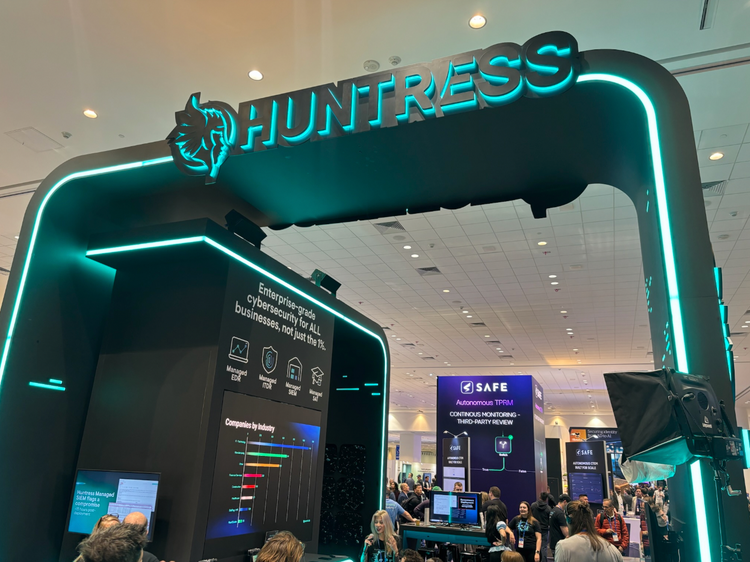
Huntress: Managed ITDR Expansion
Huntress announced Tuesday at RSAC that it has expanded its Managed ITDR (Identity Threat Detection and Response) offering to include support for Google Workspace in addition to Microsoft 365. MSPs can now provide customers with a single managed ITDR service regardless of which productivity platform customers use, Huntress said. Key capabilities include detection and protection related to identity abuse, with functionality for monitoring unexpected login activity, detecting persistent malicious inbox rules and tracking malicious utilization of data centers, the company said.
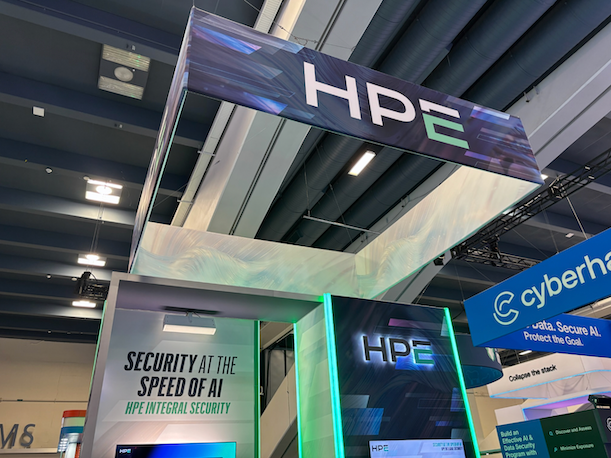
HPE Juniper Networking SRX400 Series Firewalls
At RSAC on Tuesday, HPE unveiled a new firewall series that combines strong performance and manageability with a compact size for smaller locations. The HPE Juniper Networking SRX400 series extends “carrier-grade” network security efficacy into environments that are space-constrained, featuring “hardware-rooted protections” against tampering, the tech giant said in a news release. Meanwhile, HPE also announced hybrid mesh updates on Tuesday that will deliver greater protection related to AI usage, including capabilities for enhanced visibility and access management around AI systems. Other new hybrid mesh capabilities include prompt-level inspection and centralized protection-based identity, HPE said.

Torq Agentic Builder
Just ahead of RSAC 2026, Torq unveiled its new Agentic Builder offering that aims to boost the ability of security operations teams to “dramatically elevate engineer and architect productivity” with “Cursor-level capabilities,” the company said in a news release. The tool allows security teams to describe the security outcome they are looking for in natural language, prompting Agentic Builder to plan the assignment and select all tools and integrations necessary, Torq said. Agentic Builder then generates custom Torq AI Agents for managing alerts 24x7 and other crucial security operations tasks, the company said.
SentinelOne: Prompt Security On-Premise
At RSAC 2026, SentinelOne unveiled a new offering that protects AI usage within on-premises environments, including sovereign and air-gapped data centers. The Prompt Security On-Premise offering provides self-hosted AI security, with discovery for unsanctioned "shadow AI" usage and real-time redaction of sensitive data “across thousands of applications,” SentinelOne said in a news release. The offering serves as a “specialized firewall for both internal and external AI tools,” blocking risks such as data leaks and threats such as prompt injections without a need for external connection, the company said. Meanwhile, SentinelOne also debuted additional capabilities for protecting agents and agentic workflows (Prompt AI Agent Security) along with its new Prompt AI Red Teaming offering and general availability for agentic investigations with Purple AI Auto Investigation.
Palo Alto Networks: Prisma AIRS 3.0
Palo Alto Networks unveiled the next generation of its AI security platform with the debut of Prisma AIRS 3.0, which includes a number of new capabilities for discovery and assessment of AI agent activities. Discovery capabilities include instant inventorying of AI agents and models, as well as their connections across environments. Prisma AIRS 3.0 also provides the means to map an AI agent’s complete architecture while also scanning for vulnerabilities within the agent, Palo Alto Networks said. Meanwhile, the new version of the platform also introduces the AI Agent Gateway, which offers a “central control plane to enforce agent runtime and identity security, governance and observability,” Palo Alto Networks said in a news release. The AI Agent Gateway is now in limited preview, the company said.
Okta: Secure Agentic Enterprise Framework
Okta disclosed what it’s calling the “new blueprint for the secure agentic enterprise” ahead of RSAC 2026, with the unveiling of a new framework for addressing the most critical questions amid the adoption of agentic AI. The framework, according to Okta, addresses the questions of “where are my agents, what can they connect to and what can they do?” The implementation of the framework is enabled in part by the Okta for AI Agents offering, which will be available in April. Okta for AI Agents is the “the first and best implementation of the blueprint to answer the three critical questions to become a secure agentic enterprise,” the company said in a news release. Capabilities include the discovery and registration of known and unknown AI agents in Okta’s Universal Directory—including unsanctioned “shadow” agents—as well as centralized control over what can be accessed by agents, Okta said. The offering also provides governance and monitoring of agent activity as well as the ability to instantly revoke agent access through a universal “kill switch,” Okta said.
Tenable Hexa AI
On Tuesday at RSAC, Tenable debuted its new agentic AI engine for its Tenable One Exposure Management Platform, with capabilities for enhanced automation of security workflows. The new technology, Tenable Hexa AI, “transforms exposure intelligence into coordinated action to reduce cyber risk,” the vendor said in a news release. Key capabilities include agentic orchestration and workflow automation throughout the attack surface, as well as both custom AI agents and agents that are available out of the box, Tenable said.
Wiz AI Application Protection Platform
On Monday, Wiz announced the launch of its new AI Application Protection Platform, which is aimed at providing “end-to-end” security for AI applications, the Google-owned company said in a blog post. The platform provides the necessary context to developer and security teams to enable an understanding of the real cyber risks, empowering these teams to take improved security actions, Wiz said. The AI Application Protection Platform (AI-APP) ties together visibility and risk analysis with runtime protection, ultimately delivering “a single, graph-powered platform — allowing teams to understand and secure AI systems as they actually operate,” the company said. The AI-APP is the “natural evolution” of the cloud-native application protection platform (CNAPP), Wiz said in the post.
Proofpoint: DSPM, AI Security Expansion
Proofpoint disclosed at RSAC that it’s extending its capabilities for DSPM (data security posture management) to on-premises environments as a way to protect the entire enterprise IT deployment. The company is now able to deliver “intelligent data discovery and classification across the full enterprise environment,” Proofpoint said in a news release. Other major updates announced at RSAC included the launch of AI data access governance capabilities for providing unified visibility into which AI systems can access sensitive data. The company also announced that it’s combining its Secure Email Gateway and API-based email security into a “single, integrated architecture,” Proofpoint said in the release.

Arctic Wolf: Aurora Agentic SOC
At RSAC 2026, Arctic Wolf announced the launch of what it’s calling the “world’s largest agentic SOC” (Security Operations Center). The debut of the Aurora Agentic SOC will deliver improved AI-driven security outcomes along with substantial reductions in cost and complexity, the company said. The system will leverage the new Aurora Superintelligence Platform, also announced Monday, which uses what Arctic Wolf describes as a “transformative” agentic framework that is “AI-led” but also retains human involvement where necessary. The platform utilizes “hundreds of agents” capable of handling key security tasks along with a proprietary Security Operations Graph for ingesting telemetry and AI Trust Engine guardrails, Arctic Wolf said. Ultimately, the Aurora Agentic SOC enables autonomous agents to perform core SOC workflows while human experts are kept in the loop for oversight and validation as well as more advanced decision-making, according to the vendor.
Orca Security: Threat Investigation, Triage Agents
Just ahead of RSAC 2026, Orca Security announced a pair of AI agents aimed at boosting “AI-first cloud defense,” the company said in a news release. The new Threat Investigation Agent provides automatic analysis for risk while correlating data signals across cloud environments, ultimately providing “transparent” reports and recommended steps for containment, Orca said. Meanwhile, the new AppSec Triage Agent provides analysis of findings from SAST (static application security testing) in order to spot false positives and reduce alert fatigue, the company said. In addition, Orca announced that it’s now able to identify all interactions between workloads, identities and other processes with AI systems.
Cisco: Zero Trust For AI Agents
Cisco Systems is aiming to provide a massive boost to the adoption of AI agents in the workforce with a new set of security capabilities announced Monday, including new zero trust functionality for agentic that represents a “big step forward” for the industry, Cisco executive Tom Gillis told CRN. When it comes to securing AI agents, “we believe that has to evolve from access control to action control,” said Gillis, senior vice president and general manager for Cisco’s infrastructure and security group. “It needs to be more fine-grained, and it needs to be more intelligent—where it can allow selective access for certain tasks, but not general and broad [access].” In response, Cisco is introducing Zero Trust Access for AI agents, providing task-based permissions for agentic activities. The offering enables organizations to move from providing long-lived credentials, such as those often granted to humans, to providing tightly controlled permissions linked to specific workflows for agents, according to Cisco. The tool also provides monitoring for evaluating whether agent actions are appropriate, effectively supervising the activities of agents, Gillis said.
Rubrik: Semantic AI Governance Engine
Rubrik announced Monday that it’s launching what it calls the “first AI governance engine” in the data security industry that can provide real-time security and control for autonomous agents. The vendor said that the Semantic AI Governance Engine includes key capabilities such as semantic policy interpretation for translating natural language instructions into machine logic as well as a proprietary SLM (small language model) that offers both lower latency and improved accuracy compared with most LLMs. The Semantic AI Governance Engine will be the technology driver behind the Rubrik Agent Cloud, ultimately “replacing static, manual oversight with intent-driven governance,” the company said in a news release.
1Password Unified Access
Just ahead of RSAC 2026, 1Password announced the debut of its new unified access platform that aims to provide improved discovery, security and audit access for all identities. The new 1Password Unified Access offering covers human, machine and AI agent identities, providing a “clear operating model” for access security in the AI area, the vendor said in a a news release. Discovery capabilities for AI tools and agent activity, as well as security capabilities for exposed secrets, are both available now, 1Password said. Audit capabilities that provide “end-to-end” visibility across credential access are “coming soon,” the vendor said.
Netskope One AI Security
In advance of RSAC, Netskope debuted a suite of new AI security products within its Netskope One platform. The new Netskope One AI Security portfolio includes capabilities such as the Netskope One Agentic Broker, which offers “visibility and control over all MCP transactions whether sanctioned or unsanctioned,” the vendor said in a news release. Other new products include prevention for AI-specific threats (Netskope One AI Guardrails), inspection and enforcement of security policies related to private AI applications and LLMs (Netskope One AI Gateway) and simulation for adversarial attacks (Netskope One AI Red Teaming), the company said.
Chainguard Repository
Just ahead of RSAC 2026, Chainguard debuted an array of new advancements for its portfolio including the Chainguard Repository. The offering provides a streamlined method to pull open- source containers, dependencies, OS packages and other components that are secure by default, Chainguard said. Other newly launched offerings include hardened AI agent skills (Chainguard Agent Skills), workflows for CI/CD pipelines that are secure by default (Chainguard Actions), and access to base images with no known CVEs (Chainguard OS Packages). The company also introduced an AI agent, Guardener, which delivers “continuous maintenance of Chainguard's trusted open-source artifacts across software development and deployment workflows,” the company said in a news release.
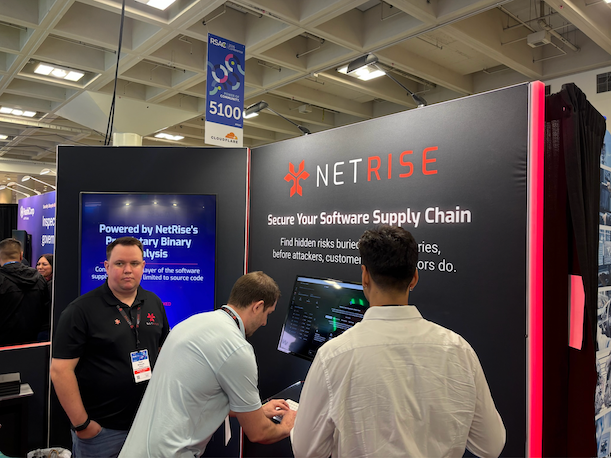
NetRise Provenance
Software supply chain security vendor NetRise announced Tuesday at RSAC that it has launched a new offering for enhanced identification of risk linked to open-source project contributors. NetRise Provenance can identify the risk related to contributions to open-source components used by enterprise software as well as connected devices, while also determining “how far the risk associated with bad actors reaches across portfolios,” the company said in a news release. Ultimately, NetRise Provenance provides a major boost to visibility in software supply chains, the company said.
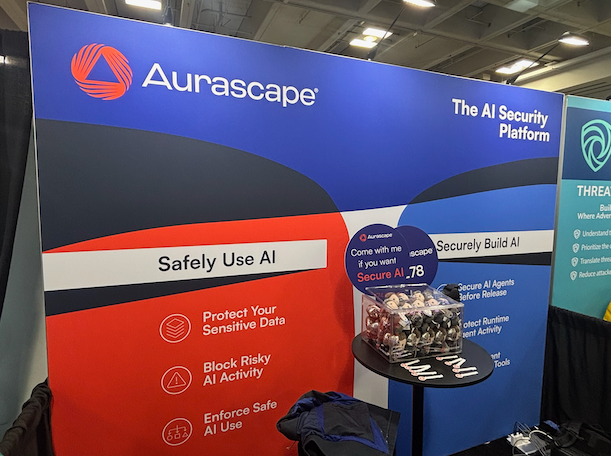
Aurascape Zero-Bypass MCP Gateway
AI security startup Aurascape announced just ahead of RSAC that it’s launching a new tool for addressing massive security gaps related to the Model Context Protocol (MCP). The new Zero-Bypass MCP Gateway works with Aurascape’s AI Proxy to enable governance for use of trusted tools, as well as providing identification of high-risk activity related to MCP, the company said. In addition, Aurascape’s Zero-Bypass MCP Gateway has capabilities for reducing bypass risk during agent interactions, offering a single platform for both “securing the AI agents organizations buy and securing the AI agents organizations build,” the company said in a news release.