Nutanix’s Rajiv Ramaswami: ‘No Changes’ To Company’s Channel Commitment Amid Planned CEO Shakeup
Nutanix CEO Rajiv Ramaswami said the company is 'still very much a channel-first company' as he prepares to leave his role as the leader of the cloud and AI infrastructure player.
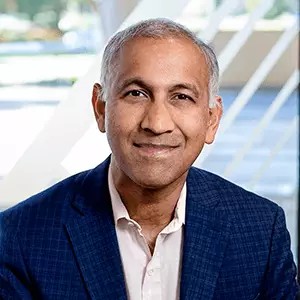
As Rajiv Ramaswami prepares to step down as the CEO of Nutanix, the company’s commitment to the channel remains steadfast, he said during a press conference Tuesday following the disclosure of his impending departure.
“No changes. We are still very much a channel-first company,” Ramaswami said. “If anything, I think this year we’d like to have the channel partners do even more of the services piece than they had [done] in the past, really be that front from a services perspective. … We made some changes internally to even push that further towards the channel partners, enabling them to go deliver more and more services using the Nutanix platform. The rest of our channel platform and our strategy remains intact.”
Ramaswami will continue as CEO while Nutanix looks for the company’s next CEO, after which he plans to remain as a senior advisor to help with the transition.
[Related: Nutanix Bets Big On Agentic AI With New Controls For The Hybrid Cloud]
He has led the San Jose, Calif.-based company for the past six years, driving its transformation from an outfit focused on pioneering development of hyperconverged infrastructure (HCI) to a major cloud and AI infrastructure player.
Mike Strohl, CEO of Entisys360, a Concord, Calif.-based solution provider and Nutanix channel partner, told CRN Ramaswami leaves a strong legacy.
“He took a company that was built for one thing, really, and turned it into something else, and navigated through lots of opportunity,” he said. “From an HCI perspective, they became a significant player, and then as customers were looking at alternatives, they found themselves in the center of that discussion as well. I think he’s done a good job of allowing the industry to change and changing with the industry to create ongoing relevance as a whole.”
Over the years from the channel side, the biggest change Strohl said he has seen at Nutanix is the role the company has taken in providing relief from changes in the virtualization business.
“And I hope whoever is next will take that ball and run with it,” he said.
Ramaswami unveiled his departure plans during his prepared remarks on Nutanix’s first fiscal quarter 2027 financial conference call and then participated in a press conference.
He took over as Nutanix CEO and president in December of 2020 after nearly five years at arch-rival VMware, first as executive vice president and general manager of networking and security and later as chief operating officer of products and cloud services.
Following Broadcom’s acquisition of VMware in 2023, which resulted in broad changes to VMware’s product, pricing and channel strategies, he has been vocal about the role Nutanix plays as a VMware alternative.
“We’ve been adding about 500 to 1,000 new customers every quarter for the last couple of years. All of these are customers migrating away from VMware,” Ramaswami said in October at CRN’s Best of Breed Conference in Atlanta.
Ramaswami’s tenure at Nutanix has been marked by several major changes that transformed the company from an HCI pioneer into a profitable cloud software business with an expanding focus on AI infrastructure.
He presided over the company’s shift from a focus on HCI to a major provider of broader hybrid cloud and AI-ready platforms. Ramaswami also oversaw the transformation of Nutanix’s business model to one focused on subscription selling and led the company to separate its storage from its HCI platforms for customers who wanted to work with storage technology from other providers such as NetApp, Everpure, and Dell.
Why Ramaswami Is Stepping Down As Nutanix CEO
Ramaswami said he has been thinking about stepping down and discussing it with the company’s board of directors for some time.
“I would just say it became firm over the last month or so, in terms of conversations and timing and when we want to do what and so forth,” he said. “I would just say it's fairly recent. … We have succession conversations all the time at a board level. We talk about our vision and strategy and where we need to go as a company all the time at a board level. Those things are a continuous conversation. … I turned 60 [years old] last year. I don't think I'm necessarily done, but I want to see what's next.”
Regarding whether Nutanix will be looking for internal or external candidates for its next CEO, Ramaswami said one of the advantages of talking about his plans publicly and announcing it before finding a successor is that the company can cast a wide net.
“We will look for the best person to take the role, whether it's internal or external, and take a good comprehensive look,” he said.
When asked about whether his departure means Ramaswami is looking to retire, he said his plans are not yet settled.
“This is not like me moving on to my next gig or anything,” he said. “First of all, I think I'm going to be here [at Nutanix] until we find a new CEO. I'm going to be here in an advisory capacity for some period of time after that, and then I've got to think about what comes next because … I've been working for a long time, and I do want to take a little bit of a break and frankly see how it goes. Really, I have an open mind. I'm not like looking to go jump on something immediately and take it on or anything like that.”
Ramaswami also said he is on several boards of directors and is already working with a number of interesting startups.
“And that might continue,” he said. “And if I'm happy with that, that'll be great. If I get unhappy and I say OK, I need to do more, then maybe I'll consider something else that becomes interesting. So that's kind of where I'm at. No particular agenda really at this point.”
Ramaswami On Nutanix's AI Future
When asked about AI, Ramaswami said that his company’s business was originally tied to workloads and applications that landed on its platforms but has since expanded to running nearly any mission-critical enterprise applications, cloud-native applications, and now a new wave of AI-native applications.
“They'll all embed AI,” he said. “They'll all be cloud-native. But they will be AI-embedded. And so we want that to be running on Nutanix. And the underlying infrastructure is now accelerated compute, not regular compute, right? So there'll be accelerators of various kinds: Nvidia, AMD, others that we need to support. Get those workloads running on our platform, whether it be running on-prem, whether it be running in neo clouds, whether it be running in a public cloud. So that's the next set of things for us to be doing.”
Nutanix will also be looking at adjacencies to those applications, particularly related to agentic AI, Ramaswami said.
“We are also the platform for running agents on one front, and so how do you run those agents,” he said. “How do you secure those agents. How do you put governance around those agents. What do you do in terms of agents accessing models, which we have a model gateway and a router for. There's a lot to be built from a portfolio side. We already have, I would call it, the ‘version one’ of that in the market. Now we got to build it. We got to evolve with the times. We got to go win the customers.”
From HCI To Cloud And AI: Ramaswami's Nutanix Legacy
Ramaswami said his biggest success at Nutanix has been the build-up to what he called “chapter two” of the company.
“We completed our subscription transformation journey,” he said. “We went from being a good HCI company, a really good HCI company, but not profitable. We were, I think, [maybe] $1.2 billion or something back in FY20. We were, I think, burning about $249 million in cash. Today we are close to $3 billion. Last year we did about $850 [million] or $849 million of free cash flow, so we've done that transformation. That's behind us. We're now scaling. The platform has evolved quite a bit. We're no longer just the HCI company. Now we're a platform company with extensions into public clouds, cloud native, external storage, and we've started to put the foundation together for that AI journey. As well, the ecosystem has gotten much, much broader over the last few years.”
As far as future growth for Nutanix, Ramaswami said the biggest pushes from an internal investment perspective are around cloud native and AI, and Nutanix will continue to build out that portfolio.
“Beyond that, it's broadening the set of external storage partners,” he said. “I mean, I'd love to get to a point where we’re able to support the vast majority of storage arrays out there. Today we support a good chunk with Dell PowerStore [and] PowerFlex, Everpure, and NetApp, but there are many others out there that we don't yet, and we'd like to go support those. And continued investment in the core platform itself. Those are the R&D side investments. But at the same time, we're also investing in our go-to-market, adding more sales tracks because we do think we can capture more opportunity out there by adding to our sales capacity.”
Nutanix By The Numbers
For its first fiscal quarter 2027, ended October 31, Nutanix reported total revenue of $772.4 million, up about 15 percent from the $670.6 million the company reported for its first fiscal quarter 2026.
That translates to annual recurring revenue of $2.63 billion, up about 15 percent from last year’s $2.28 billion.
Within total revenue, Nutanix reported product revenue of $393.5 million, up from $349.0 million, and support, maintenance, and other services revenue of $378.9 million, up from $321.6 million.
Total revenue beat analysts' expectations by $9.64 million, according to Seeking Alpha.
The company also reported GAAP net income of $143.6 million, or 49 cents per share, up from last year’s $62.1 million, or 21 cents per share.
On a non-GAAP basis, the company reported net income of $216.0 million, or 73 cents per share, up from last year’s $120.9 million, or 41 cents per share.
Non-GAAP earnings beat analysts' expectations by 12 cents per share, according to Seeking Alpha.