Halo Pushes MSPs Into The Era Of Predictive IT
‘I see the industry going headless. You want to stay in the screen when you’re doing the work. You want your techs to stay on the ticket, and then you want to basically have all the automation happen elsewhere, and then come back to the ticket,’ says Halo channel chief Tim Barton-Wines.
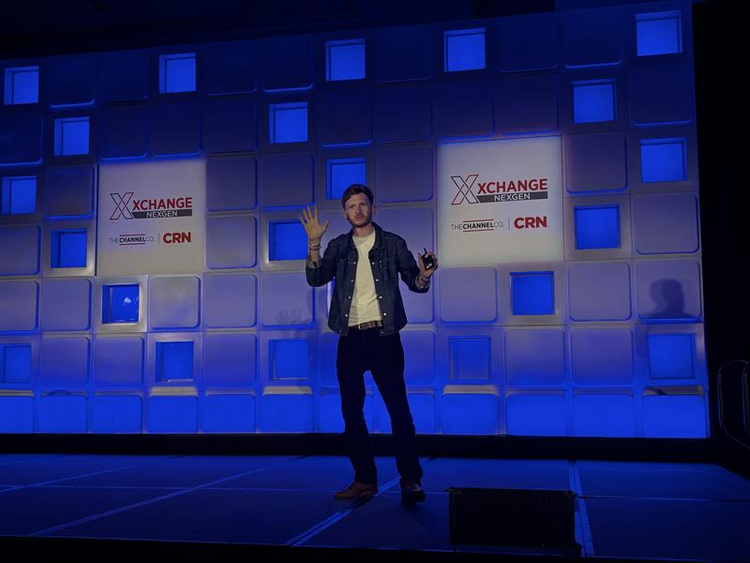
Halo is urging MSPs to move beyond automating routine IT tasks and start using AI to predict problems and prevent disruptions.
The Ipswich, U.K.-based vendor is building AI capabilities into its HaloPSA platform to help MSPs streamline service desk operations, automate Level 1 support and create new revenue opportunities by packaging AI and other technology services together.
Halo channel chief Tim Barton-Wines spoke to MSP executives at CRN parent company The Channel Company’s XChange NexGen conference in Orlando, Fla., on Sunday and said more and more MSPs are “shifting left.”
“I think a lot of the teams I work with top out once they’ve automated a lot of the stuff they’re handling day to day. They’ve got a script, a PowerShell, some sort of automation runbook, whatever it may be, to deliver that for them,” Barton-Wines said. “But the bit I really want you to focus on next is predict and prevent. You should fix it before they feel it.”
[Related: Halo Positions ITSM Platform As ServiceNow Alternative For MSPs]
He urged MSPs to leverage historical data and emerging AI capabilities to anticipate issues before they happen. This approach, he said, provides a benchmark for operational maturity, noting that MSPs supporting more than 250 endpoints per service desk technician are typically among the industry’s top performers.
Tommy Vaughan, president of Lynchburg, Va.-based Halo partner Central Technology Solutions, said the vendor’s AI capabilities are why MSPs must move beyond reactive IT support and embrace proactive and predictive service delivery.
“I think it’s important that if you think about how quickly everything is changing… AI, the scope, the world…you can’t really stay on that right side,” Vaughan told CRN. “You have to be proactive because once it’s happened, it’s too late. So for them to be a software company, especially bringing in the AI features that they’re bringing in to help you manage inside of your environment, is going to bring so much to the table.”
He added that Halo’s decision to make those capabilities available without additional charges offers MSPs a model for adopting the same proactive mindset into their businesses.
“They’re staying to the left. They’re being proactive,” he said. “So it just gives us a good example of how we can take that back to organizations, not only use their tools, but take that same philosophy and make changes to be better.”
And the vendor, which has about 7,000 MSP partners, is embedding AI-driven workflows directly into its PSA platform. During his keynote, Barton-Wines showed a native AI agent that interacts with Halo through a conversational interface, enabling users to create reports, dashboards, workflows, ticket types and additional AI agents with natural-language prompts.
“You can basically have a terminal,” he said. “You can even make this full screen if you wanted to, and you can just have an alternative UI to the entirety of Halo if you’re using it today, and just have a sort of a chat-based terminal interaction with the platform for free.”
He added that the capabilities reflect Halo’s broader effort to make AI accessible within its existing platform. The next step is using AI agents to resolve tickets autonomously, including identifying recurring problems, selecting appropriate remediation steps and confirming fixes.
However, he stressed that MSPs must be mindful about how they deploy AI-generated scripts and automated remediation, especially when systems can execute commands on customer endpoints.
“It’s a bit dodgy having this AI create random scripts and running it on customers’ machines. Let’s face it,” he said.
Beyond service desk efficiency, Halo is also helping MSPs monetize automation and expand their service catalogs. The channel chief touched on a customer-facing service portal to browse software, select devices and submit requests, while Halo handles the heavy lifting behind the curtain.
The platform can automatically trigger procurement and installation workflows, connect with distributors and orchestration tools, adjust software licensing counts and even update customer contracts with new recurring charges.
For MSPs, Barton-Wines said they can turn the same platform they use to manage service delivery into a sales channel for software, AI services and other offerings. And as AI capabilities mature, he said MSPs who prepare now will be in the best position to automate more work, identify profitable use cases and create new revenue streams.
“I see the industry going headless,” he said. “You want to stay in the screen when you’re doing the work. You want your techs to stay on the ticket, and then you want to basically have all the automation happen elsewhere, and then come back to the ticket.”