The 10 Biggest Microsoft News Stories Of 2025
Market cap milestone, Windows 10 EOS, AI agents and channel partner program changes are among the list makers.
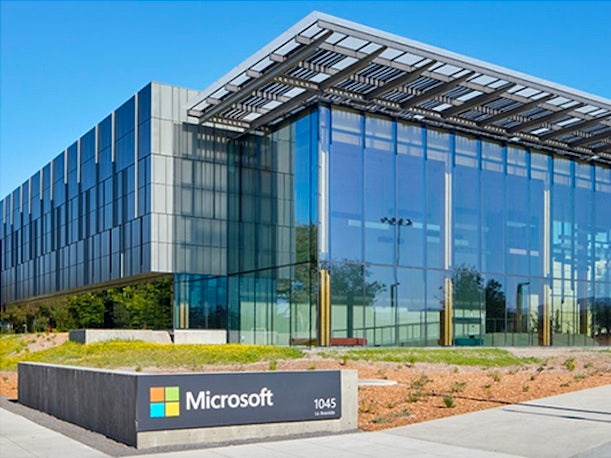
From cracking $4 trillion in market capitalization to the end of support for Windows 10, Microsoft delivered another year to remember for its 500,000-plus member ecosystem.
Innovations in AI agents and orchestration and oh-so-many partner program changes also make this year’s list of the biggest Microsoft news stories of 2025, with a particular eye on news by the Redmond, Wash.-based tech giant that affected channel partners.
[RELATED: The 10 Most Controversial Companies Of 2025]
Microsoft News 2025
The vendor closed off 2025 with promising financials for its solution providers, Microsoft’s executives revealed in their latest quarterly earnings call back in October. The numbers included an eye-popping commercial remaining performance obligation (RPO) business backlog of $392 billion, up 51 percent year on year.
Based on Microsoft’s estimates for fiscal year 2026–estimates laid out in July for the fiscal year ending June 30–the vendor expects double-digit revenue and operating income growth over the $281.7 billion in revenue and $128.5 billion in operating income seen in fiscal year 2025.
Here’s more of the biggest news stories from 2025 involving Microsoft. And be sure to see other CRN year-end lists including the Top 10 Biggest Google Cloud News Stories of 2025 and the 10 Biggest Nvidia News Stories of 2025.
No. 10: New Microsoft, OpenAI Agreement
Microsoft and the maker of ChatGPT, OpenAI, adjusted their agreement in October to allow, in part, Microsoft to independently pursue artificial general intelligence (AGI) alone or in partnership with third parties and extends Microsoft’s intellectual property (IP) right for models and products through 2032 and includes models post-AGI.
Microsoft uses GPT and other OpenAI models in its own AI products sold and leveraged by channel partners. Some of the greater freedoms coming out of the new deal could spell greater advancements in Microsoft’s AI offers in 2026.
As part of the new deal, Microsoft also has IP rights to research until AGI or through 2030, whichever happens first. CEO Satya Nadella said in October that he feels “pretty good” about AI’s progress and that he doesn’t think AGI “as defined, at least by us in our contract, is ever going to be achieved anytime soon.”
The agreement keeps OpenAI as Microsoft’s frontier model partner and Microsoft continues to have exclusive IP rights and Azure application programming interface (API) exclusivity until OpenAI achieves artificial general intelligence as verified by an independent expert panel.
As a result of the new deal, Microsoft holds about an investment of $135 billion in OpenAI, representing about 27 percent of the whole organization, down from 32.5 percent of just the for-profit branch.
Microsoft has already seen 10 times the return on its OpenAI investment, and OpenAI has contracted an incremental $250 billion of Azure services, Nadella said. The new agreement marks “the next chapter in what is one of the most successful partnerships and investments our industry has ever seen,” the CEO said.

No. 9: Microsoft’s AI Spending, Circular Deals
Microsoft’s capital expenditures in calendar year 2025 of more than $80 billion (the vendor still needs to report results for the quarter ended Dec. 31) reflect the high demand of meeting the AI moment, but also what the vendor is willing to spend to make sure it comes out on top. That CapEx includes data center construction, chips and equipment to enable AI.
The vendor’s leadership has defended the spending, with Microsoft CEO Satya Nadella sayingin October that the company still has more demand than supply and that he prioritizes “fungible” data center assets applicable to multiple geographies, first-party products, third-party products and research to help prevent lock-in with any one customer. Microsoft is “building a planet-scale cloud and an AI factory,” as Nadella put it. The vendor is also exploring ways to keep costs in check, such as more property leasing instead of building and owning data centers.
Microsoft has also played a part in the number of circular deals that emerged in 2025 and elevated concerns of an AI bubble–although other companies such as Nvidia and OpenAI were more so at the center of these deals where a small group of companies buy supplies and services from each other, only to use that money to buy more products from each other and sometimes even taking equity stakes in one another.
Circular deals in 2025 included Microsoft’s November announcement with Claude AI chatbot maker Anthropic where Microsoft invests $5 billion into Anthropic and Anthropic buys $30 billion in computing capacity from Microsoft Azure. Nvidia, whose chips power Azure, said it will invest up to $10 billion into Anthropic as part of the deal.

No. 8: Mass Microsoft Layoffs
Microsoft joined other technology companies laying off employees in 2025 as they reallocate money from less successful divisions, go all-in on AI and downsize headcount from COVID-era hiring sprees.
The vendor cut somewhere around 16,000 employees in 2025–potentially more than 7 percent of Microsoft’s total headcount based on the 228,000-employee global workforce the vendor had at the end of June.
Microsoft’s 2025 layoffs included about 7,000 people announced in May and about 9,000 people announced in July. Based on CRN analyses of LinkedIn posts from laid off Microsoft workers, the layoffs cut across technical and creative positions in cloud, Windows and even some AI-related roles. The laid off employees worked at Microsoft for as long as 21 years and as short as less than a year.

No. 7: Microsoft Leadership Changes
Microsoft gained a new CEO–a commercial CEO, that is–this year with the promotion of Judson Althoff (pictured).
Althoff has been highly visible in the role, even leading the vendor’s annual Ignite user conference and delivered the keynote address from the floor of San Francisco’s Chase Center, home of the Golden State Warriors NBA team.
Multiple solution providers told CRN that Althoff’s relationship with the channel over his Microsoft career is a positive sign that their concerns will get heard at the highest levels of the tech giant. He served a leadership role over the past nine years over Microsoft’s global sales organization and architected the new Microsoft Customer and Partner Solutions organization.
In his prior role as executive vice president and chief commercial officer, Althoff oversaw Microsoft’s Small, Medium Enterprises and Channel organization, which was revamped in 2025 as well.
As part of the changes, Ralph Haupter–president of the vendor’s Europe, the Middle East and Africa business–took over SME&C on Feb. 1. Haupter became the boss of Microsoft Corporate Vice President and Chief Partner Officer Nicole Dezen.
This year also saw the retirement of Kevin Peesker, Microsoft’s president of worldwide small and medium business and corporate markets, and the departure of Thomas Dohmke, CEO of Microsoft subsidiary GitHub, among other executive departures from the tech giant.
Microsoft has also recruited some big names from its technology rivals, including Ashish Kelkar, a vice president at former Facebook parent Meta; Umesh Shankar, formerly a chief technologist and distinguished engineer in Google; and Carmen Krueger, formerly with SAP.
No. 6: Microsoft Security Issues, Cloud Outages Stretch Trust
Another year, another series of security issues and cloud outages plague Microsoft and its users. While not a surprise for the vendor behind some of the most widely used business applications and technologies in the world, the frequency and far-reaching nature of these issues can put a strain on the trust users put on Microsoft.
Some of the worst security moments from 2025 for Microsoft include the compromise of more than 400 systems in widespread cyberattacks exploiting vulnerabilities in Microsoft SharePoint servers. The U.S. National Nuclear Security Administration was among the victims of the hack.
There was also the “whopping” 130 Common Vulnerabilities and Exposures (CVEs) disclosed by Microsoft in the July edition of its monthly “Patch Tuesday” release of software fixes.
It should also be noted that Microsoft researchers played a major role in the fight against cyberattacks and threat actors. Some of Microsoft’s best security moments from 2025 include observing “active exploitation” of a maximum-severity vulnerability impacting Fortra’s GoAnywhere file transfer platform, detecting and mitigating a multi-vector distributed denial-of-service (DDoS) attack measuring a record-breaking 15.72 terabits per second (Tbps) and nearly 3.64 billion packets per second (pps).
Microsoft also teamed up with the U.S. Department of Justice and other international organizations to disrupt Lumma Stealer by taking down, suspending and blocking about 2,300 malicious domains forming the info-stealing malware’s infrastructure, the vendor reported in May.
As for cloud disruptions, some of the biggest ones involving Microsoft in 2025 include the October widespread outage that affected Entra, Purview, Defender and other cloud offerings within the Microsoft 365 suite. In March, tens of thousands of Microsoft users reported outages and accessibility issues for Outlook and Microsoft 365.

No. 5: Microsoft Surpasses $4 Trillion With Help From Cloud Surge, VMware Migrations
In July, Microsoft became the second company in history to hit a $4 trillion market capitalization.
This came weeks after Nvidia became the first company to achieve the milestone and a year and a half after Microsoft reached $3 trillion. Microsoft’s market cap on Friday was about 3.6 trillion. Nvidia’s was $4.4 trillion.
Fueling the excitement over Microsoft was interest in the cloud as the vehicle for achieving AI results and a major migration opportunity for Microsoft users looking to move legacy workloads from companies including VMware to Microsoft Azure.
Although Microsoft still has another 2025 calendar year quarter to report, its total revenue so far exceeds $224.2 billion with operating income exceeding $104 billion–a major financial windfall for the partners that have found ways to ride the Microsoft wave in 2025.
No. 4: Product Innovation Spans Agentic AI, Agent Orchestration
Microsoft’s annual Build and Ignite conferences presented solution providers and customers with a host of product innovations to help bring the AI era to life.
Build in May saw Microsoft reveal support for Anthropic’s Model Context Protocol (MCP), with first-party support across GitHub, Copilot Studio, Dynamics 365, Azure AI Foundry, Semantic Kernel and Windows 11.
The vendor also showcased its NLWeb open project for creating natural language interfaces for websites, Copilot Tuning for training models that perform domain-specific tasks with company data and agentic retrieval in Azure AI Search.
Ignite in November saw the debut of an Agent 365 control plane for artificial intelligence agents, new vocal commands for Microsoft 365 Copilot and a way to create enterprise-grade agents in Windows 365.
Microsoft security advancements from the conference include Intune recovery for remote management of the Windows Recovery Environment (WinRE) and a new I/O protection function that promises advanced input protection against keylogging malware and keystroke injection attacks.
On the hardware side, Microsoft this year rolled out a new line of Surface PCs that deliver 40 trillions of operations per second (TOPS) or better neural processing unit (NPU) performance in a thin, light chassis that weighs 1.5 pounds with up to 17 hours of advertised battery life.
No. 3: Microsoft Partner Program Changes
Another year, another round of Microsoft partner program changes–some for the better, some for the worse, according to partners.
With a partner program of more than 500,000 organizations spanning industry specialties and sizes–from global system integrators down to one-man shops–changes benefiting one class of Microsoft partner can sometimes anger a separate class of partner.
Some of the biggest partner program changes include new eligibility and authorization requirements that started Oct. 1 for a variety of partner types. The changes notably more than triple revenue rules for direct bill partners and enforce revenue demands for indirect resellers.
Another major change was the end of the Microsoft Black Partner Growth Initiative (BPGI) in July. Although the end was preplanned, the change removed a resource for smaller, newer Microsoft partners to navigate the partner program’s benefits.
On the positive side, in July, with the new Microsoft fiscal year marked a host of new incentives ranging from increased funding for Copilot offerings by 50 percent and a 15 percent funding boost to security offerings.
In November, Microsoft made its Partner Skilling Hub generally available and launched previews for an App Accelerate offer that unites incentives, benefits and co-sell support across the Microsoft Cloud. It also started a “frontier partner” badge, “frontier distributor” and “support services” designations and a “digital sovereignty” specialization available for partners to differentiate themselves.
December also saw the launch of a $21 per user per month Microsoft 365 Copilot Business that could help partners in 2026 with customers that have balked at the existing $30 per user per month Copilot offer.
No. 2: Spotlight On Partner Program ‘Execution,’ Vendor Digital Sales Concerns
Even with all the partner opportunities from AI, cloud migrations and users investing in cybersecurity, execution in Microsoft’s channel motion caused enough concern with the tech giant’s leaders to warrant rare public comments by CFO Amy Hood on quarterly earnings calls at the start of the year.
In January, Hood said that non-AI Azure sales saw “go-to-market execution challenges” in the vendor’s “scale motion.” Hood said that “primarily, these are customers we reach through partners and through more indirect methods of selling.”
Although she was describing issues that started in 2024, April’s earnings call saw Hood tell analysts that “we still have some work to do in our scale motions,” but “things were a little better” in the quarter ended March 31. Hood did not make such explicit comments about Microsoft partners on the July and October earnings calls.
While Microsoft has denied an increase in activity by the Vendor Digital Sales program that “identifies upsell and cross-sell opportunities with small and medium businesses” and “connects those opportunities to partners,” CRN has heard anecdotal examples from solution providers during the year of a perceived ramp-up by VDS.
The VDS activity’s ties to Hood’s comments might be coincidental, but they have served as an indicator to partners that increasing spend by expecting customers is important to the tech giant.
No. 1: Microsoft Ends Windows 10 Support
The biggest Microsoft story of the year for channel partners cut across all practices with October’s end of support for Windows 10, prompting solution providers to move clients to Windows 11 or pay for “extended security updates” and stay on Win10 with some basic security protections.
The end of Win10 support prompted new conversations between solution providers and customers around AI applications plus AI PCs, providing a revenue opportunity for partners in 2025 that should continue into 2026 as ESUs expire.
In November, Dell Vice Chairman and Chief Operating Officer Jeffrey Clark said that Windows 11 migrations lagged about 10 points behind the previous operating system cycle.
Clark saw an installed base of about 1.5 billion units and 500 million of them capable of running Windows 11 that hadn’t upgraded yet. He also saw about 500 million devices older than 4 and thus good targets for device refresh. The commercial side of those numbers should prove an opportunity for solution providers even in the new year.