GTIA Bets Big On AI Standards, Local Chapters To Help MSPs Lead The Next Channel Era
‘When every employee, every customer, every partner, every competitor…and even our kids are talking about AI, it’s no longer hype. It’s reality,’ says GTIA CEO Dan Wensley.
The Global Technology Industry Association (GTIA) announced a broad slate of initiatives to help MSPs capitalize on the AI opportunity while strengthening governance, expanding peer collaboration and giving the channel a greater role in shaping industry standards.
The announcements include the expansion of GTIA’s global community through new local chapters, new research into SMB AI adoption, member access to a new AI Essentials training library, a new consortium with Texas A&M University focused on responsible IT services, the creation of the Managed Intelligence Alliance to establish standards for managed AI and a partnership with the United Nations’ AI for Good platform.
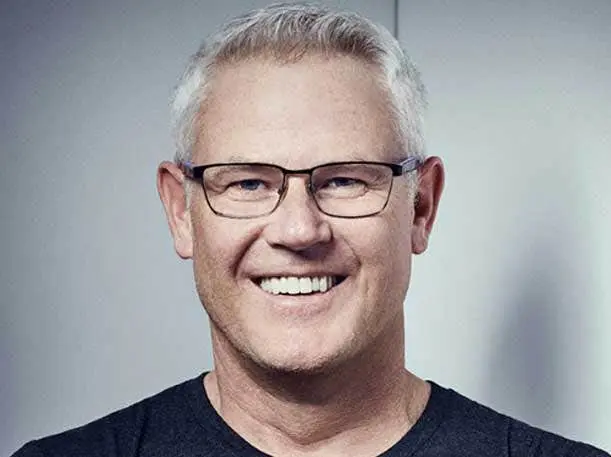
All the initiatives are intended to help MSPs move beyond experimenting with AI and toward building profitable, trusted and sustainable AI practices, according to GTIA CEO Dan Wensley (pictured).
“The entire channel has always had one constant, and that’s change,” Wensley said during GTIA’s ChannelCon conference in San Diego this week. “Technology innovation keeps accelerating, customer expectations keep changing and service delivery models continue to evolve. What makes this industry different is that we don’t have to face those changes alone. That’s the reason ChannelCon exists and why GTIA exists. We believe one conversation, one new relationship or one shared idea can change the direction of your business. This is a neutral place where competitors become collaborators, where vendors, distributors and MSPs solve problems together, and where members build resources that benefit the entire ecosystem.”
[Related: The 10 Coolest Open-Source Software Tools Of 2026 (So Far)]
And AI, he said, has become the defining issue for the channel.
“When every employee, every customer, every partner, every competitor…and even our kids are talking about AI, it’s no longer hype. It’s reality,” he said. “We know 97 percent of MSPs are already using AI internally, but only a fraction have formal governance or a real revenue strategy around it. That’s the gap GTIA wants to help close. We want to democratize AI so MSPs of every size can use it to improve cybersecurity, operate more efficiently and become trusted advisors. There are 90,000 MSPs serving roughly 400 million small and midsize businesses around the world. That is an enormous opportunity, but if someone else is talking to your customer about AI before you are, you’re going to miss that opportunity.”
One of the association’s first announcements was the launch of GTIA local chapters, which are member-led communities that will provide year-round networking opportunities between flagship events. Chapters are already underway in Australia, New Zealand, Canada, the United States, the Netherlands and Singapore.
The initiative comes as members have asked for more opportunities to connect closer to home, according to GTIA Chief Community Officer MJ Shoer.
“We heard over and over that people love the global GTIA community but wanted more local engagement,” Shoer said from the mainstage. “These chapters are funded by GTIA, there’s no additional cost to participate and they create opportunities for members to collaborate with peers who understand the exact business challenges they’re facing.”
GTIA is also giving members a larger role in shaping the industry's future through two major governance initiatives. Through a partnership with Texas A&M’s Global Cyber Research Institute, the association is establishing the Consortium for Responsible IT Services to help ensure industry standards will be created by the channel instead of for it.
Additionally, the association launched the Managed Intelligence Alliance to define specifications, capability standards and accreditation programs for managed AI. The goal, Wensley said, is to give members a chance to define what excellence looks like before the market does it for them.
Lastly, Chief Channel Officer Nancy Hammervik announced that GTIA members now receive access to CompTIA’s AI Essentials Library, providing on-demand AI education across technical, sales, marketing and leadership functions at no additional cost.
“Our research shows organizations want practical AI skills, not theory,” Hammervik said. “This partnership gives every employee in an MSP the opportunity to build those skills, earn competency certificates and immediately apply that knowledge with customers.”
And the United Nations’ AI for Good platform partnership will provide new opportunities for MSPs to participate in innovation competitions and showcase responsible AI solutions internationally.
“This opens doors that most companies could never access on their own,” she said. “Members will gain visibility into emerging technologies, responsible AI practices and international standards while showcasing innovation on a global stage. It reflects exactly what GTIA is trying to accomplish—helping our members grow their businesses while ensuring AI is developed responsibly and delivers meaningful benefits for society.”
Keith Nelson, CEO of Irvine, Calif.-based Vistem Solutions, said GTIA’s expanding focus on AI is “a positive step for MSPs,” particularly as many are still determining how to turn AI into meaningful business opportunities rather than marketing hype.
“I think a lot of the initiatives are really encouraging,” Nelson told CRN. “What GTIA is doing with the United Nations is encouraging, and I like the fact that they’re investing in education and governance. MSPs have to tailor AI initiatives to solve actual business problems, improve operations and produce measurable results. That’s what customers are going to care about.”
And he said GTIA’s approach to practical guidance is just what MSPs need.
“Explaining how AI works, showing people how to secure it and helping them understand how businesses are actually using it moves the conversation beyond simply saying, ‘We sell AI,’” he said. “It’s about becoming a trusted advisor again, but this time with practical AI expertise backed by education, governance and real-world use cases.”