IBM CEO Krishna: In The Age Of AI, ‘Who Do You Want To Trust?’
In an interview with CRN, IBM CEO Arvind Krishna discusses a wide range of topics and why he believes solution providers should place their bets on the company as AI reinvents—and reinvigorates—the technology landscape.
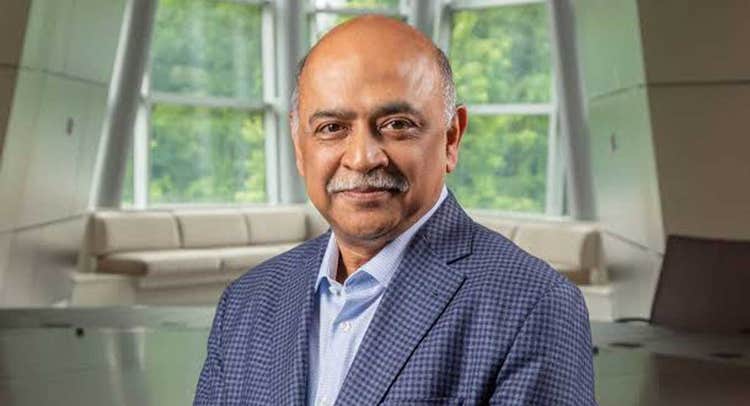
IBM Chairman, President and CEO Arvind Krishna believes artificial intelligence can drive a 30 percent to 40 percent productivity improvement and, in extreme cases, boost productivity by as much as 10 to 20 times.
The Armonk, N.Y.-based technology vendor has already seen plenty of wins this early in the AI era, reporting in April an AI platform, agents, assistants and orchestration business north of $1.5 billion with only 25 percent penetration. IBM’s AI business was more than $4 billion in annual recurring revenue in its first fiscal quarter. IBM did not give updated numbers during its July quarterly earnings call.
“In this day, when technology is advancing, who do you want to trust? Who can stick with you for the next five to 10 years? Who has the investment wherewithal? Our history there of sticking to those patterns is important,” Krishna told CRN in an interview.
[This article is part of CRN’s August cover story on IBM. For an even more in-depth look, read: 'The New IBM Partner Agenda.']
Krishna Sees Massive AI Opportunity For Partners
In AI, IBM solution providers still have ample opportunity working with customers on where to deploy AI and how to do so—in existing applications or in building new ones, for example. Users need help strategizing for increased productivity, revenue growth, accomplishing the same or more tasks with fewer people, and so on, Krishna said.
Asked whether users will increasingly leverage AI to build their own custom tools instead of buying products—part of the fuel of the so-called SaaSpocalypse of investor concerns that AI makes Software as a Service less valuable—Krishna said users may look to leverage AI for tools that don’t require much business logic.
Tools needing a lot of business logic for complex tasks like taxation and recognizing revenue are tougher to build in-house, even with AI, he said. And AI may be adept at building apps with interaction, but the need for highly reliable results in areas like financial transactions that need 99.9999 percent accuracy will remain too risky for AI tools, he said.
Here’s more of what Krishna had to say to CRN.
What is your message to IBM solution providers?
When there is a moment of technology inflection, there is a wonderful opportunity for any services partner.
Once you get beyond a couple of 100 enterprises [in the world] who I’ll say are maybe capable of doing it themselves, everybody else is going to need help. ‘Where do I deploy AI? Do I deploy it in enterprise ops? Do I make new applications? How do I unlock data? How do I get my data ready for this day of AI?’ There’s just an incredible opportunity for our services partners.
People who can then bring risk-based approach, people who can bring the expertise of having done it before—all of that gives a lot of comfort to the C-suite in any of the clients to say, ‘Now I can go forward.’
What are some of the biggest opportunities for IBM solution providers looking ahead?
We are going to be very focused on the top 1,000 [customers] always. We have a category we call ‘Horizon,’ which is the next 3,000, 4,000. These tend to behave [like large entities]. And it’ll be a mix of partner [work] with help from IBM.
And then there are the next 100,000 where we want to be largely partner-led as opposed to direct at all.
That means that’s a good 30 percent of the overall opportunity. And, by the way, that’s where the maximum growth occurs because people graduate from there into the top category. Those are also the places where they don’t have that much expertise in-house, so they want expertise from a partner in how to help.

What should IBM solution providers look forward to from IBM’s product innovation and product portfolio looking ahead?
Let’s talk about areas where IBM will be well-recognized in the market.
There are four platforms. Let me acknowledge the first one is probably not so relevant in this long tail, but it is very relevant in the top few 1,000 [accounts], which is the mainframe platform.
Next, let’s think about a hybrid cloud platform. As prices go up for pure cloud, I think there’ll be a lot of opportunity for hybrid because that is where Red Hat plays. But it’s also where technologies like Hashi and those that we have acquired play.
The third area is around AI. Everybody is wondering: ‘How do I unlock value from AI to improve the enterprise—be it productivity, be it revenue growth, be it getting things done with fewer people?’
And then the fourth area down the road is quantum.
Let me also acknowledge at some level, once you’re in the long tail beyond the top 1,000 [accounts], they’re not necessarily buying a platform. They have a need. They have a capability. And they want a great product to fit against that need that they have at the moment.
Is it unlocking data for AI? I think Confluent is the world’s best answer to get that done.
Is it how do I protect myself in this day of cyberattacks? How do I do all my patching? Hashi is a great technology in both dimensions. Protect secrets with Vault, as well as leveraging Terraform for much more automated—I will use the word ‘AIOps’ [AI operations]—for doing automation around how you manage all your infrastructure and code.
Or is it about: How do you begin to get a better sense of where you’re spending money and [where] is it most unlocked, which is Apptio.
One dimension is the platforms. And the other dimension is where do we have something that will be considered best of breed, which means it’s a much easier sale.
Looking at the opportunity, all of these already have 3,000, 4,000, 5,000, 6,000 clients. That means could it be 10,000? And could it be 20,000? I think that is the big unlock that we have in front of us.

What makes IBM the right vendor to partner with in the AI era?
In this day, when technology is advancing, who do you want to trust? Who can stick with you for the next five to 10 years? Who has the investment wherewithal?
Our history there of sticking to those patterns is important. Then two, there is going to be a lot of cyberattacks. It’s not new and unique to AI. When the internet came, there were the first threats and firewalls were the answer.
Then people began to worry about more layered defenses. Insider threats came along. We came to zero trust and two- and three-factor authentication. Now we’re going to have AI-driven attacks.
Who other than IBM could do something like Lightwell to help protect you against all the open source that is going to come under attack?
And then, who is talking about hybrid AI in the sense of—do you have AI at the edge and foundation models and open-weight models [where creators publicly release trained parameters]? So we can help you.
Partners have to take a thought leadership approach to say, ‘And hence IBM [is your best bet].’
IBM’s reputation and the messaging around your product portfolio—any improvements that you would like to see there?
There’s a lot of improvement that can be done in the end with how clients perceive IBM.
And then since we don’t talk directly to all of them, that means it is going to be through our partners.
There are clients who know us really well. They may need to know about a unique capability because they might not know about a new product or a new offering.
I’ll give ourselves maybe an A-minus there because we can always do better.
Then there are those who don’t know us at all. And they say, ‘Oh, did you guys make ThinkPads?’ And you say, ‘Oh, OK, we sold that 21 years ago [to Lenovo].’
They say, ‘Did you guys make typewriters?’ We say, ‘Oh, we stopped doing that 30 years ago.’ [IBM sold its typewriter-and-printer business to private equity firm Clayton, Dubilier & Rice in 1991, which branded the business as Lexmark. Lexmark was sold to Xerox in 2025 for $1.5 billion].
They [partners] explaining that IBM is a platform-based company—this is where it’s innovating, it does a lot of R&D, it is on the bleeding edge in a number of areas—is a really important conversation.
And then the third category is those who know IBM a little bit. They may have bought one or two things, so they might know us for that. But they have no idea what the breadth is. I think that’s a wonderful opportunity.
They are happy with the service they’re getting from one part of the portfolio. Nobody writes a check for a few $100,000 unless they’re getting value. There, the opportunity—I believe—is how do you expand that relationship? Because there is some goodwill, but there isn’t complete knowledge.
That I think is the nearest near-term opportunity. Could you take somebody who’s spending half a million dollars and make it into $1 million? Or somebody who spends $1 million and make it into $2 million?
Because there is a relationship, there is some trust. But now can we double down on that?

When you see vendors with large consumer and enterprise divisions—Microsoft and Google, for example, although now we see the AI upstarts like OpenAI and Anthropic making their way into enterprise sales—do you still see the benefits of IBM exiting business-to-consumer lines to focus on business-to-business?
Look, it’s not for lack of trying [to make a splash in B2C businesses].
We bought The Weather Company brand, mobile and cloud-based web properties, including weather.com and Weather Underground, in 2016 for about $2.3 billion, didn’t we? [IBM completed the sale of The Weather Company assets to Francisco Partners in 2024 for about $1.1 billion.]
You have got to go back to your roots and say, ‘What are we really good at?’ We’re really good at solving hard problems. We’re really good at doing deep, long-term innovation.
Is there an opportunity [in B2C]? I’ll concede to you, there could be. But when there is so much other opportunity where we can get better on the B2B side, until we get done with that, I don’t really want to give up on that.
There’s a lot written in business books about is it better to do one thing really well and get that thing done across all geographies and markets and sectors, as opposed to if you try to do five things you’re going to fail because you’re now dividing your investment and your energy down five different paths.
We're only playing in about a fourth of the [B2B] market. Let's go and play in the whole market.
And then when we begin to run out of gas over there, then we can look at—is there an area of B2C where it’s aligned with our brand and our capabilities?
Your recent letter to investors described some clients as ‘distracted with rapidly evolving, industrywide cybersecurity concerns. At this point in the AI adoption cycle, how can IBM solution providers and their clients avoid distractions, especially with a high level of ongoing AI experimentation in businesses?
There are two levels of distraction. [And yes], people are experimenting a lot still. And my advice is, it’s time to stop experimenting. Pick something and go try to get it done at scale.
Partners there can help our clients by saying, ‘Look, people, you need an ROI. Let’s focus in on one, two, three things where we can scale the answer so that it makes a real difference across the enterprise.’
The second is there is a lot of distraction on, ‘Are AI models going to attack our code? Are they going to make us more vulnerable?’
[We need to have] a more thoughtful answer. ‘This is how we can help protect you.’ Look, it’s going to be about layered defenses. It’s going to be about making sure that you can track at scale. You have got to trust your providers that you know that they’re doing this in a proper way. [Those] are the two areas of distraction which we can get rid of.
By the way, I’ll say a little bit tongue in cheek, this distraction is no different than social media. Social media is incredibly effective at targeting a message, at making sure that even enterprise capabilities can be targeted to an organization or an individual—it is wonderful.
And then when you look at your friends or your children or others, you can say, ‘Are you really doing work? Or are you just browsing social media with no real ROI that I can think of?’ Because they are very, very good at … having you keep on clicking from one link to the other to the other. And you soon discover you’ve done a random lot of nothing.

In this AI era, IT buyers are looking for what are the new commodities and how will vendors continue to differentiate themselves—what do you see as IBM’s moats?
In the world of technology, moats are not written in stone, meaning they’re not constant.
If I go back to even the early 2000s, which server type did you use—did you use a server from Sun Microsystems? Or did you use one from HP—HP-UX?
Or did you use one from IBM, Power with AIX [Advanced Interactive eXecutive]?
Those were called moats because it was considered that the switching costs were really high.
Then Linux came along. [And users said], ‘Hey, that’s the common operating system.’ And suddenly, there was no longer a moat. So technology can advance, moats can disappear.
Long-term investments—if we believe that we are uniquely positioned, that if we invest, we can get a multiyear lead on top of others, we will do that.
What are some great examples of that? Mainframe is clearly one. I would say quantum looks hard enough that we will do it.
In the past, I can go back to relational databases [IBM’s Db2 system]. I can go back to the days of enterprise Java. And why were we uniquely positioned? Because everybody else was chasing Java for consumers. And so we felt it could be a big advantage.
These are areas where the moats played out. Now, if I look at Java, it played out for about 15 years really well. And then it began to become a commodity. So today it’s not.
So my point is, moats are not really moats in a long, long term.
Now, even if they’re not, I say commodities are very valuable. Gold is a commodity, but it’s very valuable. So then you have to run that business in a slightly different way once it’s a commodity and not a moat where you do have some distinguished pricing power and you do have some ability to do a lot more innovation. So that’s just a macro way of thinking about it.
So if I look at us right now, what I call our four platforms of the mainframe, of Red Hat, of AI and of quantum—I would say these are pretty good moats, which I can imagine going on for a fair amount of time.
Now, these moats are not totally abstract. It’s not that we decided these are moats. These are also moats because clients are using them. So there is a lot of usage. We get that feedback. We improve the product. People use it more. We leverage that growth of that investment to make it even better.
AI users have a variety of ways to pay for this technology including per license, consumption-based, and then even the units users leverage can be consuming—what do you think of all these pricing models?
We have got multiple conflicting vectors playing into this right now.
There is a land grab for people to use a particular hyperscaler or a particular model, or the intersection of those two. And so, when there’s a land grab, people then say, ‘Look, I have got to get the client in. And I’ll figure out how to maybe make a profit later. But it is revenue, and I’m doing a land grab.’ That’s one vector.
The second vector—the amount of CapEx going into the hyperscalers—is going to demand a return at some point, which means prices have to go up.
And if the consumption is unlimited, it means there will be caps put upon that. The same way as we think about our cellphones as being unlimited, but actually there is a data throttle that comes in at certain point.
Voice calls, which used to be the moat 20 years ago, nobody even cares about. There is no throttle put upon those because actually the number of minutes people are talking is going down, not up. So in aggregate, that works out. The data usage is going up, so people put throttles there.
And then if semiconductors remain supply constrained, that means semiconductor prices will keep going up, which means that has to make its way up to higher pricing.
So there’s at least these three vectors, which are all different. Which one is going to be the dominant vector in two to three years? I don’t know. I'll just make two predictions.
One, our average price will double in the next two to three years.
It may not be direct to an end user. It could be that you are getting it through other capabilities. Like, social media [for example], effectively ads pay for it. You don’t pay for it as a user.
Will people use knowledge about an enterprise or an individual to sell somewhere, somehow, and make that the pricing? I don’t know. This is going to be hard to predict for the next two to three years.
Given the unpredictability, doing a lock-in [with one vendor] is probably the worst decision that somebody can make. So keep flexibility and make sure that you can switch—I am not going to say ‘painlessly,’ but with an acceptable level of pain.
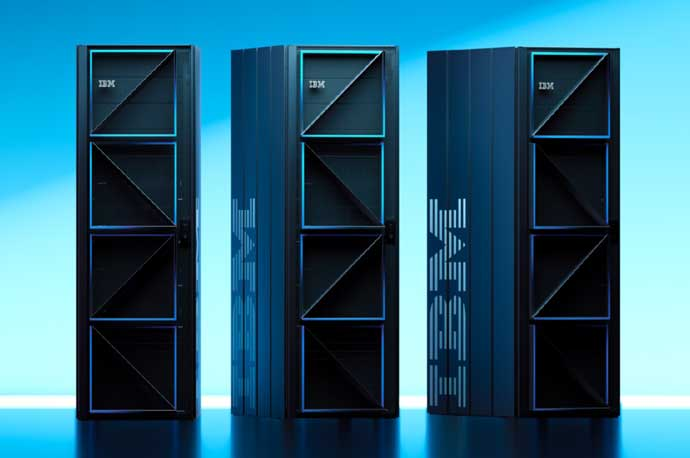
Solution providers have seen quoting windows shrink in this high-price, low-supply data center component environment—has this been an opportunity for IBM Power and IBM Storage?
Because we are good about trying to manage our supply chain, so all of those costs, and we’re good about maintaining pricing for at least a month at a time—right now, I think that that’s remarkably better than most of the competition because some of them are only good to hold prices for a week as opposed to a month.
Now, part of the reason we can hold for a month is that we do about six months’ worth of supply chain planning. And we are able to get, not necessarily locked-in prices, but at least locked-in supply. So we can go ahead and do that.
Power and Storage for IBM grew 37 percent in the [latest] quarter. We are entering the [current] quarter with a half-a-billion-dollar backlog. Given that we have supply—not necessarily of everything, but of a lot of the parts and systems that we can sell in Power and Storage—I would strongly urge our partners to, say, leverage the fact that we have supply to go sell.
What are your goals and measures of success for IBM Channel Chief Kareem Yusuf and the IBM partner organization?
What I would really like to see is a partner step up to having much more customer intimacy.
Perhaps it is appropriate that half their leads come from IBM. So we lead pass, and then the partner can fulfill them.
But maybe the other half, they are finding [leads] because they have intimacy and they have trust with the client. So that is, I think, a great mix to get to, and that would be a great outcome.
Then they should tell us, what do they need from us to do that? By the way, I do believe that in order to do that, it’s probably got to be more focused where it’s not everything in the portfolio, but it’s probably 10 or 15 things.
But I think there’s a lot of opportunity. The opportunity in those 10 or 15 things is probably at least five times what we’re getting today. So there’s a lot of runway to go.
Your goal is still 50 percent IBM revenue sourced from partners?
That is still my goal right now. About a fourth of IBM revenue is touched by partners someway or somehow. And I would like to see that fourth go to half.
But remember, as IBM goes up, that means probably our partner revenue has to become three times of what it is today. And that’s really what we would like to see.
How should IBM solution providers look at IBM Consulting and IBM’s forward-deployed engineers?
All of our CSMs [customer success managers], all of our FDEs, all of our client engineering are absolutely resources for partners. That is not something they should look upon as at all confrontational. That is meant to be cooperative.
I’m torn on Consulting. [Consulting] has a footprint that is going to be a few 100 clients globally. But it’s kind of within the top 2,000 [accounts].
So could be that if there is a partner in the top 2,000—which there is on the infrastructure or hardware side—maybe it’s a possible resource.
But it’s really not going to be something that’s our value for the vast majority of our partner channel.
And that’s not unique to IBM Consulting. That's probably true for the large GSIs globally.
How is buying versus building changing in the AI era—both for you all at IBM but also for clients now wondering how they should rethink their IT stack?
Is AI going to make building products and capabilities easier? Absolutely.
We can see, I’ll say, in the vast aggregate, probably a 30 [percent] to 40 percent improvement in productivity. But at the extreme end, probably more like a 10 to 20 times improvement in productivity.
So then you have to say, when do you want to buy versus when do you want to build something with AI?
If it’s an interaction capability and if it’s a surface capability without a depth of business logic in it, it could probably make sense to look at should I build it as opposed to buy it.
If there is a huge amount of business logic baked in—does it effectively contain the logic of our taxation and of how we recognize revenue—that’s a lot harder to do because there is a lot of subtlety and a lot of nuance and experience that goes into those things. I separate it that way.
Next, AI is really great for building things that are interaction-rich. But maybe not if it needs to be an extreme transaction record with six nines of accuracy baked into it.
Then you need code that’s a lot more deterministic and that’s a lot more serviceable that is in there. So I don’t think it’s a simple one answer. It is a question of where are you on that spectrum of does it need to be six times the reliability or do I need it to be easy and how much business logic versus not?
[That’s how] all clients and then partners taking that to clients should be thinking about it.
This probably speaks to the durability of the mainframe platform, no? High data integrity and accuracy.
MIPS [millions of instructions per second, a measure of mainframe capacity] are still growing.
I think over the last 10 years, it’s four times. [Eighty-five] percent of [installed MIPS] are growing.

Switching to quantum, I have heard from multiple partners that post-quantum cryptography has actually seen growing demand lately, even though you have transparently pointed out that the age of quantum is a few years out.
PQC, post-quantum cryptography, is an absolute opportunity. The executive order here in the U.S. already says every federal agency has to be ready by 2030 or 2031 at the latest.
If I was in a critical industry, I would try to be ready by 2029. That’s not that far away, by the way. That’s three years away. So if you say I need to go in and assess and I need to do the work, that is a massive opportunity for all of our partners.
And we have a lot of assets that we can provide there. But I think going in there to say which parts of the infrastructure need to be getting their cryptography to evolve is an opportunity that’s measured probably in the tens of billions [of dollars], if not even bigger.
What can IBM solution providers do in the short term to prepare for quantum?
Partners who have domain expertise in areas should think about, OK, it’s not about learning Qiskit [the IBM-developed open-source, Python-based quantum computing software stack released in 2017].
It’s more about, OK, I want to learn so I get a sense of which kinds of algorithms are possible on quantum. Where is it going to be advantaged?
And if you have that knowledge, then as the systems begin to scale, which, by the way, is only now two years away. It used to be five. Five became four, became three, became two. It’s not that far away.
So they should probably learn to say, ‘OK, when it comes, then I can help.’ And there’s a lot of money to be made by partners helping clients take advantage of quantum algorithms.
There will probably be a few dozen—I don't think it’ll be in the thousands of companies—who will benefit from, I’ll call it, ‘the infrastructure of building on quantum.’
Are these people going to be building fabs? Are they going to be building control electronics? Are they going to be building cryogenics? Are they going to be building quantum networking? But it’s probably a few dozen. Not in the thousands is my gut sense right now.
But I think that middle bucket of, ‘How do I help a client explore quantum?’ is going to be the massive unlock. And where I want to urge people to start thinking.