IBM’s Enterprise AI Bet Is Paying Off, And CEO Arvind Krishna Says It’s Just Beginning
IBM CEO Arvind Krishna said during the company’s third fiscal quarter 2026 financial report that the acceleration of enterprise AI adoption is fueling demand for Red Hat OpenShift, hybrid cloud, real-time data and security, all of which play into IBM’s AI investment strategy.
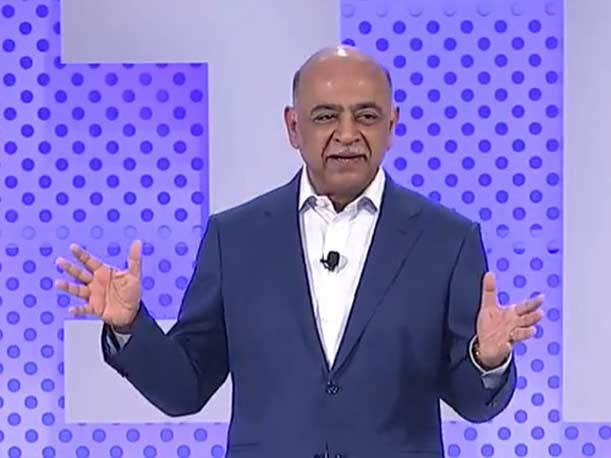
IBM Chairman, President and CEO Arvind Krishna told financial analysts that enterprise artificial intelligence is moving beyond experimentation into large-scale production and said that IBM’s hybrid cloud, software, data, automation and security products are the foundation for that shift.
Krishna, in his prepared remarks during IBM’s quarterly financial conference call with financial analysts, Wednesday said that Red Hat bookings accelerated back to the high teens, while OpenShift adoption strengthened as organizations scaled AI applications and agents. He described that activity as evidence that companies remain in the early stages of a long-term application modernization cycle.
“Enterprise AI is entering its next phase,” he said. “Deploying more models or building more agents will not be enough. The advantage will belong to a company that can operate AI securely, efficiently and sustainably across the enterprise.”
[Related: IBM Think 2026 Showcases Agentic AI And Sovereign Cloud Strategy]
IBM has assembled that approach around four platforms, Krishna said. Confluent supplies real-time business context; watsonx, including Bob and Orchestrate, supports software development and agent orchestration; HashiCorp and Apptio handle identity, policy, costs and performance; and Red Hat provides open hybrid deployment across clouds, on-premises systems, sovereign environments and the edge.
“Together, these platforms help clients move from isolated deployments to AI operating at enterprise scale,” he said.
Data is central to that strategy. Krishna said 72 percent of organizations report inadequate real-time data infrastructure. Confluent’s Streamhouse continuously captures, transforms and queries real-time data, complementing warehouses and lakehouses while making governed information available to applications, analytics and AI.
“Agents need the current state of the business,” he said. “That is why we are excited about Streamhouse, a capability from Confluent that continuously captures, transforms and queries real-time data.”
IBM is also addressing the economics and control of enterprise AI, Krishna said. Apptio now connects AI spending with business results, providing visibility into usage, token consumption and operating costs. The open-source LLMD project, developed with Red Hat and Google, reuses processed context to help clients run large models at five to 10 times lower cost through more efficient use of existing GPU infrastructure, he said.
Bob, IBM’s agentic AI development technology, can now run on-premises, allowing customers in regulated and sovereign environments to keep code and models on their own infrastructure, Krishna said. Meanwhile, HashiCorp Vault can register, authorize, audit and revoke agents and secure their credentials. IBM Agent Identity and Vault are partnering with Nvidia’s Open Agent Safety Platform to strengthen agent security, he said.
“Governance matters as much as intelligence,” he said. “As agents multiply, enterprises need to know who each agent is, what authority it has, and what it can access.”
Krishna also linked AI workloads to growing storage demand. He said IBM is gaining share across flash, IBM Fusion, tape and IBM Z storage, including AI-enabled tools that help customers scale and manage data. Consulting activity reflected customers’ efforts to modernize and deploy AI securely.
IBM showed major progress in its quantum computing business during the quarter, Krishna said. He cited three independent demonstrations of quantum advantage on IBM hardware with the University of Chicago, Algorithmic and Qedma. He said the results offered more evidence that quantum computing is advancing from scientific promise toward practical value.
IBM’s Nighthawk R2 quantum processor reached milestones in speed, scale and quality during the quarter, executing 100,000 circuits per second and providing performance improvements of up to 19 times over previous-generation systems, Krishna said.
“That performance changes both time to solution and the economics of quantum computation,” he said. “Workloads costing approximately $100 to run on IBM could cost up to $10 million on slower competitive modalities.”
IBM was selected for Stage C of DARPA’s quantum benchmarking initiative, which Krishna described as validation of its path toward a fault-tolerant quantum computer. IBM Quantum also signed 16 enterprise engagements this year across several industries, including AT&T and General Motors.
IBM is also advancing infrastructure for fault-tolerant computing. Krishna cited its first connected modular cryogenic systems, progress on the 300,000-square-foot Poughkeepsie, N.Y., manufacturing facility, and preparations to scale quantum-wafer manufacturing.
In response to an analyst’s question, Krishna said customer spending priorities in trying to leverage AI remain strong, but getting value depends on multiple factors.
“They have to rewrite an application,” he said. “They have to modernize an existing application. And you then ask the question: ‘Where do those run?’ That tends to be a tailwind for Red Hat OpenShift, and I think we are at the very beginning of this cycle. So I expect that to carry on for a long time.”
At that point, Krishna said, the conversation shifts to how to unlock enterprise data to power that AI application.
“Remember, 90 percent of enterprise data is not on the cloud,” he said. “It’s very much inside the enterprise. So Confluent tends to be a tailwind. I expect these to carry on for a long time.”
Customers’ automation portfolios will benefit when AI applications all get to scale and people start worrying about managing hundreds and thousands of them, giving IBM another growth tailwind, Krishna said.
“Right now, we don’t really want to comment on [fiscal] ’27 growth, but generally speaking, I can say when we get these kinds of booking growths, it crosses into good revenue growth going forward,” he said.
When asked by another analyst about AI sovereignty and data protection, Krishna said questions here are leading to a big boom in on-premises AI infrastructure growth.
“I believe this is going to turn into a tailwind for many players in the industry,” he said.
Phil Godwin, president and COO at Clear Technologies, a Dallas-based solution provider and IBM channel partner, told CRN that his customers are enjoying the fruits of IBM’s AI investments.
“We’re seeing quite a bit of success with Bob specifically in our legacy IBM Power customers to be able to provide better insight and AI functionality specifically around the AS/400 or iSeries in that space,” Godwin said. “We’re not doing much with watsonx. We’re still very infrastructure-centric, so Power storage, and then more into their automation portfolio. They all complement what we’re doing with our FinOps launch. We’ve built a strong stack there that they can pull together multiple products to really focus on solving customers’ broader problems.”
Clear Technologies is also seeing success with Red Hat, Godwin said.
“What we’re going to continue to see is the convergence of Red Hat and IBM Fusion and IBM storage,” he said. “Some of the OpenShift and related things they’re doing in Fusion is where we’re focused on growing from a Red Hat standpoint.”
IBM By The Numbers
For its third fiscal quarter 2026, which ended Sept. 30, IBM reported total revenue of $17.10 billion, up 5.7 percent over the $16.33 billion the company reported for its fiscal third quarter 2025.
Revenue beat analyst expectations by $260 million, according to Seeking Alpha.
That total revenue includes software revenue of $7.80 billion, up from last year’s $7.21 billion; consulting revenue of $5.34 billion, up from $5.32 billion; infrastructure revenue of $3.71 billion, up from $3.56 billion; financing revenue of $192 million, down from $200 million; and other revenue of $66 million, up from $38 million.
In software, IBM saw 11 percent revenue growth in its Red Hat business, 30-plus-percent growth in OpenShift annual recurring revenue, and 11 percent revenue growth in its hybrid cloud business.
On the infrastructure side, IBM reported 32 percent growth in distributed infrastructure, over $1 billion in incremental z17 mainframe revenue, and record growth for its storage business. Despite the high z17 revenue, total revenue was down 19 percent over last year.
IBM also reported GAAP net income for the quarter of $2.19 billion, or $2.30 per share, up from last year’s $1.74 billion, or $1.84 per share. On a non-GAAP basis, IBM reported net income of $2.88 billion, or $2.95 per share.
Non-GAAP earnings beat analyst expectations by 8 cents per share.
Looking ahead, IBM continues to expect full fiscal year 2026 revenue to grow between 4 percent and 5 percent over fiscal 2025.