NinjaOne CEO: We’re Hiring 1,000 Employees, Doubling Channel Spend In 2027
‘My advice to MSPs is that they should lead. Get certified, get the right help and help your customers with advisory services, AI and governance. There’s a whole market there to be had,’ says Sal Sferlazza, NinjaOne CEO.
NinjaOne is expanding its commitment to MSPs, pairing continued investment in its IT management platform with a revamped partner program to help partners grow their businesses, navigate AI and deliver more value to customers.
The Austin, Texas-based vendor, which recently surpassed $600 million in annual recurring revenue, is planning to accelerate product development, expand its channel investments and strengthen its support for MSPs as it enters 2027, according to CEO Sal Sferlazza. That includes launching partner peer groups, developing training around sales and go-to-market strategies, and helping MSPs capitalize on demand for AI governance, co-managed IT and advisory services.
And the company is growing, planning to increase its channel budget by two to three times, expand internationally and hire about 1,000 employees in 2027, including several hundred in research and development.
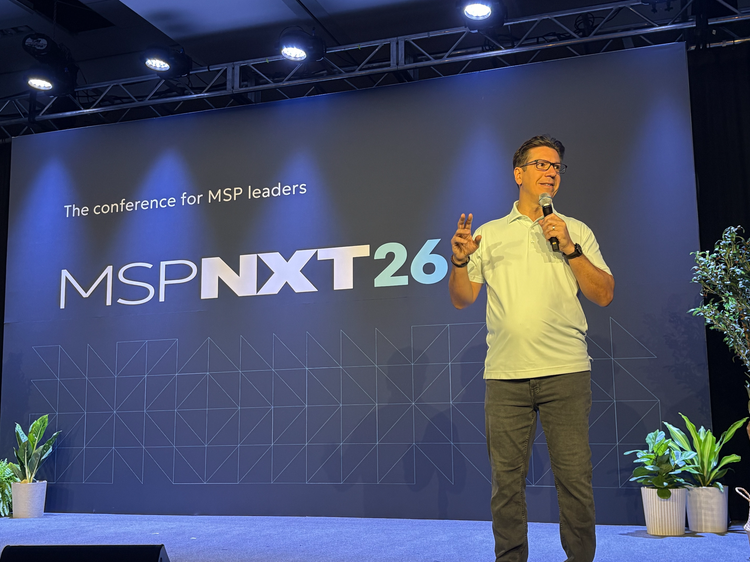
“We see MSPs as a critical part of our future,” Sferlazza told CRN in an exclusive interview at the vendor’s inaugural conference in Austin this week. “We’re all in and investing in helping them with go-to-market, helping enable them and training them on things like co-managed IT.”
The strategy comes as MSPs face pressure to differentiate their services while customers look for help navigating AI, cybersecurity and the growing complexity of their IT environments. The CEO said he sees “a significant opportunity” for partners willing to move beyond management services to become trusted advisers.
“There’s a lot of disruption in the market. It’s a scary time, and there’s also this pull against MSPs trying to fight commoditization,” he said. “But at the same time, there’s a massive opportunity there. People are looking for guidance and help with control and guardrails. I think the smartest MSPs will move the quickest and look for ways to partner and help enable IT organizations.”
He added that NinjaOne is emphasizing security, cost efficiency and practical business outcomes rather than adding AI features simply to follow the market. “We really think about where we can add value. It’s not about shiny toys,” he said.
That approach extends to the company’s broader product strategy. Rather than relying heavily on acquisitions, Sferlazza said the company plans to build more capabilities into its existing platform, allowing MSPs to consolidate tools and manage more endpoints with fewer technicians.
Going forward, he expects to introduce one to three products annually, with customer feedback helping shape its road map.
For Sferlazza, the challenge is maintaining the company’s pace of innovation as it scales while remaining responsive to its loyal partners.
“Staying humble and focused on high-demand innovation will be essential,” he said. “We have to listen to them. They’re giving us the path to succeed.”
CRN spoke further with Sferlazza about NinjaOne’s road map, investment priorities and partner opportunities in 2027.
Why is NinjaOne expanding its partner program, including peer groups, now?
Through NinjaOne, we have about 40,000 customers globally. If you look at the MSP cohort, those partners are probably managing a million small and midsize businesses. That’s a massive opportunity.
We’re investing in helping them with go-to-market, enabling them and training them on things like co-managed IT. There will be competencies we want to help them develop, but also general go-to-market, marketing, sales acumen and that sort of stuff.
Where do you see the biggest growth opportunities for MSPs right now?
I think it’s a really interesting time. I talk to three or four MSPs a week, so I’m talking to customers all the time, and the signal is that a lot of these IT organizations need help.
My advice to MSPs is that they should lead. Get certified, get the right help and help your customers with advisory services, AI and governance. There’s a whole market there to be had.
There’s a lot of disruption in the market. It’s a scary time, and there’s also this pull against MSPs trying to fight commoditization. But at the same time, there’s a massive opportunity there. People are looking for guidance and help with control and guardrails. I think the smartest MSPs will move the quickest and look for ways to partner and help enable IT organizations. That’s the No. 1 growth lever for them.
So what are MSPs telling you about their biggest challenges?
It depends on the size. A lot of the smaller providers struggle with go-to-market, marketing and sales. That’s what I hear from the smaller folks, and it feeds into the curriculums we’re talking about building.
With the larger providers, they’re breaking into co-managed IT. They want more capabilities in NinjaOne to help them enable and roll out services where they’re not the IT provider of record. They might come in as the virtual CIO, or they’re doing a help desk extension for a much larger organization. Those are some of the challenges we’re hearing, and the great news is we’ve had some success there, too. We’re partnering and working together.
How is customer feedback shaping NinjaOne’s 2027 product road map?
We have our customer advisory board, and we get feedback all the time. We have an internal Slack channel and our partners are constantly telling us what they think. ... They’re giving us the path to succeed. We just have to listen to them.
We go through our road map, they give us critical feedback about the things they care about, and we try to mix it up. We have different MSPs representing different segments. We might have some folks with a couple hundred endpoints in the same room as people managing 100,000 endpoints.
What’s nice about service providers is that even a small MSP might be serving a customer that does business with the federal government or a state, local or education organization. So it’s fun for me to put my football helmet on and go into the room and get punched in the face 100 times by our partners. That makes our road map better.
Where will NinjaOne invest most heavily in AI in 2027?
We’re working on an AI monitoring and governance module. We think providing 100 percent visibility to our customers is important. Providing visibility across the full estate of the RMM is a logical extension because we have so much data and telemetry available to customers already. I think we can lean into that and provide more visibility for MSPs so they can advise their customers.
What can MSPs expect from NinjaOne’s broader product road map in 2027?
I think NinjaOne has the opportunity to go after lots of different products. With great success comes great responsibility. Anything in the IT operations stack is in our purview. We have people using NinjaOne in 80 countries around the world. The great news about our MSP partners and our other customers is that they’re telling us what products to build.
We did an acquisition with Dropsuite, which was wonderful. But as a product CEO, I don’t want to go buy five companies. I want to build.
How much is NinjaOne planning to invest in research and development?
We have wonderful investors, and a lot of the companies they invest in eventually become publicly traded. Internally, we look at what the most successful companies did at our current stage of revenue and growth.
We look at companies like Datadog, CrowdStrike and Zscaler. At that moment in time, how much were they investing in engineering? The goal is always to beat the industry standard. We look at support, too. We spend about two to three times what is normal for companies at our stage. The goal is to always overinvest in R&D.
What roles will you be hiring for in 2027?
A couple hundred will be in R&D, for sure. But obviously, if we double our channel budget, there will be heavy investment in channel relationships. There will be more branding and investment across the board, particularly in new geographies.
We’re expanding heavily into Latin America, Japan and the rest of Asia. We think there’s a lot of opportunity there. We’re also generally moving upmarket into larger organizations, and a big priority is getting our brand out there even more. We’ll invest across the board. We want to keep growing, keep building the team and keep investing in the platform.
What do you think will be your biggest challenge in 2027, and how do you plan on tackling it?
I have a joke about this. At our size and scale, this is right about the time companies and entrepreneurs mess it up. We’ve had some success, but one of the risks is getting away from what made us successful. We have to stay humble, stay more paranoid and remain focused on high-demand innovation now more than ever.
I always joke that the biggest risk to NinjaOne is our ability to hire talented engineers fast enough. I was a software engineer for 16 years, so that’s just how I’m wired.
A year from now, what will MSPs be able to do with NinjaOne that they can’t do today?
I think it’s a journey, rather than one specific thing. They’ll be able to run more tools, consolidate more and manage more nodes with fewer technicians and greater efficiency than ever before. That was the thesis when I built NinjaOne. We were about 15 people, and the idea was to make it simple, easy to use and require zero training time.
One of the biggest headwinds for an MSP, besides go-to-market and sales, is getting technicians up to speed quickly, making sure they’re profitable and providing better service to their customers. The providers that do that best can become more efficient and manage more endpoints with fewer technicians.
I still think that holds true. We have partners using three or four tools within NinjaOne, and they’re telling us that if they can buy more products in the same platform, their technicians can stay in one console and manage everything.
That single-pane-of-glass concept has been beaten to death by every vendor, but I think it’s real. We’re seeing people get a lot of efficiencies by staying in NinjaOne.
Lastly, what’s your overall message to partners heading into 2027?
You can expect NinjaOne to accelerate product innovation, continue investing in R&D, stay close to our roots and not get ahead of our skis.
We want to be a trusted adviser to MSPs around AI and provide more capabilities, both for them to use AI in our platform to become more efficient and for them to build AI practices that support their customers.