Google Cloud President On Topping Microsoft In AI And Channel GTM
Google Cloud’s president of global revenue, Matt Renner, takes a deep dive with CRN on Google’s AI market differentiation and channel strategy against his former employer Microsoft. Here’s what every partner needs to know about Google’s channel investment and strategy.
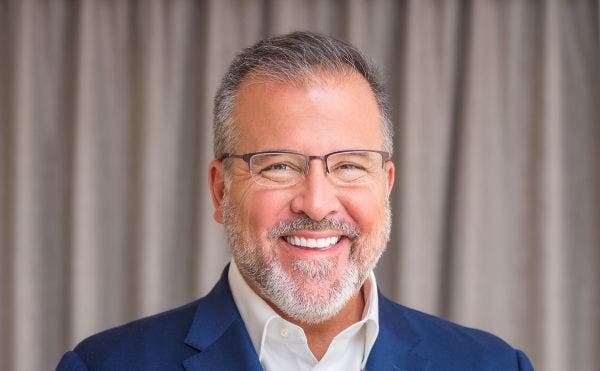
Google Cloud President Matt Renner is bullish that his $54 billion organization’s AI and channel partner go-to-market strategy is besting his former employer Microsoft in AI era.
“Of the three hyperscalers, the only one that offers true choice in AI is us,” said Renner, president, global revenue at Google Cloud.
“We have a full stack—from chips all the way up through models, at every level of the stack—that’s optimized to work together but can also work in individual layers and different combinations. So you have that flexibility,” Renner said. “That’s the true difference when you talk about what our strategy is in AI and why long term, we’re going to prevail. We’re also the only ones with [mature] models and data tools.”
Renner said Google Cloud is getting “a leg up in the enterprise” over the competitors because of its different choices and flexibility. “We’ve chosen a strategy a couple years ago, and I think now it’s getting exposed with the other two [hyperscalers],” he said.
[Related: Broadcom’s Hock Tan On VMware, VCF 9, AI Sales And CEO Future]
On the channel front, Google Cloud is engaging with customers differently versus the competition.
“How we engage with customers is different. We want to have a much better ratio of engineers and technical folks that engage with a customer to help them—not only qualify what are the best projects and be the expert in the room—but then deliver on that and get to production quicker,” Renner said. “That is a stronger approach.”
Renner’s Microsoft, Oracle And Google Career
Renner is a longtime IT leader with decades of executive roles at IT giants Microsoft and Oracle.
Prior to joining Google Cloud in 2023, Renner was president of Microsoft’s U.S. enterprise business, accountable for over $50 billion in annual revenue and bookings.
He was responsible for Microsoft’s largest 2,200 U.S. commercial customers, leading an organization with more than 6,000 team members between sales, presales, and consumption functions.
Renner spent 20 years at Oracle from 1995 until 2015 in various top North American sales roles.
He is now responsible for all global go-to-market functions at Google Cloud—from sales and alliances to operations and customer success. In an interview with CRN, Renner takes a deep dive around Google Cloud’s AI and channel partner differentiation versus Microsoft and its competitors.
Where do you think Google Cloud differentiates from Microsoft in the AI era?
When you look at the products, we have the best tech and it’s proving that way. We are very specifically positioned well, because when you look at Google’s history, Google was utilizing information and data to ultimately help and service our customers to get better outcomes. So what did we use? We used data analytics tools and then AI for the better part of 20 years. So we’re positioned very well because we have all this history.
Another advantage is,we have our hands on all of this data and publicly available data. It’s always going to help us build faster and bigger and better AI models quicker.
Of the three hyperscalers, the only one that offers true choice in AI is us.
True choice for me is defined as: we allow you to partner to bring models onto your platform. That’s an infrastructure like-relationship. And we allow that, we foster it and we make it very easy for you to do that multi-cloud. All three hyperscalers do that, but the difference of true choices is we also let you choose from our products.
So we have a full stack—from chips all the way up through models at every level of the stack—that’s optimized to work together, but can also work in individual layers and different combinations. So you have that flexibility.
That’s the true difference when you talk about what our strategy is in AI and why long term, we’re going to prevail. We’re the only ones with [mature] models and data tools.
We’re getting a leg-up in the enterprise because we can immediately offer you those different choices to go through it. We’ve chosen a strategy a couple years ago, and I think now it’s getting exposed with the other two.
It’s that folks are not turning to them for AI because they know they’re just going to get infrastructure and partnering. They’ll turn to us and we’ll go faster, because they have both options with us. If they’ve got a problem that needs to be solved, they know they can always lean on our models.
And by the way, it doesn’t hurt that I have the best models in the industry based on just about every analysis.

As a former Microsoft executive yourself, do you think Google’s channel strategy is better than Microsoft’s?
Microsoft is a phenomenal company with tremendous leaders like [CEO] Satya [Nadella] and [CFO] Amy Hood that do a marvelous job in culture and execution. There’s no question that they have a very strong presence of the desktop, as they’ve had for decades, and they tend to pivot off that from those solutions. … They put a lot of effort, dollars and focus in the partners. They have a strong channel system.
Our strategy is a little more born of infrastructure.
We clearly have a phenomenal product in Workspace. We start almost customer-first versus the desktop.
Where we’re differentiating ourselves, where I think we’re better, is in engaging in the field and out-partnering, if you will, when it comes to pairing up SIs (system integrators), with ISVs, and driving to actual outcomes for their results.
So they have a massive partner community. We have a large partner community, but we try to keep it to a manageable level so we can add value to our partners.
We are probably more focused, if I had to compare the two, on driving customer value and partner value. That’s where we’re trying to out-execute them.
Engineers are important. It’s important aspect of our execution. I think it’s one of Google’s secret sauces.

Double-click on why one of Google’s secret sauces to channel and customer success is your engineers in the sales cycle?
If I had to compare the willingness, focus and strategy of our engineers here versus Microsoft, without question, I see us more engaged with customers on a consistent basis to drive to outcomes.
[Google Cloud CEO] Thomas Kurian is a very big supporter of getting engineering in front of customers and engaging outcomes.
He’s incredibly customer-centric. This is the best I’ve ever seen when it comes to engaging engineers with both our partners and our customers.
We get comments from customers that say, ‘Google shows up, not necessarily sales-first, they show up with solutions and problem solving first. And then they help us get to production very quickly and get to resolution.’
Our incredibly strong engineering organization is very quick to get out to the field and engage with customers, which is a huge asset for us.
We see it from everything from our DeepMind organization that sits within Google to all the way through all aspects of our engineering team at Google Cloud.
How we engage with customers is different. We want to have a much better ratio of engineers and technical folks that engage with a customer to help them—not only qualify what are the best projects and be the expert in the room—but then deliver on that and get to production quicker. That is a stronger approach.
---

As Google Cloud’s president of global revenue, how important is the channel for you?
The channel is incredibly important and a big part of our motion.
We’ll invest this year more than any previous year in the channel in multiple facets.
Our strategy is very simple, we have not materially grown our consulting organization over the last few years. So every year we’re growing [revenue] at around 30-plus percent. We’re taking up more and more business, but we’re not growing our internal structure.
So our partnership structure when it comes to consulting or SIs, is to partner first—meaning, even when our consultants are engaged, 85 percent of the work, on average, goes to a partner.
We’ve come a long way.
If you look at Google Cloud, we were third to market versus the other two large hyperscalers. We’ve been in this formation largely for the last 10 years. But if you look at us 5 or 6 years ago, we had hundreds of partners. If you look at us today, we have over 100,000 partners.
Today our run rate is north of $50 billion, we’re in 200 counties and have 44 data center zones out there globally. We’re also now highly profitable.
We’ll fail without a strong ecosystem to scale or hit any of our goals.

You say channel investment at Google Cloud is at a record in 2025. Talk about where and why?
Where we’re investing more money than ever is where we can drive value with the customer, drive the solutions, and co-sell solutions with the customer.
Historically, we have invested in all types of buckets, including some buckets that were around kind of a transactional paper flow, administrative function. We’ve candidly shifted away from that, but we put more money into co-selling and working with our partners.
If you’re a partner that—and this is one of the fastest growing areas for us—looks into, not only co-selling, but also deploying solutions with us, it’s a very good spot to be.
We’re definitely the fastest growing practice within most of the global SIs and that has to do with our phenomenal AI products and our data products and our service, but it also is customer demand.
So as the fastest-growing hyperscaler, as you’d imagine, the SIs are being pushed to have more resources here as well.
The companies that are leaning in are realizing that if we can go arm in arm, we’re going to partner very hard and very strongly with customers that want to help us drive value at the customer level. So that’s where we see the most investment, and that’s definitely our biggest focus.

As a longtime IT leader, why do you think Google Cloud can be a leader in the AI era?
I’ve never seen something with the velocity like AI and the agentic wave that we’re seeing right now. When I think about the products we have, we’re very well-positioned.
Our Agentspace offering, which is a massive opportunity for our partners, has more traction than any product in Google’s history, relative to the number of seats we have signed up even before it went generally available.
The pipeline is exploding.
We have a product set that we can lean on, and we can work with customers that’s also open and interoperates with other investments they’ve already made. As more and more customers get live on the platform, it’s just an incredible explosion that we’re going to see on top of all the success we’re having with our other AI products.
When people ask questions about Google five or six years ago, they would ask questions, ‘Are we serious? Are we not profitable yet? What’s going to happen with the future here? Can I bank on there being enough support for me in the ecosystem?’
All of those questions have been answered for the most part.
So we’re back to: who’s got the best service, who’s got the best products, who’s got the best approach? And we love our story versus the other two hyperscalers at this point.