Andy Jassy On AWS’ $244B Backlog, Trainium4 And AI Chips Strategy
Amazon CEO Andy Jassy talks AWS’ huge $244 billion backlog, Trainium4 release time frame, plans to invest $200 billion mostly in AWS, and how AI is pushing enterprises to the cloud, during Amazon’s fourth-quarter 2025 earnings report.
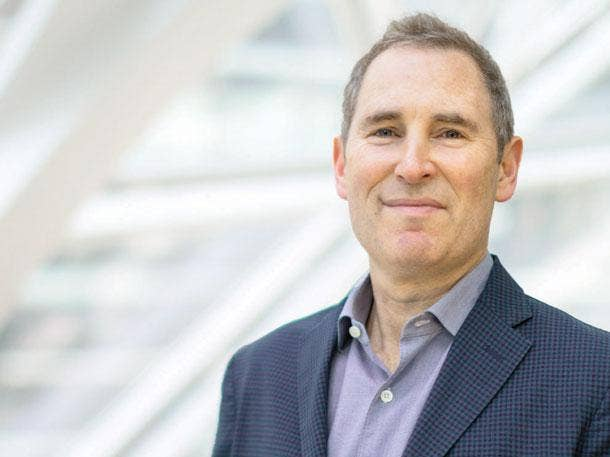
AWS currently has a massive $244 billion backlog with Amazon planning to boost AWS’ AI goals this year with a $200 billion investment, according to Amazon CEO Andy Jassy.
Jassy touted AWS’ 24 percent sales growth rate in fourth-quarter 2025 as the largest in three years, while also unveiling plans to launch its new AI Trainium4 chip.
“As a reminder, it’s very different having 24 percent year-over-year growth on a $142 billion annualized run rate than to have a higher percentage growth on a meaningfully smaller base, which is the case with our competitors,” said Jassy, referring to competitors like Google Cloud and neoclouds, during Amazon’s recent fourth-quarter 2025 financial earnings report.
[Related: AWS Vs. Microsoft Vs. Google Cloud Earnings Q4 2025 Face-Off]
It is key to note that Jassy did not mention during the report Amazon’s recent 16,000 layoff round that included AWS employees.
Before jumping into Jassy’s boldest remarks on the availability of Trainium4 AI chips, Graviton growth rates, and AI pushing more businesses to the AWS cloud, here’s a quick look at AWS’ recent earnings results.
AWS Fourth-Quarter And 2025 Earnings Results
AWS generated $35.6 billion in fourth-quarter 2025 revenue, up 24 percent year over year, with an annual run rate of $142 billion.
Operating income at AWS increased 17 percent in fourth-quarter 2025 year over year to $12.5 billion.
For the full year of 2025, AWS sales increased 20 percent annually to $129 billion.
Operating income at AWS in 2025 was over $45 billion, an increase of 15 percent year over year.
Here are CEO Andy Jassy’s five boldest remarks from Amazon’s earnings report this month.
AWS’ $244 Billion Backlog; ‘We Are Being Incredibly Scrappy Around’ Supply
Our [AWS] backlog is $244 billion [as of the fourth quarter]. That’s up 40 percent year over year.
It’s up 22 percent quarter over quarter, and we have a lot of deals that are in the pipeline. There’s just a lot of demand for AWS right now in the AI space and also in the core AWS space.
On the supply and demand, [AWS is] growing 24 percent year over year on a $142 billion annualized run rate business. So we’re growing at really an unprecedented rate yet.
Every provider would tell you—including us—that we could actually grow faster if we had all the supply that we could take. So we are being incredibly scrappy around that.
If you look at the last 12 months, we added 3.9 gigawatts of power. Just for perspective, that’s twice what we had in 2022 when we were an $80 billion annual run rate business.
We expect to double it again by the end of 2027.
Our team is being aggressive and scrappy and inventive in adding capacity as fast as we can. We’ll add a lot more in 2026, 2027 and 2028.
Trainium4 Chips Coming In 2027; Trainium5 Conversations Are Happening
Trainium is a multibillion-dollar annualized run rate business at this point, and it’s fully subscribed.
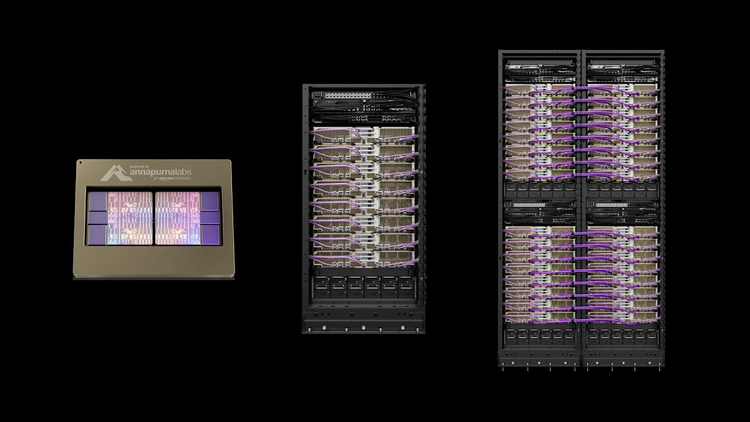
Trainium3, which is the next version of Trainium that we just started shipping, that’s 40 percent more price performance than Trainium2.
We have a very substantial amount of interest there. We’re seeing very strong demand for Trainium3 and expect nearly all of our Trainium3 supply of chips to be committed by mid-2026.
And we’re just in the process of building Trainium4.
There’s very substantial interest in Trainium4, which is coming in 2027, and we’re already having conversations about Trainium5.

$200 Billion CapEx Spending Plan In 2026 ‘Predominantly In AWS’
We expect to invest about $200 billion in capital expenditures across Amazon, but predominantly in AWS because we have very high demand; customers really want AWS for core and AI workloads, and we’re monetizing capacity as fast as we can install it.
We have deep experience understanding demand signals in the AWS business and then turning that capacity into strong return on invested capital. We’re confident this will be the case here as well.
If you look at the capital we’re spending and intend to spend this year, it’s predominantly in AWS.
Some of it is for our core workloads, which are non-AI workloads because they’re growing at a faster rate than we anticipated. But most of it is in AI.
We just have a lot of growth and a lot of demand.
Graviton Chips ‘Growing More Than 50 Percent Year Over Year’
Our chips business, inclusive of Graviton and Trainium, is now over $10 billion in annual revenue run rate—growing triple-digit percentages year over year.
We’re adding significant EC2 core computing capacity each day, and the majority of that new compute is using our custom CPU silicon, Graviton.
Graviton is up to 40 percent more price performance than leading x86 processors and is used expansively by over 90 percent of AWS’ top 1,000 customers.
Graviton itself is a multibillion-dollar annualized run rate business, growing more than 50 percent year over year.
We consistently see customers wanting to run their AI workloads where the rest of their applications and data are.
If you really want to use AI in an expansive way, you need your data in the cloud and you need your applications in the cloud. Those are all big tailwinds pushing people towards the cloud.
So we’re going to invest aggressively here, and we’re going to invest to be the leader in this space as we have been for the last number of years.
We have, I think, a fair bit of experience over the years in AWS of forecasting demand signals and doing it in such a way that we don’t have a lot of wasted capacity and that we also have enough capacity to serve the demand that’s there.
We’ve also proven with AWS over the years in how we build data centers and how we run them and how we invest in there. If you think about our chips, our hardware and our networking gear and how we’ve invested in power that this isn’t some sort of quixotic top- line grab, we have confidence that these investments will yield strong returns on invested capital.
We’ve done that with our core AWS business. I think that will very much be true here as well.