Google Cloud Next: 5 Biggest Gemini, TPU, AI And Partner Takeaways
From Google’s new TPUs and Gemini Enterprise Agent Platform to its huge $750 million partner fund, here are the five biggest launches and takeaways from Google Cloud Next 2026 that partners need to know about.
From new Tensor Processing Units (TPUs) to a $750M channel partner investment fund, Google Cloud’s AI innovation engine roared last week at Google Cloud Next 2026.
The Mountain View, Calif.-based cloud and AI giant launched a slew of new AI products and tools for the agentic AI market as well as new AI security solutions based off its recent acquisition of Wiz.
Thousands of channel partners, developers and customers flocked to Google Cloud Next 2026 in Las Vegas to get hands-on training and to learn about the next wave of AI innovation from Google, which did not disappoint.
[Related: Google’s New Partner Leader On Key Investments, Microsoft Worry And ‘Enavling Partner Superpowers’]
Here are the five biggest launches and news from Google Cloud Next 2026 that every Google partner, investor and customer needs to know about.
New Gemini Enterprise Agent Platform
One of the biggest launches at Google Cloud Next was the new Gemini Enterprise Agent Platform for building, scaling, governing and optimizing agents.
The new platform is an evolution of Google’s Vertex AI—bringing model selection, model building and agent building capabilities together with new features for agent integration, DevOps, orchestration and security.
The Gemini Enterprise Agent Platform supports agents with autonomous reasoning and is integrated with Google’s data and security capabilities.
It brings together a low-code agent studio; agent-to-agent orchestration for agents to delegate tasks to one another; agent registry for indexing internal agents across the organization; agent identity to enforce traceable and auditable authorization policies; agent gateway for real-time policy enforcement; and agent observability for agent auditing dashboards.
Other capabilities include an agent developer kit with a graph-based framework for defining agent logic, the ability to connect to any Model Context Protocol (MCP) server, and a memory bank with memory profiles to provide agents with persistent context and recall of specific user details and project histories.
Gemini Enterprise Agent Platform gives users access to Google’s most advanced AI model, Gemini 3.1 Pro, as well as other Google models and models from Anthropic.
The Takeaway: The launch of Gemini Enterprise Agent Platform shows that Google will keep revamping, investing and tweaking its flagship agentic platforms at a rapid pace to keep up with its own innovation engine.
Click through to read the other four biggest takeaways from Google Cloud Next 2026.

$750 Million Partner Fund
Google Cloud launched a new $750 million fund for Google partners to provide them with new resources and incentives to drive more agentic AI customer adoption.
The new fund is specifically focused on channel partners—including global consulting firms and systems integrators—to provide financial incentives when building AI agents for customers and integrating the agents into existing software and workflows.
Google’s $750 million fund is focused on large-scale training and enablement and collaborations where Google forward-deployed engineers will work with partners in workshops as well as in building prepackaged agents to distribute them on the Google Cloud Marketplace.
The fund also includes presales investments like co-funding minimum viable products that take customer production data, show a business outcome and then scale more broadly.
Lastly, the fund includes post-sales activity-linked incentives for driving customer go-lives and activating usage.
The Takeaway: Injecting $750 million into adding more partner resources and financial incentives to drive agentic AI adoption shows, once again, that Google Cloud is a global leader when it comes to channel programs that drive AI sales and profitability.
TPU 8t And TPU 8i
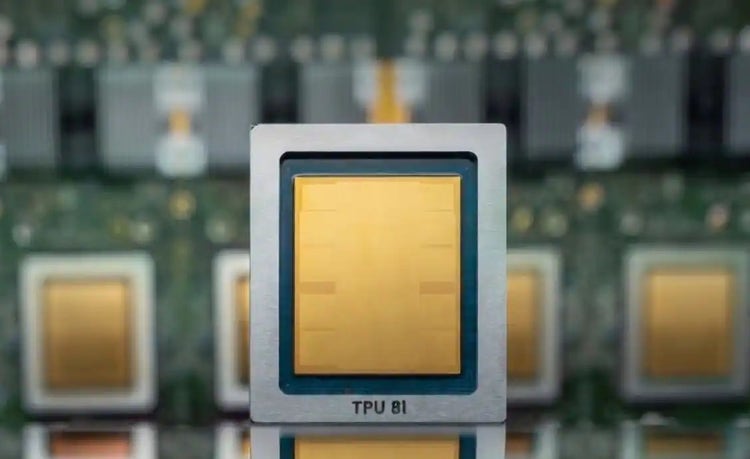
Google unveiled its eighth generation of its TPUs, which includes two distinct chips and specialized systems engineered for the agentic era: the TPU 8t and the TPU 8i.
The TPU 8t is optimized for training, designed for high-throughput AI workloads.
TPU 8t uses new Inter-Chip Interconnect technology to scale up to 9,600 TPUs and 2 petabytes of shared memory in a single superpod. It achieves three times the processing power of Ironwood and delivers up to double the performance per watt, Google said.
Google’s new TPU 8i, meanwhile, is optimized for inference and reinforcement learning.
TPU 8i uses the new Boardfly topology to directly connect 1,152 TPUs in a single pod. It features three times more on-chip SRAM compared with previous versions and a specialized Collectives Acceleration Engine that offloads resource-heavy tasks.
The Takeaway: Google will continue to pour millions into building new AI chips to have a unique market differentiation—a true end-to-end hardware, software and services portfolio for the AI era.
Expanded Wiz Platform Support For AWS, Azure, Cloudflare, Databricks And Salesforce
Google officially completed its blockbuster $32 billion acquisition of Wiz in March, tucking the security company under the Google Cloud umbrella.
At Google Cloud Next, the company said the Wiz platform has added support for Databricks, enabling Databricks customers to now use Wiz security.
Google’s Wiz also added support for several agent studios including AWS Agentcore, Gemini Enterprise Agent Platform, Microsoft Azure Copilot Studio and Salesforce Agentforce.
Wiz also unveiled it now can support Google Cloud Apigee and Cloudflare AI Security for Apps along with the Vercel platform.
In addition to all the new support capabilities, Wiz launched a new security technology for securing AI-native development, including new protections for vibe-coded applications via an integration with Lovable. Wiz can now run its security scanning functionality within the Lovable platform.
Other new Wiz capabilities include new inline AI security hooks that boost security for AI-generated code and new agent-powered remediation capabilities leveraging Wiz Skills.
The Takeaway: Google launching new support for Wiz customers that are not only Google clients shows the company’s willingness to be an open AI provider regardless of competition.
Gemini Enterprise Revamped App
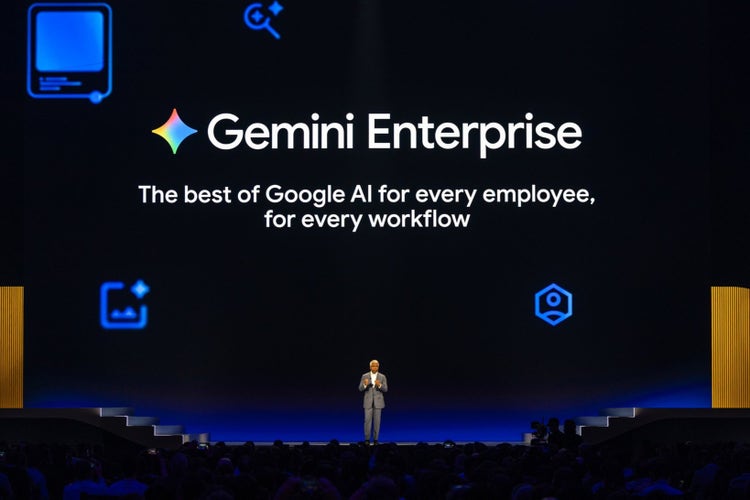
Google revamped its Gemini Enterprise App with new capabilities including the ability to now build and deploy long-running agents that independently solve complex problems up to days at a time, managed entirely through a new Inbox command center.
Other big enhancements inside the Gemini Enterprise App include the ability to build agents—ranging from simple assistants to highly complex autonomous orchestrators—without needing to write a single line of code. Using Google Agent Designer and Skills, users can construct these workflows entirely with natural language or through a visual interface.
Another big boost to Gemini Enterprise is the ability to transition from individual AI to collaborative team-level productivity with Projects—a new shared workspace for teams and agents—and the integrated Canvas editor.
Lastly, Gemini Enterprise App now integrates with Microsoft 365. Customers can orchestrate actions across Google Workspace, Microsoft 365, and a growing ecosystem of partner agents and data connectors.
The Takeaway: Gemini Enterprise is one of the hottest AI products in the world. Continuing to add rich features and new support shows customers that Gemini will be constantly enhanced when new AI innovation comes to light.