IBM CEO’s Letter To Investors Spoke To Deeply Held Leadership Principle
‘If there’s a hard thing to be done, do it earlier rather than later,’ says IBM CEO Arvind Krishna.
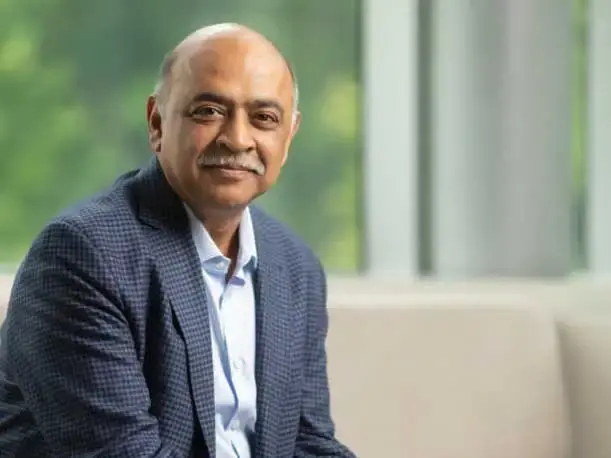
IBM Chairman, President and CEO Arvind Krishna had a problem.
The 115-year-old technology giant’s next quarterly earnings report was more than a week away, but already IBM looked like it was going to underperform due in part to customers delaying spending on infrastructure projects and instead spending money on data center components to get ahead of rising costs and falling supply.
Customers had also been “distracted,” as Krishna described it, by reports around the security capabilities of one of the latest artificial intelligence models made by the upstart firm Anthropic.
As Krishna told CRN in a recent interview, he looked at his options and leaned on a principle he’s carried through his six years at IBM’s helm: “If there’s a hard thing to be done, do it earlier rather than later.”
Instead of waiting for the earnings call on July 22 to reveal the underperformance, Krishna published a letter eight days earlier not only acknowledging the results but providing some market trends behind them. The letter shocked the business world, sending IBM’s stock down more than 25 percent, one of the largest drops in the company’s history.
[This article is part of CRN’s August cover story on IBM. For an even more in-depth look, read: 'The New IBM Partner Agenda.']
But Krishna reasoned that with the news out of the way, he could use the earnings call to focus on remedies.
“Time will tell whether that was the right decision. I tend to think it was,” Krishna said. “Otherwise, we would have been spending the last week explaining the hesitation as opposed to what we are going to do to go fix it.”
Krishna’s comments offer a window into the mindset behind his leadership decisions and the balancing act IBM faces as it pursues AI growth while preparing for the next wave of quantum computing.
Alex Talmor, president of Toronto-based GlassHouse Systems, an IBM solution provider since the early 1990s, said Krishna has his vote of confidence as the head of IBM.
“Arvind is acknowledging challenges, addressing them hands-on, has a vision for IBM and where it’s going,” Talmor said. “From a leadership … perspective and downstream, it’s evident they’re adjusting quickly. They’re making changes even now in the sales force and coverage.”
David Luftig, executive vice president of strategy and innovation at Pellera Technologies, which just celebrated one year since its launch after Converge Technology Solutions and Mainline Information Systems merged, told CRN in an interview that he’s confident in Krishna as a leader, and commended the field teams, partner engagement and innovation vision.
“We are very happy,” he said.
IBM’s share price has rebounded somewhat to the $240 a share range as of Aug. 11. That’s still down about 19 percent since July 13 but up about 20 percent since the stock dipped below $200 a share on July 22.
Krishna is used to having results taking time to play out.
In October 2018, when Krishna was senior vice president of IBM Cloud and Cognitive Software under CEO Ginni Rometty, he played a central role in the $34 billion purchase of Red Hat. IBM’s stock fell about 5 percent after the acquisition announcement.
Krishna became CEO of IBM in April 2020. Today, Red Hat has around $8 billion in annual run rate compared with the $3.4 billion in annual revenue it reported in its final earnings as a stand-alone company in March 2019.
Asked about IBM’s potential vulnerability to activist investors, angry shareholders and board members looking to change Krishna’s innovation road map and strategy, he said that public CEOs must always prepare for those possibilities, but that his No. 1 focus is always on delighting clients and then investing back into delighting IBM employees.
“If you falter, one should always be just prepared is my view. And you can imagine that that is something that we want to always be [thinking]—are we giving enough back to our shareholders? And activists, at the end, if I look at the good side, are trying to come in to say, ‘I need better returns for clients and for investors,’” Krishna said. “And if that’s the goal, then one should be prepared to deal with them. That is just the nature of today’s world that we live in.”