5 Things Intel’s CFO Said About US Equity Deal, CPU Road Map, Foundry Warning And Other Topics
In the first appearance of a top Intel executive since the company’s U.S. equity stake deal was announced last week, Intel CFO David Zinsner discusses the implications of the ‘historic’ agreement with the Trump administration, its CPU road map and its recent foundry warning.
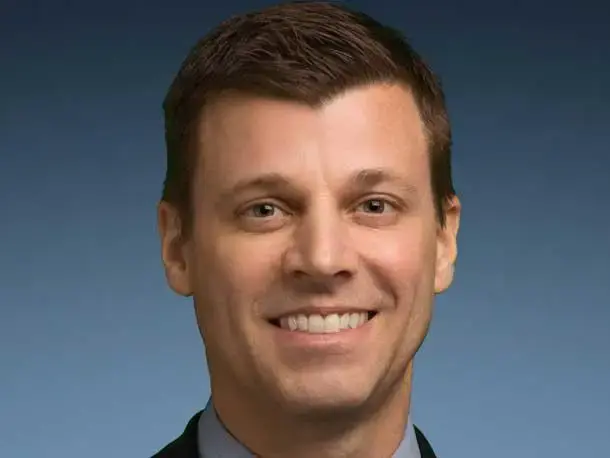
Intel CFO David Zinsner said Thursday that it will take more than two years for the chipmaker to get its server CPU portfolio “where we want it to be” as CEO Lip-Bu Tan pushes for road map changes that he hopes will make it more competitive.
These were one of many comments Zinsner made about the state of the chipmaker’s products, the implications of its U.S. equity deal with the Trump administration, prospects for its contract chip manufacturing business and other topics during an appearance he made at Deutsche Bank’s 2025 Technology Conference that day.
[Related: Exclusive: AMD Makes Big Channel Funding Boost As It Builds ‘True’ Partner Program]
“We will be adjusting the road map to make sure that we are listening to customers and delivering products that customers want and need,” Zinsner said, referencing Intel’s server CPU business. “We’ll make some incremental improvement over the course of the next couple years, but it’s going to be a multi-year process to get the portfolio to be really where we want it to be.”
This marked the first public appearance of a top Intel executive since the Santa Clara, Calif.-based company confirmed last Friday that the U.S. government will take a 9.9 percent equity stake in the chipmaker using $8.9 billion in previously allocated CHIPS and Science Act grants, which it called a “historic” agreement.
Answering questions from a financial analyst, Zinsner said Intel received $5.7 billion out of the total funds it’s expecting from the federal government last night. This, according to the CFO, boosted Intel’s balance sheet and “eliminated the need to access capital markets in any other way in the near term.”
Zinsner called the U.S. government’s investment in Intel a “good endorsement” that will help it convince customers to work with Intel Foundry, but he said the success of the contract chip manufacturing business is “really in our hands.”
“We’ve got to execute on the process. We’ve got to delight our customers. We’ve got to make sure we’ve got capacity there when they need it. Those things, I think, are going to be primarily the reasons why customers come to us,” he said. “But [the] endorsement helps on the margin, and I think ultimately will help be helpful for us.”
What follows are five other big things Zinsner discussed on Thursday, including his view on the state of Intel’s CPU business, how a stipulation in the U.S. equity deal creates “friction” for any plan by the company to spin off Intel Foundry, what investors should make of Intel’s warning about the future of Intel Foundry, and the coincidental timing of SoftBank Group’s investment.
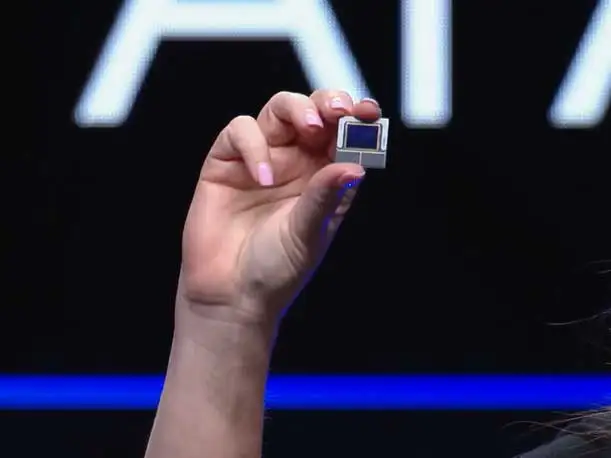
Zinsner Gives Mixed Assessments On PC And Server Chips
Zinsner said while Intel is “in pretty good shape” with its CPUs in the notebook segment—including the Core Ultra 200V “Lunar Lake” chips—the company is on shakier ground when it comes to desktops and servers.
“We kind of fumbled the football on the desktop side, particularly high-performance desktop side,” the CFO said, referencing the Core Ultra 200 “Arrow Lake” products it launched last fall. “As you look at share on dollar basis versus a unit basis, we don’t perform as well. And it’s mostly because of this high-end desktop business [for which] we didn’t have a good offering this year.”
Intel expects to “improve” its position in the desktop space next year with its next-generation product line, code-named “Nova Lake,” which Zinsner said will have a “more complete set of SKUs [models].”
“I actually feel pretty good about the client [business]. It’s not executing flawlessly, but it’s executing pretty well. That generates good operating margin, drives good cash flow and funds the rest of the business,” he said.
As for Intel’s server CPU business, “it’s been pretty mixed,” according to Zinsner.
“We are continuing to bring out products that that do perform better than the prior product, but we’re still not there relative to the competition,” he said.
Zinsner noted that Intel’s server CPUs are performing well when it comes to powering single-threaded applications and head nodes in GPU server clusters.
“But collectively, across the entire data center, we still have more work to do to get products that are really performant across the spectrum and are meeting our customers’ expectations,” he said.
Among the work Intel is doing to improve its server CPU position is to restore multi-threading, which is among the things Tan has pushed, according to Zinsner.
But in admitting that it will take a “multi-year process” for Intel to make big competitive moves in the business, Zinser said the company’s upcoming “Diamond Rapids” server product line due for launch next year “doesn’t get us quite there.”
“In certain cases the performance is actually better, but in other cases it’s not. And so we’ve got more work to do to finally get to a place,” he said.
Zinsner called the successor to “Diamond Rapids,” code-named “Coral Rapids,” the “real opportunity” that will let Intel “take a really good step forward.”
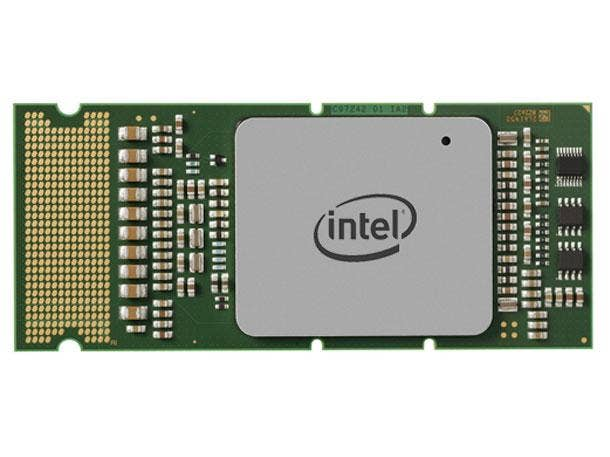
Zinsner: U.S. Stake Should Ultimately ‘Be Accretive’ For Shareholders
In addressing the move by Intel and the U.S. government to convert previously awarded U.S. CHIPS and Science Act grants into an equity stake, Zinsner said there was a “significant amount of uncertainty as to whether” the company would receive the remaining $5.7 billion in grants that had been awarded but not paid out.
Intel had received $2.2 billion out of the $7.9 billion federal grants it had been awarded as part of a direct funding agreement the company reached last year with the Biden administration to support its U.S. manufacturing expansion.
With respect to the Biden-era agreement, Zinsner said, “there were certain concerns around whether we would hit many of those milestones” that were required for the company to receive the remaining funds in the direct funding agreement.
By contrast, Zinsner said Intel “saw a lot of advantages” with the Trump administration’s proposal to convert the federal grant money into an equity holding.
“We were already thinking, ‘Hey, we likely will need a little bit more cash on the balance sheet, given that one of Lip-Bu’s core strategies is to solidify the balance sheet. And so this was a quick way to getting, initially $5.7 billion in the door,” he said.
While Zinsner admitted that the U.S. government’s investment in Intel common stock will have a “dilutive impact” on shareholders, he said “it doesn’t take a lot of volume” of wafers for Intel Foundry customers “to make this accretive for us.”
“So we ran that math, and as we were doing the analysis that, we said, ‘Hey, I think based on this ownership, we will see that level of business going forward.’ And thus, ultimately, this should be pretty accretive to our existing shareholders,” he said.
Zinsner: US Equity Deal Puts Pressure On Us To Keep Foundry Business
Zinsner said that a stipulation in Intel’s U.S. equity deal could be seen as a way to discourage it from spinning off its contract chip manufacturing business.
This stipulation comes in the form of a five-year warrant for the federal government to purchase an additional 5 percent of Intel common stock at $20 per share. But it can only be executed if Intel reduces its ownership of Intel Foundry below 51 percent.
Intel’s board chairman, Frank Yeary, had proposed for the company to spin out Intel Foundry earlier this year, the Wall Street Journal reported earlier this month. But while the idea had some support from the outside—including some former board members—Tan saw the manufacturing business as critical to Intel’s future and the U.S supply chain.
Regarding the U.S. government’s warrant with Intel that could trigger if the company sold a majority stake of Intel Foundry or the entire business, Zinsner said, “They didn’t want to see us take a business and spin it off or sell it to somebody.”
“And so in some ways, you could view this as a little bit of friction to keep us from moving in a direction that I think ultimately the government would prefer we not move to,” he added.
The CFO noted that Intel has discussed the possibility of Intel Foundry taking on external investors with how it has structured the division as an independent business but said there’s not a “high likelihood that we would take our stake below the 50 percent [mark].”
However, Zinsner said he doesn’t anticipate outside investors to take a stake in Intel Foundry anytime soon, adding that any possibility of that is “years away.”
“We’ve got a lot of work to do to get the foundry business to a level where we feel confident it can operate somewhat quasi-autonomously,” he said.

Timing Of SoftBank’s $2B Stake In Intel Was A ‘Coincidence’
Zinsner called the proximity of SoftBank Group’s $2 billion investment announcement to the chipmaker’s equity agreement with the U.S. government a “coincidence.”
Four days before President Trump said the federal government would take a 9.9 percent equity stake in Intel, Japan-based SoftBank announced that it would make a $2 billion investment in the company’s common stock to boost U.S. chip manufacturing.
“We have been working for a number of years with SoftBank on ways to partner, and we continue to have those conversations,” Zinsner said. “They’re very much invested in AI, as and we’re looking for opportunities where we can intersect with that and provide solutions that either may be useful for them or may be, in concert with them, useful for others.”
While the two parties had discussed the possibility of SoftBank gaining an equity stake in Intel, the Japanese investment giant decided to “somewhat fast-track the investment,” according to Zinsner.
“We were looking to put some cash on the balance sheet, so it was a good opportunity for us to do it quickly, get a good quantum of capital, a good slug of capital in one fell swoop with a quality investor,” he said.
Zinsner Explains Intel’s Warning About Future Of Foundry Business
Zinsner said Intel gave a dire warning more than a month ago about the future of its foundry business because the upcoming Intel 14A manufacturing node is too expensive for the chipmaker to sustain with its own products.
The CFO was addressing a question about Intel’s disclosure in a late July quarterly filing with the U.S. Securities and Exchange Commission, where it said that the company may halt or pause development of Intel 14A and future leading-edge nodes if the company can’t land a “significant external customer” for Intel 14A.
While Zinsner said that SEC filings only focus on the “risk factors” and don’t address “any of the mitigating factors” related to its business, he admitted that Intel Foundry could face an existential threat if the company doesn’t find a big-enough external customer.
“By the time we’re ramping up volumes in 14A on our own, it’s not going to be enough to drive an appropriate ROI for shareholders to make that investment,” Zinsner said.
“So we do need customers outside of our own products business to drive volume through that business to make sure that we get to get the right ROI, and we’re just articulating that to the investors so they understand what we’re trying to do,” he added.
This contrasts with the Intel 18A node, which is expected to enter manufacturing this year and can be sustained by Intel’s own products like “Panther Lake,” according to Zinsner.
“I think it’ll turn out to be a good node for us from an ROI perspective, without foundry customers,” he said. “I do think that we have an opportunity in the second wave to get foundry customers into 18A. But 14A is different.”
Despite the warning, Zinsner said Tan is becoming “more and more confident around our ability to be successful” with the contract chip manufacturing business.
“The fact that 18A is now making steady improvement on the yields is also giving us a high degree of confidence that 14A will be successful,” he said. “So it’s not to say that we have any diminished confidence around 14A, but we’re just going to maintain discipline around how we manage the build-out to be able to get the right return.”
As for how long it could take until Intel needs to make a decision on Intel 14A, Zinsner said the company could wait until 2027 to land a big Intel Foundry customer.
“If we don’t win a big customer next year, I don’t think that takes us out of the window of opportunities for 14A. I think [2027] we could win customers as well, and that’s still get us a good business on 14A,” he said.