AMD Sees ‘Very Clear Path’ To Double-Digit Share In Nvidia-Dominated Data Center AI Market
AMD CEO Lisa Su explains how she expects the chip designer’s business to grow over the next three to five years, with its Instinct GPUs estimated to drive an average of 80 percent growth in revenue and sales of other products also expected to increase over that period.
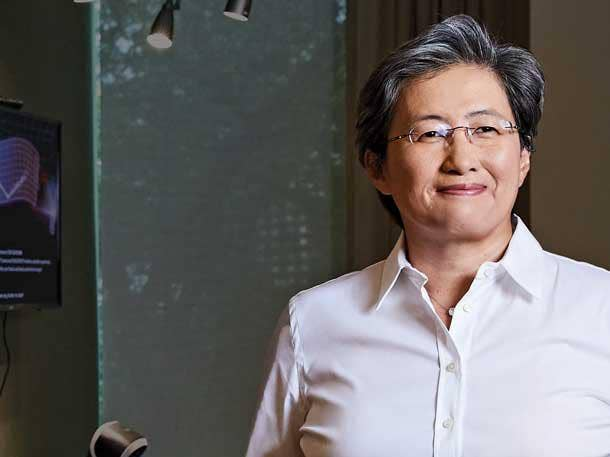
AMD Chair and CEO Lisa Su said Tuesday that the chip designer sees a “very clear path” to gaining double-digit share in the Nvidia-dominated data center AI market that could drive an average of 80 percent in revenue growth over the next three to five years for the segment.
Speaking at the AMD Financial Analyst Day 2025 event, Su (pictured) said the estimated revenue growth rate for data center AI products, anchored by its Instinct GPU lineup, could allow the company’s broader data center business to grow at a compound annual growth rate of more than 60 percent over the next three to five years.
[Related: Analysis: AMD Puts Channel Pressure On Intel As Both Firms Revamp Partner Programs]
The Santa Clara, Calif.-based company expects the total addressable market for AMD’s products in data centers to reach more than $1 trillion by 2030. This is double the $500 billion market figure Su gave in June, but that market-size estimate was only for AI accelerator chips in data centers and not a broader portfolio of products, including CPUs and networking components that the company is considering for its new figure.
Nvidia, by contrast, said back in August that it expects the AI infrastructure market to reach between $3 trillion and $4 trillion by the end of the decade.
Addressing the previous $500 billion estimate AMD gave for the data center accelerator chip market, Su said, “Many of you said, ‘Well, that seems too high, Lisa, why would you think that those numbers should be so high?’ It turns out that we were probably closer to right than wrong in terms of just the acceleration of AI spend.”
AMD’s expected data center momentum, combined with an estimated 10 percent growth in revenue on average for the rest of AMD’s business, would result in the compound annual growth rate for overall revenue reaching more than 35 percent over the next three to five years, according to Su.
“It's an exciting growth trajectory that we have,” she said.
Across the other parts of AMD’s business, Su set revenue share targets the company expects to hit in the next three to five years: more than 50 percent for server CPU products, more than 40 percent for client products and over 70 percent for adaptive chip products.
“Now, as exciting as the data center AI revenue opportunity is for us, the other message that we want to leave you with today is every other part of our business is firing on all cylinders, and that’s actually a very nice place to be,” Su said.
The disclosures were made a week after AMD reported a “sharp” jump in sales for its CPUs across the PC and server segments as well as its Instinct data center GPUs, which allowed the company to deliver record revenue of $9.2 billion for the third quarter.
The company has spent significant resources over the past few years on building out competitive GPU, system and software capabilities that is helping it chip away at Nvidia’s dominance of the AI infrastructure market.
During the presentation, Su said AMD has invested more than $40 billion into research and development as well as more than $60 billion in acquisitions over the past five years, with many of these efforts meant to boost the company’s AI strategy.
The largest acquisitions during this period consisted of AMD’s $49 billion Xilinx deal in 2022 and its $4.9 billion ZT Systems deal that was completed in March. (The company sold the server manufacturing unit of ZT Systems to Sanmina for $3 billion in October).
Su said last week that AMD is “on a clear trajectory” to make tens of billions of dollars in annual revenue in 2027 from the company’s Instinct data center GPU business, thanks in large part to its recently announced deal for OpenAI to deploy 6 megawatts of Instinct-based infrastructure.
When the OpenAI deal was announced in early October, Su said the win could spur additional revenue of more than $100 million from other customers in the coming years.