12 Agentic AI Startups To Watch In 2026
Early-stage vendors are focused on providing secure identity and governance for AI agents and delivering agentic-powered automation for security operations.

Agentic AI Startups To Watch
While the mantra of the tech startup has always been to move fast as a way to disrupt less-nimble players, the arrival of AI and agents has put the typical startup timetable into overdrive. For most startups in the past, “they’d come up with an idea, and then for a few years they’d build it. And then they’d educate the market about it,” said Niv Braun, co-founder and CEO at Noma Security, a startup providing security for AI and agents. For the current crop of early-stage vendors focused on AI and agentic technologies, however, “we need to react much, much faster to the market than most startups,” Braun said in an interview during RSAC in March.
[Related: Channel Has ‘Huge’ Role In Securing AI Agent Revolution: Top Execs At RSAC 2026]
As just one example, it’s probable that the industry’s areas of focus around AI and agentic will be entirely different just a year from now—which makes this “a crazy domain to live in,” he said. “I enjoy it. But it’s crazy.”
That dynamic is perhaps nowhere more evident than with security, which has long been a focal point for startup activity. With the push to adopt AI agents, a massive number of new cybersecurity startups have come to market in a very short span of time.
Still, many of these new security startups focused on AI and agentic are not necessarily being built for the longer term. Noma Security has taken a different approach. The startup has raised $132 million in funding to make the needed investments, such as building a full-fledged research team, to go for a “home run” and build a sizable company, Braun said.
“You don’t have a transformation like AI every one or two years. So I don’t know if there will be another opportunity in my era to build such an iconic company,” he said.
Crucially, Noma has also invested in building out a channel-focused growth strategy, including with the hire last month of channel veteran Ted Plumis to lead the effort. Even though the company is just three years old at this point, Noma is committed to driving all of its deals through partners, Braun said. Ultimately, “when we speak about building a big company,” he said, “this is the only way truly to scale big and scale fast.”
At RSAC 2026 in San Francisco last month, Noma was among the agentic AI startups that stood out through offering differentiated security capabilities along with bringing a focus on working with channel partners. Key segments for agentic AI startups at RSAC included providing secure identity and governance for AI agents as well as delivering agentic-powered automation for security operations.
What follows are the details on 12 agentic AI startups to know in 2026.
Aembit
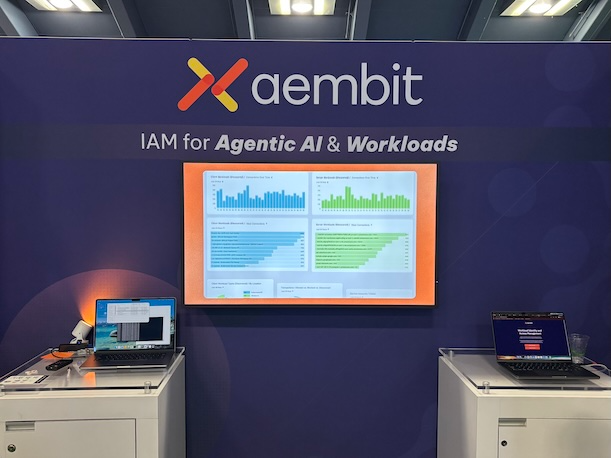
Aembit recently debuted its Identity and Access Management for Agentic AI offering, with the aim of enabling enforcement of access policies for AI agents. The startup said the move extends its Aembit Workload IAM Platform to provide controls over what AI agents—whether autonomous or user-driven—are able to access, as well as the conditions and accountability around that access. Key capabilities include providing each agent with its own verified identity that can be linked to a human identity (Blended Identity) along with an MCP Identity Gateway for controlling how agents connect via the Model Context Protocol.
Aurascape
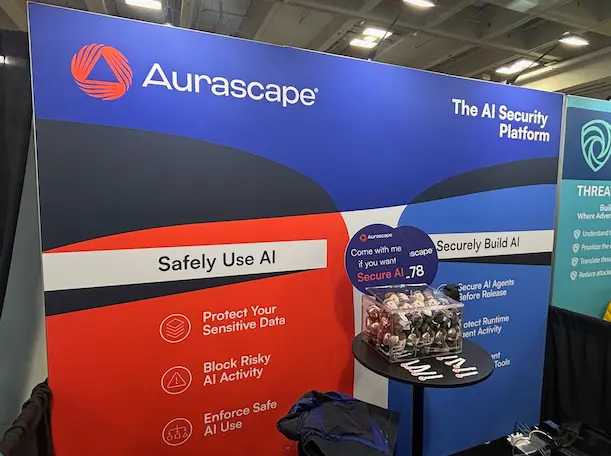
Aurascape recently announced the launch of a new tool for addressing massive agentic security gaps related to the Model Context Protocol (MCP). The new Zero-Bypass MCP Gateway works with Aurascape’s AI Proxy to enable governance for use of trusted tools, as well as providing identification of high-risk activity related to MCP, the company said. In addition, Aurascape’s Zero-Bypass MCP Gateway has capabilities for reducing bypass risk during agent interactions, offering a single platform for both “securing the AI agents organizations buy and securing the AI agents organizations build,” the company said in a news release.
Command Zero
Command Zero offers an agentic-driven platform that aims to serve as the operating system for the Security Operations Center (SOC) and provide automation for key tasks such as alert triage and investigations, according to Dov Yoran, co-founder and CEO of Command Zero. Right now, “there’s no way human-powered response is going to keep up with machine-powered attacks,” Yoran told CRN. With its agents that triage and prioritize all alerts, Command Zero is enabling human security analysts to be elevated to a much higher level of effectiveness and productivity, the company said. While security teams are “drowning in alerts,” Yoran said, Command Zero’s agentic system can handle much of the “data drudgery” that takes up security analysts’ time, Yoran said.
Dropzone AI
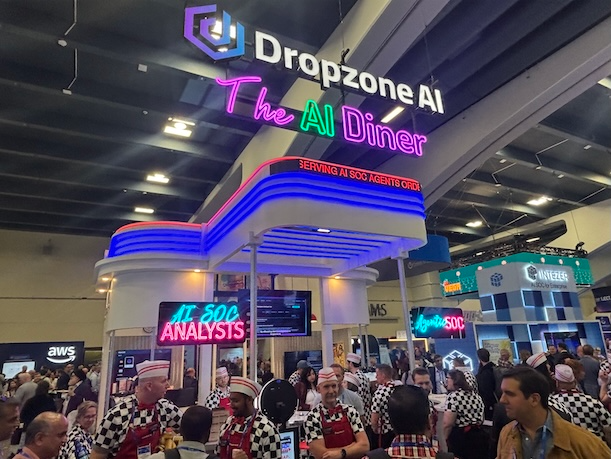
Dropzone AI offers a fully AI-powered approach to dealing with alert overload in the SOC (Security Operations Center)—delivering improved security outcomes without human analysts, Dropzone founder and CEO Edward Wu told CRN recently. Dropzone’s biggest differentiator is providing a “software-only” approach to addressing alerts with its AI SOC Analyst platform, according to Wu. This offers substantially improved consistency, scalability and transparency compared with human‑dependent methods, he said. Notably, Dropzone AI has focused heavily on channel partnerships, including with MSSPs and VARs, according to Head of Channel Shashi Nair.
Mondoo
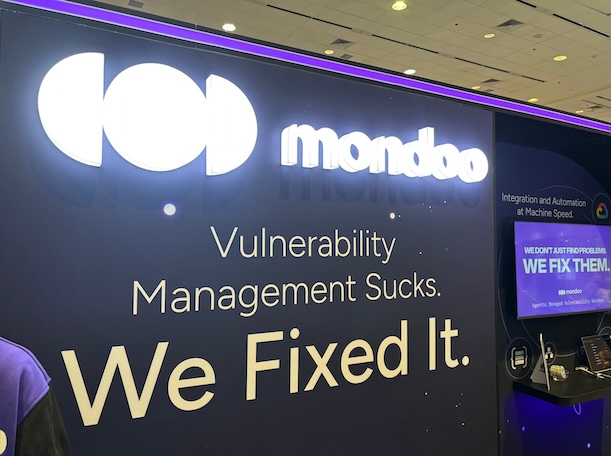
In March, Mondoo unveiled its new Agentic Managed Vulnerability Service, which delivers “fully optimized” vulnerability management programs through a combination of human experts and agentic capabilities, the company said. The offering analyzes vulnerability data from Mondoo’s platform and provides vulnerability monitoring and prioritization as well as remediation guidance and reporting, according to the startup. The Mondoo Agentic Managed Vulnerability Service is also “MSSP and channel ready” with the offering available for resale by solution providers and utilization by providers of managed security services, the company said in a news release.
Nagomi Security
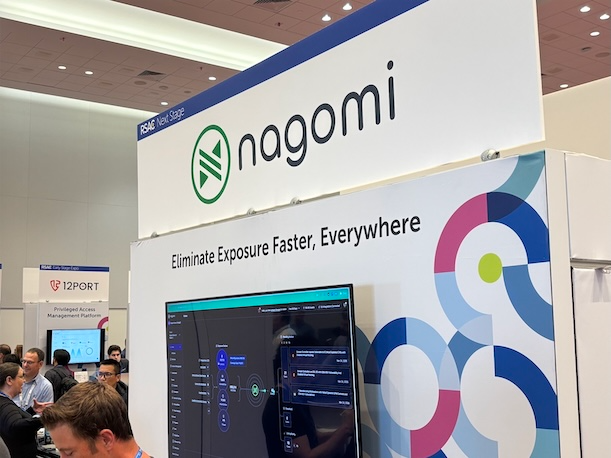
In March, Nagomi Security debuted what it’s calling a new “operating model” for replacing current exposure management methods with the help of agentic-powered capabilities. The new model, Agentic Exposure Ops, provides AI agents that can “evaluate exposure across vulnerabilities, misconfigurations, threats, controls and assets”—ultimately determining which vulnerabilities may constitute an actual risk, the startup said in a news release. The offering also runs continuously to provide verification that fixes remain intact as IT environments change, Nagomi said.
Noma Security
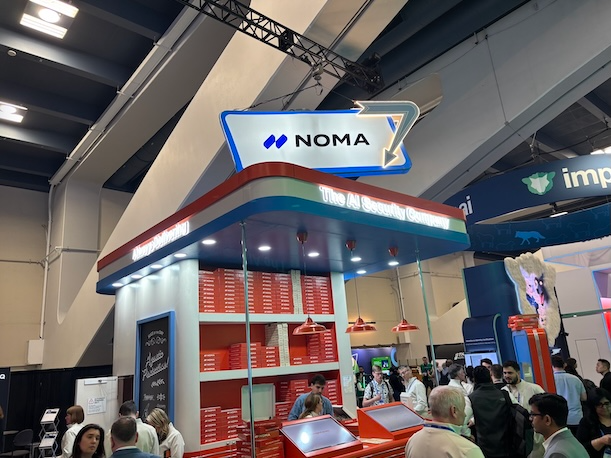
Noma Security offers what it calls a “unified” AI agent security platform, with capabilities for continuous discovery, governance and protection of AI and agents. The platform provides a full AI inventory through automatically discovering where AI applications and agents are being built, as well as determining which data and systems they can access, according to the company. Other key capabilities include AI security posture management and risk prioritization as well as AI runtime protection, Noma said. In February, Noma Security announced the hire of channel veteran Ted Plumis as its vice president of global channel and alliances to accelerate the startup’s expansion with solution and service provider partners.
Operant AI
At RSAC in March, Operant AI debuted an initiative aimed at enabling security for AI and agents to be embedded directly within AI inference infrastructure. The initiative, the AI Infrastructure Ecosystem Partnership Program, will involve working with top AI infrastructure companies to embed Operant’s runtime defense capabilities for AI and agentic “directly into the inference stack,” the startup said in a news release. The move follows the launch of Operant AI’s Channel Partner Program in February, focused on enabling VAR partners to provide advanced security for AI and agents to customers. The program is led by Kat Mills, a channel veteran and head of channel partners at Operant AI.
Prophet Security
With its Agentic AI SOC Platform, Prophet Security offers a range of capabilities including autonomous triage, investigation and response through its Prophet AI SOC Analyst. Key additions to the platform have included the debut of proactive threat hunting (via the Prophet AI Threat Hunter) as well as the Prophet AI Detection Advisor for analysis of telemetry and tuning of detections. In February, the startup announced raising an undisclosed amount of funding via strategic investments from Amex Ventures and Citi Ventures.
Sublime Security
Sublime Security offers a platform for agentic email security, utilizing AI agents to automate threat triaging and rapidly deploy updated defenses for inboxes. The company’s AI agents include an Autonomous Security Analyst, which provides automated investigation and triaging for email threats. Sublime Security also offers its Autonomous Detection Engineer agent, which provides “new, tailored defenses to combat novel threats in hours,” the company said in a news release.
Vorlon
Vorlon expanded its Agentic Ecosystem Security Platform at RSAC in March with the debut of two new offerings for boosting agent-powered forensics and coordinated response. The new AI Agent Flight Recorder leverages Vorlon’s DataMatrix simulation technology to continuously capture an audit trail of all agent actions across applications and systems, the startup said. Meanwhile, Vorlon’s new AI Agent Action Center routes priority findings to the appropriate human workers or systems while also providing step-by-step guidance for remediation, according to the company.

Zafran Security
At RSAC in March, Zafran Security launched its new secure control plane for AI agents with the debut of the Zafran Exposure Gateway. The offering provides a centralized interface allowing all agents to get “rich exposure context, scoped access and auditable action paths,” the company said in a post on its blog. The gateway enables organizations to make AI agents operational while still maintaining security and governance, the company said. Ultimately, “it’s very important that you have the right gateway and you can enable [agents] responsibly and securely,” said Sanaz Yashar, co-founder and CEO of Zafran Security, in an interview with CRN.