Palo Alto Networks Completes $3.3B Acquisition Of Chronosphere For AI Observability Push
The acquisition of the next-gen observability provider ‘accelerates our vision’ in cloud and AI security, Palo Alto Networks CEO Nikesh Arora says.
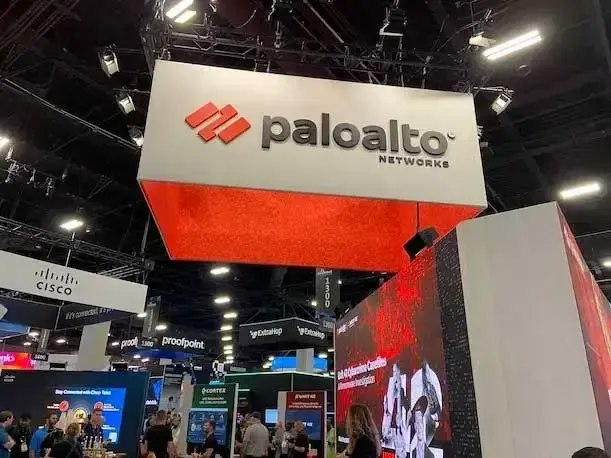
Palo Alto Networks is giving a massive boost to its capabilities in AI observability and security with the completion Thursday of its $3.35 billion acquisition of Chronosphere, according to the company.
The acquisition of the next-gen observability provider “accelerates our vision” in cloud and AI security, Palo Alto Networks CEO Nikesh Arora said in a quote included in a news release.
[Related: Palo Alto Networks CEO: Surging ‘AI Cycle’ Driving Billion-Dollar Acquisitions]
Chronosphere’s technology will be integrated with Palo Alto Networks’ agentic security platform, Cortex AgentiX, the company said. The Chronosphere Telemetry Pipeline will also continue to be available as a stand-alone offering, according to Palo Alto Networks.
Palo Alto Networks also said Thursday that Chronosphere’s co-founder and CEO, Martin Mao, has joined the company as senior vice president and general manager of observability.
The deal for Chronosphere, which was initially announced in November, comes on the heels of the cybersecurity giant’s planned $25 billion acquisition of CyberArk. The common theme is that Palo Alto Networks is aiming to lay a significantly stronger foundation for enabling AI and agentic adoption, Arora said in November in connection with the announcement of the deal.
“I’m sure all of you are wondering why Palo Alto Networks, who is in the midst of a large acquisition of CyberArk, would engage in an acquisition at the same time of Chronosphere,” he said in November, addressing Wall Street analysts during the vendor’s quarterly call.
Simply put, the answer is that “the AI cycle is moving fast,” Arora said.
The deal to acquire CyberArk—which is expected to close during the third quarter of Palo Alto Networks’ fiscal 2026, ending April 30—is in part aimed at addressing major needs around securing identities and privileges for agentic applications.
Likewise, the widespread adoption of AI systems is creating dramatically greater observability requirements due to the differing behavior of AI workloads, according to Arora. And notably, those requirements are not being met by existing observability technologies that were built for a prior era of technology, he said.
Chronosphere, on the other hand, is a provider of “next-generation observability” with a platform that is both comprehensive and “always-on,” Arora said in November.
Meanwhile, even though observability has generally remained distinct from cybersecurity in the past, Palo Alto Networks sees the technology as an essential data platform for the enterprise that customers are asking for, he said.
“I just think [observability] is foundational to our ambition to be a very large tech company,” Arora said.