ThreatLocker Driving ‘Reimagined’ Zero Trust, Consolidation For MSPs: Partners
The security vendor is continuing to fill critical gaps for MSPs with the debut of zero trust network and cloud access tools—ultimately enabling major opportunities for consolidating on the ThreatLocker platform, MSP executives tell CRN.
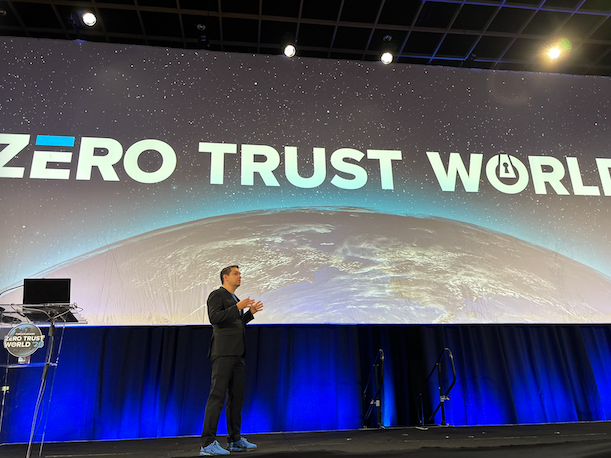
ThreatLocker’s latest product moves show the vendor continuing to fill critical security gaps in a differentiated way for MSPs—ultimately enabling major opportunities for consolidating on the company’s zero-trust security platform, MSP executives told CRN.
This week, ThreatLocker unveiled its expansion into a pair of major cybersecurity segments with the debut of its zero trust network and cloud access offerings.
[Related: ThreatLocker CEO On How Zero Trust Expansion Makes It ‘Much Harder’ To Get Hacked]
Speaking with CRN, executives at key partners of ThreatLocker said the product additions are positioned to address some of their biggest security challenges, such as phishing and network exposure, while also advancing closer to the goal of having a single platform for MSP cyber defense.
“For us as MSPs, the more we can consolidate tools into one or two platforms, the better. And the more that we can make these tools zero trust-oriented, the better,” said Reagan Roney, CEO of Sterling, Va.-based Solvere One. “So I’m excited when they come out with anything that pushes me further to that goal line.”
ThreatLocker’s zero trust network and cloud access—announced in connection with the vendor’s Zero Trust World 2026 conference in Orlando, Fla.—brings the vendor’s deny-by-default approach in a bigger way to SaaS and mobile devices, ThreatLocker Co-founder and CEO Danny Jenkins said in an interview with CRN.
The unveiling follows a year of work by ThreatLocker, which built 14 new data centers—a dozen of which are located in the U.S.—to support the products, according to Jenkins (pictured).
‘Fresh Perspective’ On ZTNA
While many existing vendors offer ZTNA, ThreatLocker has taken an entirely “reimagined” approach to the concept, according to Brian Weiss, CEO and chief AI officer at Templeton, Calif.-based ITECH Solutions.
Many ZTNA products are still more or less VPNs in disguise, with zero‑trust concepts simply layered on top of traditional network security technology, he said. Such products are frequently “not dynamic enough” and often depend upon VPN‑style tunneling, Weiss said.
Other ZTNA offerings are often also bandwidth-heavy and high cost—due to the need for sending huge amounts of network traffic through data centers—and can also introduce a single point of failure, he noted.
ThreatLocker, on the other hand, is brokering network traffic rather than tunneling it through a VPN—which offers massive advantages for user experience and performance, according to the company.
“I feel like Danny flipped it on its head and said, ‘If we were going approach the idea of ZTNA from a fresh perspective, instead of trying to build it off of existing technology, how would we do it differently?’” Weiss said.
‘Biggest Problem’ For Many MSPs
For zero trust cloud access, meanwhile, ThreatLocker said it is protecting against the effectiveness of compromised credentials in key SaaS applications such as Office 365, Salesforce, Jira and ConnectWise. The product does this through binding access to the SaaS apps both to the user and to their approved device, making stolen credentials ineffective, according to the company.
Phishing attacks aimed at compromising identities and credentials remain at the forefront of security challenges faced by MSPs, said Marc Menzies, CEO of Ronkonkoma, N.Y.-based Overview Technology Solutions.
By contrast, it’s been several years since Overview has seen any malware affect customer devices thanks to using ThreatLocker, he noted. The vendor’s core “application allowlisting” technology ensures that unsanctioned software—including malware—cannot run on customer endpoints.
However, “even when you have your conditional access dialed in, [customers] still end up with so many business email compromises,” Menzies said. “It is the biggest problem for many of us right now.”
The moves by ThreatLocker to boost protection against phishing with zero trust cloud access have the potential to fill this major security gap for many MSPs—while also enabling greater streamlining of the tool stack, he said.
Ultimately, the ThreatLocker product expansion unveiled this week “solves a lot of problems for us,” Menzies said. “Everybody talks about a single pane of glass. [But] this helps us to actually get to a single pane of glass.”