VMware Customers’ Future, VCF Success And Broadcom Partner Programs: Sentinel CTO Weighs In
Sentinel Technologies CTO Robert Keblusek takes a deep dive into the pros and cons of VMware by Broadcom’s partner strategy and how customers are choosing to respond to all of VMware’s changes.
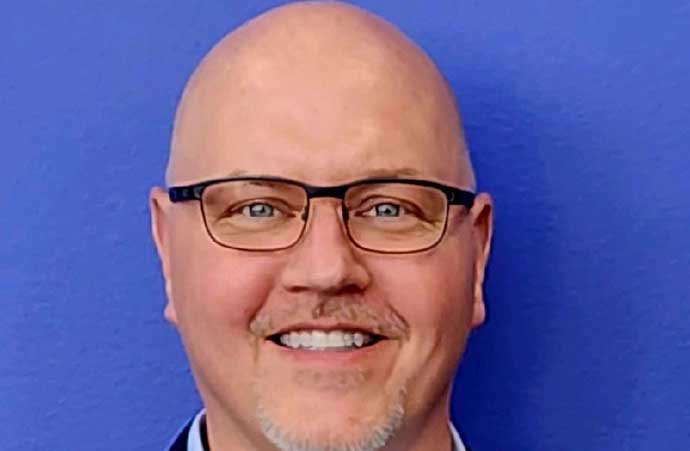
Many VMware customers are currently making the difficult decision to either “lean in” to VMware Cloud Foundation or leave for competitive solutions, with VMware partners like Sentinel Technologies being at the forefront of the decision.
“Customers definitely are exploring options—no doubt about it. I’d say almost across our entire customer base, up to the enterprise and all the way down, they start to talk about, ‘Well, what are my options here? Because my price to move to VCF is 2X or 3X what I was expecting and budgeted. So what do I need to do?’” said Robert Keblusek, chief innovation and technology officer at Sentinel Technologies.
“It depends on where they’re at in their own business transformation as to which direction they ultimately choose. But by and large, all our customers, they want to renew VMware,” he said. “They want to keep VMware. They ultimately either want to renew it or double down.”
[Related: Like It Or Not, This Is Broadcom’s New VMware Channel Strategy]
Sentinel Technologies is a longtime VMware partner. The Downers Grove, Ill.-based company ranks No. 109 on CRN’s 2025 Solution Provider 500 list.
VMware’s strategy under Broadcom’s leadership is to sell an end-to-end private cloud platform via VMware Cloud Foundation (VCF) and no longer offer thousands of point products and licenses.
“Obviously, it’s disruptive from a change perspective. But their goals of simplifying under a more unified subscription model, building private clouds, giving customers more integrated AI capabilities on-premises all fit into Sentinels go-to-market model,” said Keblusek, who has been critical to Sentinel Technologies’ success for decades.
However, one big issue Sentinel Technologies has as a VMware partner is Broadcom mandating its channel ecosystem to either become a VMware reseller or a VMware Cloud Service Provider (VCSP). Partners can no longer be in both VMware’s reseller and VCSP partner programs.
“From a partner program perspective, I only wish they would allow us to remain in both the reseller and cloud provider program,” he said. “That would be a better way for Sentinel to be an advocate for the direction Broadcom wants to take things rather than have to choose one or the other. Why can’t we be allowed to be great at both?”
In an interview with CRN, Keblusek takes a deep dive into how customers are responding to all the changes at VMware, the pros and cons of Broadcom’s partner strategy and Sentinel Technologies’ future.
How are your customers responding to having to move to VCF?
We just finished a pretty nice size VCF deployment for a customer. That customer went all in.
They’re a financial services organization that’s doing a lot of M&A. They wanted to build a platform for cloud elasticity and cloud-type automation for their future growth plans.
So they leaned in on VCF. We’ve deployed a fresh new system on a flash stack infrastructure. They’re already reporting incredible results from a performance perspective; they’re extremely happy.
I don’t know if that is going to be for every customer.
A lot of our customers have been traditional, let’s just call it ‘ESX customers,’ where they love VMware, they love the hypervisor—but they really weren’t using much of the automation, management tools or anything above and beyond. They might augment it with third-party disaster recovery and other products, but they really weren’t taking advantage of any of those additional components that you traditionally buy with VMware.
Broadcom is sort of forcing some of their hands into, ‘You have to go with these capabilities now. You’ve got to move to a subscription model.’ We’re optimistic that we’ll see some customers really want to lean in once they get past some of the initial shock that their ESX renewal isn’t quite as straightforward as it used to be.

Do you think VMware’s SMB customers are going to be the ones leaving VMware due to price increases and not wanting to lean in to VCF?
Customers definitely are exploring options—no doubt about it.
I’d say almost across our entire customer base, up to the enterprise and all the way down, they start to talk about, ‘Well, what are my options here? Because my price to go to VCF is 2X or 3X what I was expecting and budgeted. So what do I need to do?’
It depends on where they’re at in their own business transformation as to which direction they ultimately choose.
But by and large, all our customers want to renew VMware. They want to keep VMware. They ultimately either want to renew it or they double down. That’s what we’re seeing right now.
We’re starting to have customer conversations a little more with, ‘Maybe let’s optimize this infrastructure for VCF instead of looking at switching to something like Nutanix or others. Let’s look at what this would look like if you go with Broadcom and we build you basically a private or a hybrid cloud environment. Would that have a positive impact on your business and the outcomes going forward?’
We’re hoping that more customers will go in that direction because we think the product is extremely strong.
I just don’t know that it was top of mind for customers when they budgeted and when they were planning their future. And Broadcom is really forcing it to be a topic, which I think ultimately is good for us as a partner.
As a partner to our customers, we’re going through what that could mean for them and how that could change the way that they run their data centers going forward.
Sentinel was both a VMware Cloud Service Provider and reseller. Now, Broadcom says you can’t be both. What did you pick and why?
We’re both a reseller and then our CloudSelect division where we have a hosted, private cloud. We’ve always been a VMware Cloud Service Provider and leverage their consumption-type licensing and model.
Initially, when that program was redefined and the reseller program was redefined, we were allowed to participate in both. We were one of the larger cloud providers, so they were allowing us to sell to some smaller providers, which was working out quite nicely for us.
However, most recently, they’ve come out with ‘we can’t be both’. We had to pick one or the other.
For me, that’s an unfortunate decision. We were doing a great job with both.
We were really optimistic about being part of both and continuing with VMware and our cloud services and hosting. But because now they’ve made that an impossibility, we simply have to find a new direction.
We were intending to double down and basically offer VCF as a hosted platform, which seems to align with what Broadcom would want us to do. But then, when the rule came out that you couldn’t be in both programs, it forced us to pivot to reseller only.
Why did you select reseller over being a VMware Cloud Service Provider?
We chose to be a reseller due to our customers’ data center needs and our reseller business being a little larger than our cloud provider business.
We have so many customers that really depend upon us to provide them their data center through resell.
It’s just a little bit larger business for us than our cloud provider business. So when we were forced to choose, we had to go that direction.
That’s the challenge that we are up against—we really need to be both.
In my opinion, we would be an excellent advocate for VCF if we were allowed to be in both and continue with VMware and our hosting platform. But they won’t allow it, and therefore, that’s what blocked us from being a great partner in both programs.
If something changed to where we can participate both the cloud program and reseller program, then that would be very welcome news to us and [we] would love to be invited.
What do you think of Broadcom’s overall strategy for VMware as the company being a platform-only provider with VCF being the main offering?
Obviously, it’s disruptive from a change perspective. But their goals of simplifying under a more unified subscription model, building private clouds, giving customers more integrated AI capabilities on-premises all fit into Sentinel’s go-to-market model.
So we ultimately welcome the changes.
We’ve got to get our customers used to the changes and be able to articulate it to those customers and identify the customers that are truly going to lean in and get those as our early wins.
The main issue I’ve had—besides customers being shocked by some of their bills and having to go through those iterations with them, which Broadcom has been very supportive of—is they’re really pushing for, ‘You’re either a private cloud or you’re really probably not a fit for VMware anymore.’
Some customers don’t take that well.
However, I like their innovation. I like where that could go for some customers and those customers that lean in. I think they’re going to love their experience.
From a partner program perspective, I only wish they would allow us to remain in both a reseller and a cloud provider program.
That would be a better way for Sentinel to be an advocate for the direction Broadcom wants to take things rather than have to choose one or the other. Why can’t we be allowed to be great at both?