VMware’s New Cloud Program Is For Partners That ‘Fight’ In Broadcom’s ‘Biggest Bet’ Yet, VP Says
VMware Vice President Ahmar Mohammad dives deep into the details of the new, invite-only VMware Cloud Service Provider (VCSP) program launching Nov. 1, 2025, and which partners make the cut and who didn’t.
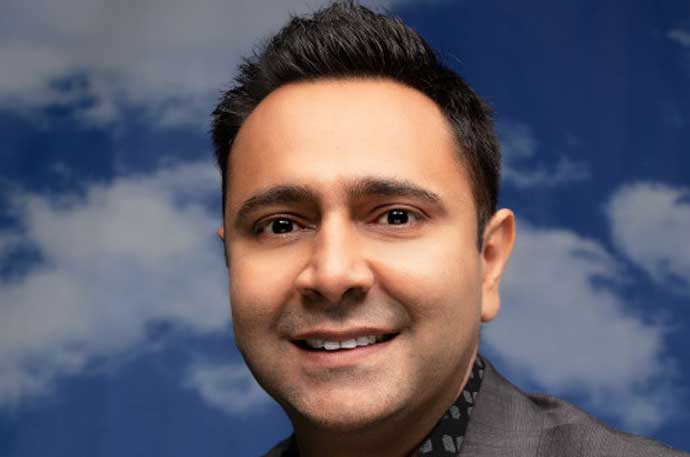
“We are creating the purity of the program so that it means something when I say CSP, so a customer can expect a clear service level agreement with a clear outcome that they can drive from it,” said VMware’s Ahmar Mohammad, who crafted the new VMware Cloud Service Provider (VCSP) program.
“So we want our CSPs to grow bigger and bigger and bigger and much faster, whether it’s acquiring the business of departing (VCSP) partners or buying them outright,” he said. “We want larger and bigger partners who can put up a fight.”
Mohammad is vice president of partners, managed services and solutions go-to-market for VMware by Broadcom, tasked with building the new VCSP program going live November 1, 2025.
“Broadcom is not going to become a hyperscaler,” he said, as the San Jose, Calif.-based company hasn’t built “data centers around the world” compared to the likes of Amazon Web Services, Google and Microsoft.
[Related: Like It Or Not, This Is Broadcom’s New VMware Channel Strategy]
“We’re looking for more all-in partners that are customer-focused, that are doing this as a CSP. The goal is to put up a credible alternative against the hyperscalers,” Mohammad said. “So we’re encouraging them to either sell their company or sell their book of business to a surviving partner.”
New VCSP Program Goes Live November 1
Mohammad is a longtime industry executive who worked for Microsoft for over 15 years. Prior to joining VMware in 2018, he was AWS’ head of business development in the Americas.
“I’ve worked in AWS. I’ve worked in Microsoft for a long time. The cloud cost starts to balloon very, very fast, very, very quickly. And you have still a lot of wastage,” he said.
The new VCSP program was, in part, built to help all-in VMware partners repatriate workloads in the public cloud to the VMware Cloud Foundation (VCF) private cloud platform.
“The idea of the new VCSP program was not about just [partner] reductions; reduction is a byproduct of it. The idea is we are trying to simplify and clarify, ‘What does it mean to be a CSP?’” Mohammad said.
In a deep dive discussion with CRN, Mohammad provides details of the new VCSP program rollout, what types of partners were and were not invited back, and Broadcom’s “biggest bet” on VMware CSPs.

Talk about Broadcom’s decision to end the current VCSP program on Oct. 31 and launch the new, invite-only VCSP program?
The idea of the new VCSP program was not about just [partner] reductions; reduction is a byproduct of it.
The idea is we are trying to simplify and clarify, ‘What does it mean to be a CSP?’.
In the past VMware days, a CSP could mean 50 different things, like just an outsourcer who provides some managed services on customer data centers. Everybody was under the CSP umbrella.
So we’re now saying, “Look, a cloud service provider is somebody who takes our subscription license as an ingredient, they have their infrastructure that they rack and stack, and they offer that as a finished product to the end customer.” It’s a cloud offering, a good alternative to a hyperscaler.
We’re basically saying in the program definition: their own hardware, their entitlement, they take our ingredients and turn it into a fully packaged offering.
These CSPs provide a lot of more services like disaster recovery as a service, backup as a service, and container as a service, and all the different lines, but they are selling that finished product to the end customer and generating multiples on top of it.
I’m happy when the partner is getting 10x or 20x or 25x on top of the license that they are paying, which means that they are adding that much value for the end customer for them to be paying 10 times or 25 times the license cost.
When you apply the definition, you realize that there are fewer partners that actually meet that criteria.
And those are the ones who we sent VCSP invitations to.
For the VMware CSPs who are not invited into the new VCSP program launching Nov. 1, how are you guiding their customers to not leave VMware?
Service providers have invested in infrastructure. They have the customer and they are running the cloud service and everything.
So what we have done is basically give them notice that after the current contract, which majority of them end on March 2027, it will not be a renewal.
So their contract stays on. Their customer stays on.
This is not an immediate, “Hey, you’re off. Go find another home.”
There is a gliding path for almost 20 months between now and when we served a notice a few months ago until the end of their current contract.
We want to do it more gracefully, more customer-partner friendly.
Is the new VCSP program globally or in certain regions?
For the most part, we haven’t made any change in Europe yet.
But for the rest of the world—all of Americas, APJ and some of the markets in the Middle East, UK, Switzerland, etc.—we will make the change.
What do these ‘new’ VMware CSPs have in common?
The partners we invite, most of them offer Sovereign Cloud as-a-Service. So with their regulators and in their market, they are the sovereign cloud provider. We say, “Love it.” Because that’s our key differentiation.
Broadcom is not going to become a hyperscaler.
We don’t have data centers around the world. Our CSPs are our next best thing that they can go and compete against the hyperscaler and provide a viable alternative.

What types of partners are not being invited to the new VCSP program?
Some of the partners we are not going to be moving forward with are those that are not in it for a living.
This is like a sideshow for them, like 5 percent of their business is CSP.
We’re looking for more all-in partners that are customer-focused, that are doing this as a CSP. The goal is to put up a credible alternative against the hyperscalers.
So we’re encouraging them to either sell their company or sell their book of business to a surviving partner. … that’s pretty common in the industry. There’s always a lot of consolidation and M&A that happens.
We are encouraging that so that the surviving partner actually becomes larger. We want larger and bigger partners who can put up a fight.

Amar, what is your message to channel partners right now?
VCSP are a very strategic asset to us. We don’t have our data centers.
We won’t have our data centers. We will rely on CSPs to provide the cloud experience where customers are not interested in running their own data center.
That’s our biggest bet.
We are creating the purity of the program so that it means something when I say CSP, a customer can expect a clear service level agreement with a clear outcome that they can drive from it.
So we want them to grow bigger and bigger and bigger and much faster, whether it’s acquiring the business of departing partners or buying them outright.