Dell Revives XPS Brand, Says Dell Pro Is ‘Here To Stay’ With Some Changes
‘We didn’t listen to you. You were right on branding. You guys heard that right. You were right on branding. And I can tell you, I greatly appreciate your relentlessness—’relentlessness,’ get that word out—and telling us so,” says Dell Vice Chairman and COO Jeff Clarke in a pre-CES 2026 press conference.
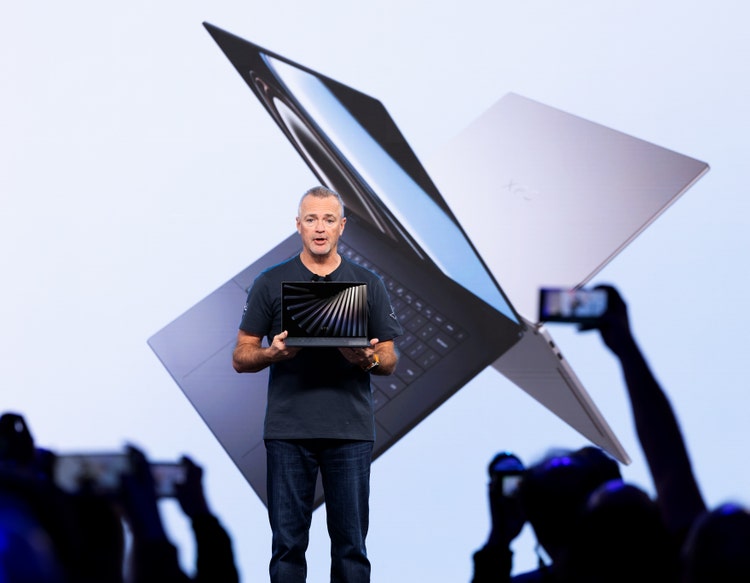
Dell Technologies Monday said it is reviving its XPS PC line with new models despite its move last year to consolidate its PC lineup into three brands that did not include XPS.
Dell introduced new XPS PCs, which it touts as its thinnest laptops with a height of 14.6 mm and weight as low as about 3 pounds, at this week’s CES 2026 conference in Las Vegas.
Dell also unveiled plans to expand its Dell Pro line of commercial PCs with a new high-end model that also revives the Precision brand name, and discussed challenges it faces in the AI PC market.
[Related: Dell CEO: Partners Key To Delivering On The ‘Profound Opportunity’ In AI]
Dell Vice Chairman and COO Jeff Clarke said during a pre-CES 2026 press conference that the PC industry is going through a series of issues that have impacted overall demand.
“We have a Windows upgrade cycle that’s been lagging historical norms,” Clarke said. “We started the year with tariffs, tariffs, tariffs. We’re encountering one of the slowest CPU transitions I’ve ever been involved in, and I’ve been involved in a few. We have this unmet promise of AI and the expectation of AI driving end-user demand. While we’re seeing exciting improvements, it hasn’t quite been what we thought it was going to be a year ago. … And if that isn’t enough, we’re about ready to enter 2026 with a memory shortage that is pretty significant that we’re going to have to navigate.”
Dell has continued to tweak its PC strategy but needs to do more, Clarke said.
“We’ve gotten a bit off course in our PC business, and the accumulated impact is we’ve underperformed. That’s something that’s unacceptable.”
Clarke said Dell’s consumer business is important and that it is the company’s job to prove that.
“The consumer business will report directly to me going forward, making sure that it has the necessary focus and resources to ensure that we succeed,” he said.
The re-introduction of Dell’s XPS brand comes almost exactly one year after Dell unveiled its plan to consolidate its PC lineup. Dell at CES 2025 introduced a “good, better, best” naming convention for its previous PC branding.
Dell’s PCs were branded “Dell” for school, fun and work; “Dell Pro” for professional- grade PCs; and “Dell Pro Max” for high-performance workstations, CAD, engineering and similar applications, eliminating its previous brands such as XPS, Inspiron, Latitude, and Precision, while keeping the Alienware brand for its gaming PCs.
Clarke admitted that that branding strategy was a mistake after feedback from customers and industry experts.
“Quite frankly, I owe you an apology today,” he said. “We didn’t listen to you. You were right on branding. You guys heard that right. You were right on branding. And I can tell you, I greatly appreciate your relentlessness—’relentlessness,’ get that word out—and telling us so.”
The XPS brand is back, Clarke said.
The two models Dell introduced Monday are based on the Intel Core Ultra Series 3 processors with built-in Arc graphics with 12 Xe cores to improve AI performance by up to 57 percent for the XPS 14 and 78 percent for the XPS 16 and graphics performance by up to 50 percent compared with previous XPS models, Clarke said.
The new laptops also include easy-to-remove keyboards, modular USB-C ports, large fans, extra small 8-megapixel/4K cameras, and 900ED (energy density) batteries, along with recycled steel in the hinges and recycled cobalt copper in the batteries, he said.
Those technologies, along with narrow bezels, help the XPS weigh in at about 3.0 pounds and the XPS 16 at 3.6 pounds, Clarke said.
The new XPS laptops also include InfinityEdge displays with 2K LCD panels standard or tandem OLED displays as an option.
Dell Pro Precision
During the question-and-answer period following Clarke’s presentation, Kevin Terwilliger, vice president and general manager for Dell’s PC portfolio, responded to a CRN question about the company’s rebranded commercial PC line by saying Dell will be bringing back its Precision brand.
Terwilliger said Dell has received good market feedback around its Dell Pro and Dell Pro Max branding for its commercial PC line.
“Dell Pro is here to stay,” he said. “Our simplification away from multiple different commercial sub brands, bringing that all under Dell Pro for commercial, has been quite successful. We are going to do a tune-up specifically in the performance category or the workstation category, and so we’re reintroducing Precision within Dell Pro. [We’re] making it very clear for those customers who are looking for the absolute best in performance and workstation-class devices they’ll find those within Dell Pro Precision.”
This follows Dell’s move in August to introduce the Dell Pro Essential brand for its portfolio of specialized PCs starting with rugged PCs.
“Dell Pro Essential is really the starting point of our Dell Pro portfolio for essential security, essential manageability, and then finally, Dell Pro Education as well,” Terwilliger said. “It’s a little bit of an overarching view. Still [it’s a] pretty significant simplification as we moved away from many of those sub brands, but bringing two of them back, XPS and then Pro Precision.”
Dell AI PCs
When asked by CRN about Dell’s outlook on demand for AI PCs in 2026, Terwilliger said the company a year ago was all about the AI PC, and that expectations for that part of the business went unmet, as Clarke said.
“But to be clear, this is really a shift around the communication of what our devices are delivering to the end user,” he said. “It’s not a shift in the architecture of the device. And so we’re very focused on delivering upon the AI capabilities in the device. In fact, everything that we were announcing has an NPU in it. We continue to see significant scale and growing parts of the AI PC part of our portfolio.”
That said, Terwilliger said, Dell over the course of 2025 saw that customers are not buying based on AI.
“In fact, I think AI probably confuses them more than it helps them understand a specific outcome,” he said. “And so we talk more about the features of the device. But in a lot of situations, AI is actually enabling that. So when we talk about things like our XPS 14 being able to deliver over 40 hours of battery life with local video playback, that’s because of efficiencies that are coming from processes moving to the NPU, just as one example.”
Dell’s strategic imperative is that it will lead in AI infrastructure, Terwilliger said.
“And I think we’re uniquely positioned to be able to do that,” he said. “We see a lot of demand within our commercial space for future-proofing for AI, for enabling local AI to run on top of the device, and we’re helping them do that with things like Dell Pro AI Studio. So a little bit kind of ‘Tale of Two Cities,’ between consumer really being focused on messaging the outcome and commercial still very focused on the communication around future-proofing for AI within our client devices.”
Dylan Martin contributed to this story.