Broadcom Channel Chief On VMware Vs. Public Cloud In AI Era And 2026 Partner Strategy
Broadcom global channel chief Brian Moats explains VMware’s 2026 partner strategy, AI competition with public clouds and partner profitability this year.
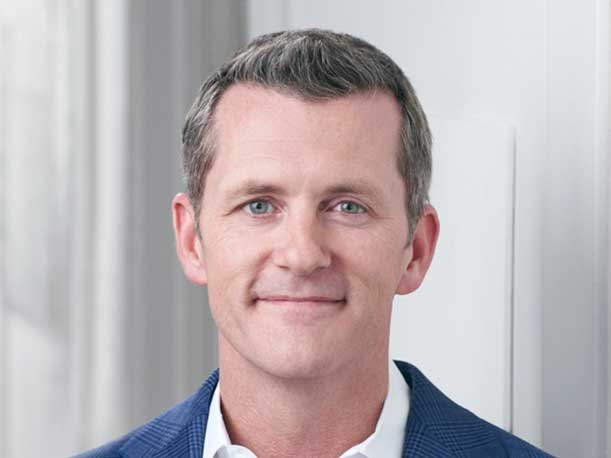
Broadcom’s channel chief Brian Moats is bullish that VMware Cloud Foundation (VCF) provides better AI solutions versus public cloud offerings with partners being VMware’s tip of the spear.
“Partners say [AI POCs] almost all get piloted on public cloud because it’s a really easy environment for a pilot. But when it comes to moving into production, you have two thematic issues,” said Moats, senior vice president, global commercial sales and partners.
“One, they have no idea what it’s going to cost if you unleash this new AI thing in the public cloud. So cost uncertainty,” said Moats. “Then the stakeholders that are concerned about the crown jewel data in the company are saying, ‘Hey, I don’t want my data anywhere near the public cloud because there’s uncertainty around control and governance in some cases.’”
[Related: AWS Vs. Microsoft Vs. Google Cloud Earnings Q4 2025 Face-Off]
Public cloud leaders like Amazon Web Services, Microsoft and Google Cloud are investing billions of dollars annually in AI hardware, software and innovation.
VMware’s 2026 Partner Strategy
Moats is Broadcom’s global channel chief who recently was named to CRN’s 2026 Channel Chiefs list of 50 Most Influential leaders.
The Palo Alto Calif.-based company has shifted its entire professional services business to channel partners, who are now providing nearly all implementation services for VMware by Broadcom solutions.
“We’re literally in a case where, by design, we are no longer implementers as a company,” said Moats.
“We’ve taken out our implementation organization—the folks that would go out and work with a company and deploy [VMware]—and in a lot of cases, we’ve had our partners hire those folks from us,” he said. “That means that we totally and completely trust them and are dependent on partners, as is the customer ecosystem, to go deploy this stuff.”
Moats said VMware’s partner strategy in 2026 with VCF is a “once-in an-every-other- decade kind of opportunity” to provide AI, on-premises and private cloud solutions for customers.
In an interview with CRN, Moats explains how VMware partners can be profitable in 2026, Broadcom’s VMware channel strategy and why he says VCF bests public cloud offerings in the AI era.
Where do VMware and VCF play in this AI era?
The thematic conversation from the partners is, ‘Man, we’ve never seen so many different AI POCs get tested.’
These are both large language models running with GPUs, as well as the small language models that are running on just commodity x86, which are very focused on small language tasks.
What they say is they’re surprised that even when these AI workloads check out and work, they’re rarely going into production. Rarely. And the big debating topic among the partners, and they all have a slightly different view on this is, ‘Why is that? Why are they not going into production?’
Partners say [AI POCs] almost all get piloted on public cloud because it’s a really easy environment for a pilot. But when it comes to moving into production, you have two thematic issues.
One, they have no idea what it’s going to cost if you unleash this new AI thing in the public cloud. So cost uncertainty.
Then the stakeholders that are concerned about the crown jewel data in the company are saying, ‘Hey, I don’t want my data anywhere near the public cloud because there’s uncertainty around control and governance in some cases.’ And that continues to get debated.
So what partners are all thinking about given that they’re at the forefront of VCF is: Now that Private AI is included inside of VCF, you don’t have to go pay for this incrementally. And since anything that’s x86 can naturally run on VCF, their thinking is: VCF is where these workloads should live.
It’s completely predictable when it’s on-prem. The control is greater, which the operators all like. And the security proposition and control is different and better.
So they think it’s ideal to attract those AI workloads to finally move into production if they’re validated.
Have VMware price changes settled down yet? What are customers saying about VCF?
I had a recent meeting among a bunch of competitive partners with the discussion being what VCF is solving for. As an integrated platform, it’s solving for something very different that never got solved for when VMWare was doing point products that were not stitched together.
It was previously like, ‘Hey, customer, you go stitch together whatever you want to stitch together.’
What we’re solving for now is something that hadn’t been solved for before. It wasn’t possible. So this idea of a modern private cloud wasn’t possible before.
So in their minds in the early days was, ‘Hey, what is the new pricing? What’s included in the platform? Do I care about these things? Can I get value?’
That was the older phase. They’re not in that phase anymore.
It’s about, ‘How do I realize value for what this platform is that Broadcom is offering?’
If I want to be the best VMware partner and be very profitable, what should I be doing in 2026?
We ask them to think through the lens of the customer. Before you worry about any new customers, you just think about the VMware install base, who is thinking about, ‘How do I go solve problems with [VCF]? How do I get a return? How do I get value? Value realization?’
Those partners who are helping the customer figure out the on-ramps that make the most sense for them and then implementing each of those components and each of those phases—those are the partners that are helping the customer unlock the value. And quite honestly, that’s what we need from our partners.
We’re delivering all services through our partners. So they recognize this is their opportunity to figure it out.
The good partners are really thinking through how to pace for the demand that they’re seeing and how to set themselves up for capturing the demand that’s there.
It’s about capability, right?
So you can be a small partner with all the right capabilities and experience and take on any project that a customer feels comfortable with you taking on.
After a little more than one year in your leadership role, what are partners talking to you about today versus one year ago?
The conversations used to be all around clarity for pricing, solution changes, rules of engagement, what’s expected to be a partner under Broadcom and under this new model. Just rounds and rounds on all those topics for months.
The conversations from the partners now are very different. They are very much around execution, deployment capabilities, keeping up with the demand that they’re experiencing at this stage in the cycle, very focused on solving real-world problems.
Partners are talking about new, modern workloads that will be coming on to VCF—meaning it’s no longer about legacy workloads. It’s containerized apps, all kinds of new workloads.
On one hand, they’re talking about the opportunity, being prepared for it and having the right capabilities.
Then the really good partners, the ones who have maybe more experience, are pretty versed now in recognizing that any customer they walk into who’s made a VCF investment is trying to determine what is the order of steps that they’re going to take because everyone’s coming from slightly a different place even if they all want to get to the same place [VCF].
So they’re very focused on helping customers think about incremental self-funding steps component by component. Each one that has some level of an ROI to help move the process forward.
The partners are telling me that there’s just real organic demand for this modern private cloud. Nobody gets there with a big bang.
The partners view it as a big opportunity to help these customers over time. So just a very different conversation compared to a year ago.
What is your message to channel partners as Broadcom’s global channel chief?
When it comes to professional services, as an example, there is complete and total trust and dependence on partners for implementation.
Meaning, we’ve taken out our implementation organization—the folks that would go out and work with a company and deploy this—and in a lot of cases, we’ve had our partners hire those folks from us.
We’re literally in a case where, by design, we are no longer implementers as a company. The partners know this. That means that we totally and completely trust them and are dependent on partners as is the customer ecosystem to go deploy this stuff.
So to me, I don’t know of any other signal we could give a partner that we’re all in on making the partnership work and trying to create an opportunity for them by designing implementation capabilities out of our organization intentionally.
The groups of partners that I interact with seem to get that and seem to think this is a once-in-an-every-other-decade kind of opportunity to go take over the delivery of all this for the customer.