The 10 Biggest IT CEO Moves Of 2025
Intel, Oracle, Kaseya and Rackspace were among the companies to see CEO changes in 2025.
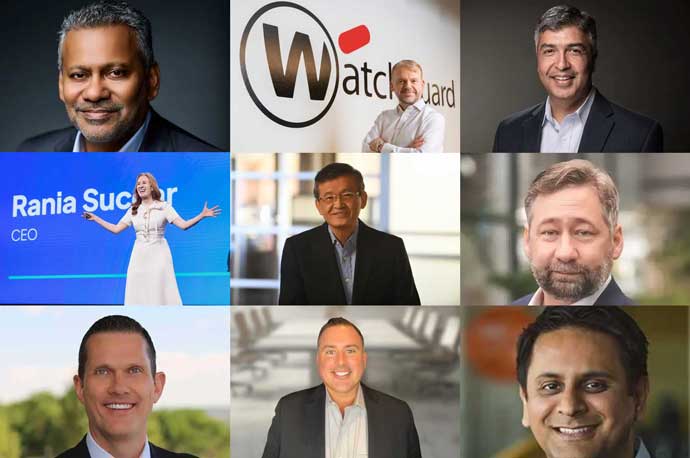
As vendors and solution providers alike in 2025 focused investment in growing practices in artificial intelligence, security and other cutting-edge technologies, some of the biggest companies in the channel looked to new leaders or decided to give another executive a chance in the top role.
Blackpoint Cyber, Cynet, Rackspace, Kaseya and Barracuda Networks were among the companies to bring in an outsider as their new CEO, bringing a new perspective and new experience to help chart the company’s course through the AI era.
Oracle and Coro, meanwhile, were among the companies to promote from within, granting loyal executives a shot at the top spot at a time of vast opportunity and uncertainty.
[RELATED: 30 Notable IT Executive Moves: November 2025]
2025 Tech Executive Moves
The year was a big one for technology CEO exits, according to a Tuesday report by executive outplacement firm Challenger, Gray & Christmas. Technology saw one of the highest turnover counts among any sector in 2025, using year-to-date numbers up to November.
The sector saw 199 CEO exits year to date, comprising about 11 percent of the total number of CEO exits the firm had logged up to November, according to Challenger. That was fewer than the government and nonprofit sector’s 394 CEO exits but more than those for health care and products, hospitals, financial firms and retailers.
That technology CEO exit count was lower than the 208 recorded through November 2024 but up from the 153 logged through November 2024 and the 126 through November 2022, according to the report. Challenger also found that companies regardless of sector were more likely to choose external replacements, a trend since 2022, the last time internal candidates outpaced external hires.
Layoffs continued to be a reality for the technology sector as companies reallocate investments to faster-growth areas like AI and security–but Layoffs.fyi indicated that fewer companies and employees turned to job cuts compared to 2024.
As for the economy overall, it was a tougher one for hiring. U.S. unemployment increased to 4.2 percent by April and hit 4.6 percent in November, according to Forbes. That’s up from the mid-3 percent range seen in 2022. U.S. gross domestic product (GDP) contracted in the first quarter for the first time in three years. Consumer confidence fell to levels not seen since 2020.
Be sure to check out CRN’s other year-end lists for 2025, including The 10 Biggest Cloud Outages of 2025 and The 10 Most Controversial Companies of 2025.
Read on for the biggest CEO changes in IT in 2025.
10. Gagan Singh
Blackpoint Cyber
In June, Blackpoint Cyber named Gagan Singh the company’s new CEO, with founder and former CEO Jon Murchison taking the newly created role of executive chairman.
Singh enters the role as Blackpoint Cyber continues to iterate on products including the CompassOne Unified Security Posture and Response platform–unveiled in April–aimed at helping managed security services providers (MSSPs) and MSPs strengthen their cybersecurity posture across the entire attack surface.
Singh’s background includes more than two years as chief operating officer and executive vice president at McAfee, during which he drove growth in the small and midsize business (SMB) and consumer segments and launched two new channels and four products in under 14 months, according to his LinkedIn profile. He also spent a year as chief product officer at NortonLifeLock, where he was accountable for $2 billion in subscription business renewals, up-sell and cross-sell.
Murchison said in a statement at the time that “Gagan’s experience, values, dedication to our MSP partners, and focus on execution are exactly what we need to take Blackpoint to the next level.”
Singh said in a statement at the time that he looks “forward to working closely with the executive leadership team, Jon and the entire board as we continue to scale, innovate and protect those who need it most.”
9. Joe Sykora
Coro
Coro made Joe Sykora its CEO in July, taking over the CEO reins from Guy Moskowitz, who co-founded the company and served as president and CEO. Moskowitz has maintained the president title.
Sykoira has publicly pledged a 100-percent partner strategy with plans to power the next phase of growth for its “all-in-one” SMB cybersecurity platform through MSPs.
“I’ve always been 100 percent channel,” Sykora said during a session at XChange August 2025, an event hosted by CRN parent The Channel Company. Coro is “100-percent channel,” he said at the time. “So many other organizations you’ll meet trying to do some of these things — they have a mixed model. They’re still selling direct. They’re doing some [business] online. Everything we do is through partners.”
Sykora joined Chicago-based Coro in March as senior vice president and general manager for the Americas. He told CRN that Coro is “a cybersecurity company for the SMBs” with ”a purpose-built platform for SMB, mostly for the MSPs that serve them.”
He brings decades of cybersecurity experience to the vendor. His resume includes owning two solution provider companies, Interspace Computers and Fortress Network Security. He worked at Fortinet for about eight years, even through its initial public offering. He also served as chief revenue officer at Bitdefender, helping to lead that vendor through its IPO, and also spent time at Proofpoint.

8. Jason Magee
Cynet
Cynet started 2025 with a major change at the helm, tapping former ConnectWise CEO Jason Magee to head the company amid a period of rapid growth and innovation.
Since then, some of the Boston-based vendor’s biggest moves in the channel include its new Ignite Partner Program and revamped partner strategy designed to accelerate revenue, streamline engagement and make cybersecurity a powerful growth engine for MSPs.
The program includes “growth ignition dollars”—Cynet’s new take on traditional market development funds (MDF)—a tiering framework designed to support all partners at every stage and a growth accelerator program that provides up-front funding, often around $20,000.
Magee took over from Cynet founder Eyal Gruner, who transitioned into the role of strategic advisor and joined the company’s board of directors. At the time, Magee told CRN he planned to scale “our go-to-market efforts, both marketing and sales” and be “investing in our partner programs and strengthening our relationships with resellers and MSPs.”
Magee brings more than two decades of experience in scaling businesses, driving strategic growth and developing robust partner ecosystems. During his tenure as CEO of ConnectWise, he led the company through a period of exponential growth, expanding its cybersecurity offerings, growing annual recurring revenue (ARR) fourfold and increasing profitability sixfold.
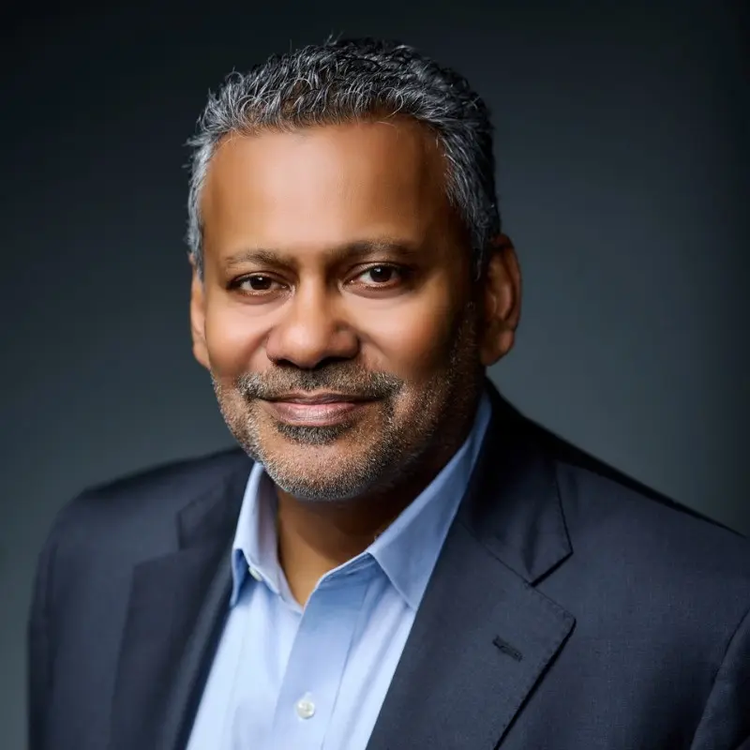
7. Gajen Kandiah
Rackspace Technology
Rackspace Technology recruited Gajen Kandiah as its new CEO in September.
Now, Kandiah guides the San Antonio-based hybrid cloud and AI tools company as it navigates a major relaunch of its partner program designed to provide long-term growth, predictability and deeper engagement for its partners.
The updated partner program includes allowing partners to earn commissions on customer workloads indefinitely and new enablement tools from marketing campaigns-in-a-box to technical resources and educational assets.
Kandiah came to Rackspace after about five years with Hitachi, according to his LinkedIn account. He served as president and chief operating officer at Hitachi Digital for more than two years following about two years as executive chairman of Hitachi Digital Services and chairman of Hitachi Cyber.
His resume includes about 16 years with Cognizant. He left the solution provider in 2019 with the title of president of digital business and digital engineering.
6. Rohit Ghai
Barracuda Networks
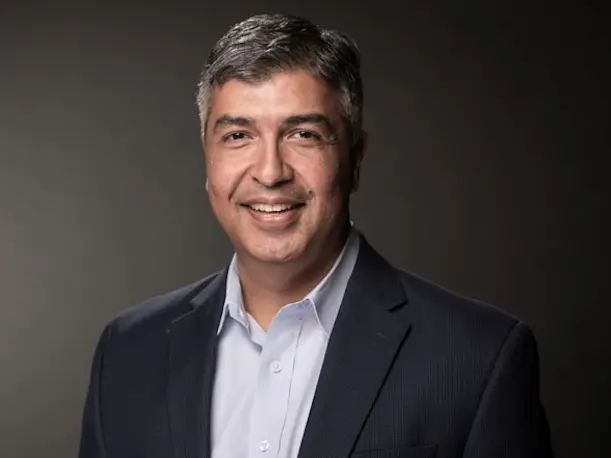
In September, Rohit Ghai became president and CEO of Barracuda Networks.
Since Ghai’s hiring, Barracuda has introduced the Barracuda Research online resource that brings together Barracuda’s latest threat intelligence, real-world incident analysis and detection data from Barracuda AI.
The vendor has also enhanced its AI-powered BarracudaONE cybersecurity platform for MSPs with bulk remediation for email threats, PSA integrations for automated billing and invoicing and streamlined account management, among other advancements–plus, rolled out the AI-powered Barracuda Assistant for quickly and easily navigating threats, troubleshooting issues, accessing actionable insights and more.
Ghai joined the Campbell, Calif.-based security vendor after about nine years as CEO of RSA Security, according to his LinkedIn account. He led RSA even when it was a division of Dell Technologies. Dell sold RSA in 2020 to private equity firm Symphony Technology Group (STG).
Prior to joining RSA as CEO in 2017, Ghai had served as president of EMC’s Enterprise Content Division. Dell bought EMC in 2016 and sold the Enterprise Content Division to OpenText shortly after. Ghai’s earlier roles include executive positions at Symantec and CA Technologies.
5. Sean Kerins
Arrow Electronics
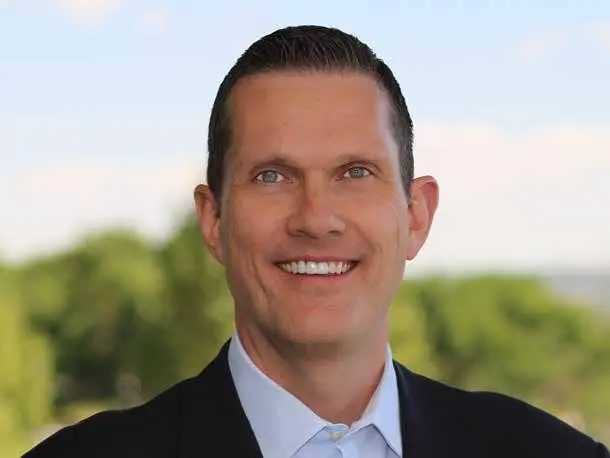
Sean Kerins, president and CEO of Arrow Electronics, stepped down in September with Bill Austen, a board of directors member, taking on the roles on an interim basis.
When Kerins left, a spokesperson for the Centennial, Colo.-based company told CRN that “the CEO change does not reflect a strategic shift at Arrow, as the company is committed to its corporate strategy and key business priorities” and that “the Board has full confidence in the ability of the current leadership team to lead the company during this period of transition.”
Arrow has more than 3,000 channel partners worldwide, according to the company. Kerins stepped into the CEO role in 2022 after about 15 years with the vendor. His previous roles ranged from chief operating officer to president of Arrow’s global enterprise computing solutions business and president of the North American region for that business.
Austen said during the vendor’s most recent quarterly earnings call in October that he is not on the list of permanent CEO candidates, according to a call transcript. Executives on the call said that Arrow’s business in the West is continuing to catch up to its business in Asia, with positive movement in book-to-bill and backlog coverage in all geographies Arrow serves, hopefully increasing sales and margin in 2026.
4. Joe Smolarski
WatchGuard Technologies
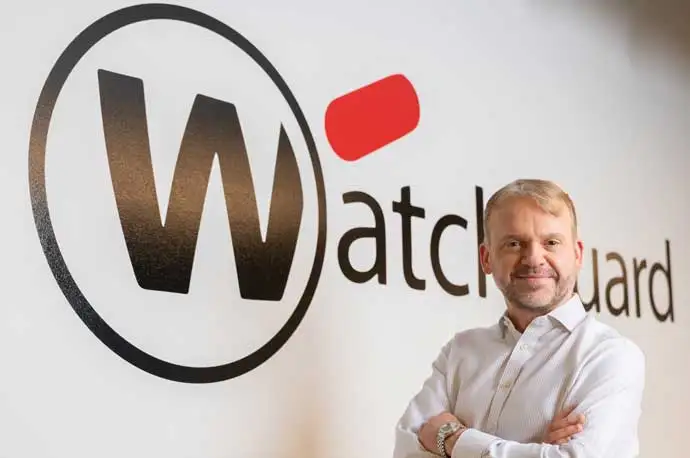
WatchGuard Technologies brought on Joe Smolarski as CEO in November. Former CEO Prakash Panjwani stepped down in May after a decade of leadership and Vats Srivatsan served as an interim CEO until Smolarski’s hiring.
Some product innovations revealed by the vendor since Smolarski’s hiring include a WatchGuard Zero Trust Bundle that brings identity confidence, device integrity and secure access together in a single, cloud-delivered architecture.
Smolarski came to the Seattle-based security vendor, which has more than 17,000 MSPs using its platform, after about seven years with Kaseya, according to his LinkedIn account. He left Kaseya with the title of president.
His resume includes about three years as chief operating officer of marketing intelligence company MRP. He left MRP in 2018.
3. Clay Magouyrk, Mike Sicilia
Oracle
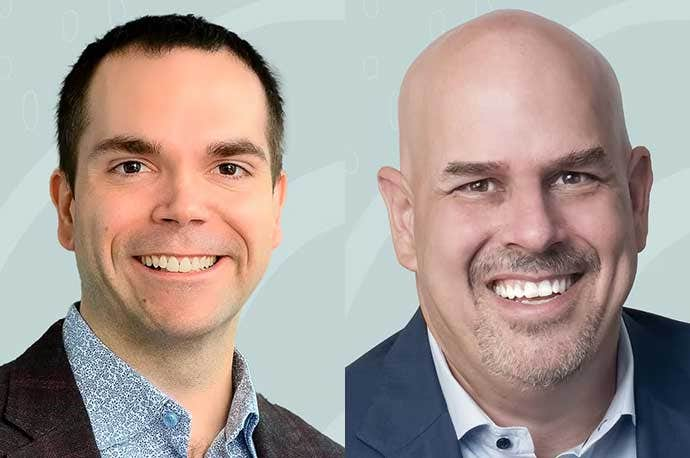
In September, Oracle promoted two executives to co-CEO roles. Clay Magouyrk and Mike Sicilia succeeded former CEO Safra Catz, who became executive vice chair of Oracle’s board of directors. Company co-founder Larry Ellison remains chief technology officer and a major face of Oracle.
Since the two executives’ promotion, the vendor has enabled preferred resellers to sell its Oracle Database@AWS, Oracle Database@Azure and Oracle Database@Google Cloud multi-cloud services and offered cross-cloud universal credits to streamline procurement and governance with flexible terms and consistent contracts for Oracle Database and Oracle Cloud Infrastructure products and services across the three biggest public clouds.
At the company’s annual Cloud World event, the co-CEOs preached greater hardware flexibility, deepening multicloud partnerships, allowing enterprises to securely leverage private data for AI and leaning into AI agents as some of the ways Oracle, its revamped leadership team and partners are taking on the AI era.
The co-CEOs will navigate Oracle through a gigantic backlog of contract work for the likes of ChatGPT maker OpenAI–but questions remain on the profitability of all this AI work, not only for Oracle but other hyperscalers.
Magouyrk previously served as president of the Austin, Texas-based database and cloud products vendor’s Oracle Cloud Infrastructure product and joined the company in 2014 from Amazon Web Services.At AWS, he served as a software development engineer for about six years, according to his Linkedin account.
Sicilia was named president of Oracle industries in June. Before that, he held the title of executive vice president of the industries division for about seven years, according to his LinkedIn account. He joined Oracle through its acquisition of project portfolio management application provider Primavera Systems in 2008. Sicilia had served as CTO of Primavera.
Oracle’s ecosystem includes about 20,000 partners, according to the vendor.
2. Rania Succar
Kaseya
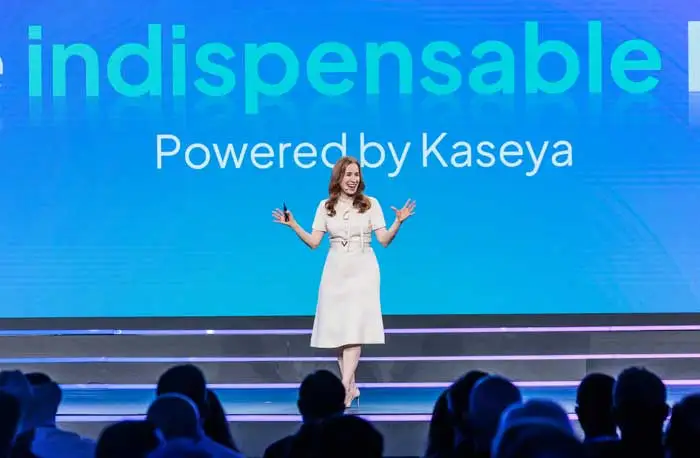
Rania Succar took the top spot at MSP tools vendor Kaseya in June, months after the unexpected transition of her predecessor, Fred Voccola, from CEO to vice chairman.
Voccola had led the vendor for more than 10 years and spent billions spent on acquisitions, a revamped go-to-market and a hard-nosed sales strategy that gained admirers as well as detractors.
Kaseya’s Succar-era has so far included a host of new executives, pricing changes, product innovations, the acquisition of Inky, a round of layoffs and a lawsuit with a Datto founder.
Succar joined the Miami-based MSP tools vendor after about 10 years with Intuit, according to her LinkedIn account. She left Intuit with the title of general manager of the Mailchimp division.
Her resume includes about five years with Google. She left in 2016 as director of brand solutions and innovation for North America.
Kaseya has about 50,000 channel partners worldwide, according to CRN’s 2025 Channel Chiefs.
1. Lip-Bu Tan
Intel
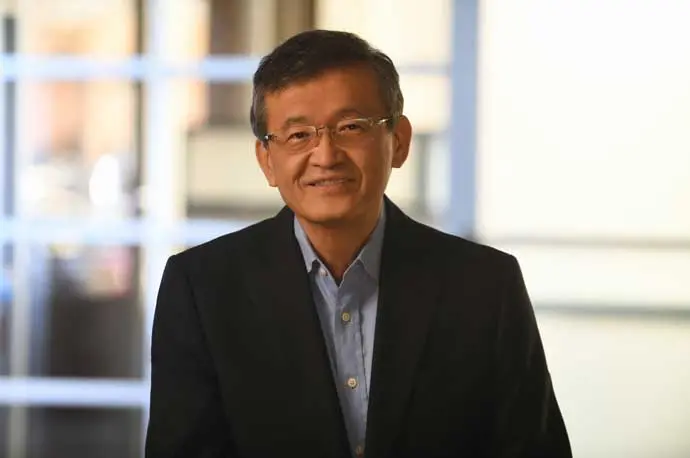
Lip-Bu Tan became CEO of Intel in March with a mission to turn around the 56-year-old company after the forced ouster of his predecessor, Pat Gelsinger, in December 2024.
Tan’s first chapter as head of Intel saw a variety of ups and downs from mass layoffsto major executive exits and semiconductor factory delays to difficulty securing external customers for the Intel Foundry contract chip manufacturing business, the company that helped enable the personal computing era continues to face struggles in coming out ahead of its rivals in the AI era.
On the plus side for Intel’s 100,000-partner ecosystem, the vendor marked its fourth consecutive quarter of improved execution in October, rolled out Core Ultra 200V processors in commercial laptops, launched midrange Xeon 6 processors and even locked in one of its three Xeon 6 processors as the host CPU for Nvidia’s new Blackwell Ultra-based DGX B300 system.
Intel also revealed in October a 160-GB, energy-efficient data center chip that is part of a new annual GPU release cadence.
At a time when semiconductors are at the center of international geopolitics–with Nvidia fightingfor the ability to export chips and even giving the U.S. a percent cut of its Chinese sales revenue–Tan found himself personally in the crosshairs of President Donald Trump, with the commander-in-chief calling for Tan’s removal as Intel CEO. The two appear to have squashed their beef, with the U.S. government even getting a 10 percent stake in Intel, a rare move.
Tan joined the Santa Clara, Calif.-based chipmaker after previously serving as an Intel board member from 2022 to 2024, according to his LinkedIn account.
His resume includes CEO of chip design tool provider Cadence Systems from 2009 to 2021. He is also a founding managing partner of Walden Catalyst Ventures and chairman of venture firm Walden International.