The 10 Biggest Intel News Stories Of 2025
CRN rounds up the 10 biggest Intel news stories of 2025, which range from TSMC suing a company executive and the U.S. gaining a 10 percent stake in Intel to a ‘new financial discipline’ under CEO Lip-Bu Tan for its manufacturing investments and a setback to its AI strategy.
Four years after Pat Gelsinger kicked off a major transformation within Intel as part of an ambitious comeback plan, the semiconductor giant underwent another big wave of changes this year under a new revival effort by his successor, Lip-Bu Tan.
After joining Intel as its new CEO in March, Tan has held onto some of Gelsinger’s largest goals, like building a major contract chip manufacturing business to compete with Asian foundry giant TSMC, but the leader is taking a different approach in some key ways.
[Related: The 10 Hottest Semiconductor Startups Of 2025]
Among his most notable moves in his first year as CEO, Tan said he is instituting a “new financial discipline” for the manufacturing investments the company makes through its Intel Foundry contract chip-making business.
This has resulted in the Santa Clara, Calif.-based company scaling back its global manufacturing expansion that Gelsinger aggressively pursued as CEO before he was reportedly forced to resign by Intel’s board late last year. Tan has also drawn a line for when Intel would stop investing in advanced chip manufacturing technologies, saying that it needs major volume commitments from customers to continue doing so.
Tan also shook up his executive team by turning more officials, including business unit leaders, into direct reports, and bringing in some outsiders for key roles. In addition, he reduced the number of management layers in the company by 50 percent when he cut Intel’s workforce by 15 percent over the summer.
All these moves are part of Tan’s push to build what he has called an “engineering-driven, customer-first culture,” which he thinks will allow the company to better compete in markets for x86 CPUs, AI accelerator chips and contract chip manufacturing.
Intel has made some early progress under Tan, reporting a “fourth consecutive quarter of improved execution” in its third-quarter earnings release, with revenue, gross margin and earnings per share all coming in “above guidance.”
But Tan’s comeback efforts have faced some setbacks, like when Sachin Katti, who he appointed to lead Intel’s AI strategy in April, left the company roughly six months later to take a job building compute infrastructure for ChatGPT creator OpenAI.
The company has also found itself in a dispute with TSMC, which counts Intel as a customer in addition to being its biggest chip-making rival, after the Asian foundry giant sued a former TSMC executive who took a job at Intel this year.
What follows are summaries of these and other developments, such as business spin-offs and partner program changes, that were Intel’s 10 biggest news stories this year.
10. Intel Continues To Spin Off Non-Core Businesses
Intel continued its push to spin off non-core businesses this year with moves to turn its computer vision and programmable chip products into stand-alone companies, but the chipmaker ended up changing course with its networking and communications unit.
Most recently in September, Intel completed the majority stake sale of its Altera programmable chip business to private equity firm Silver Lake for $3.3 billion, with the chipmaker owning the remaining 49 percent.
The Silver Lake deal—which valued the FPGA design business at nearly $8.8 billion when it was announced back in April—is the result of a plan that was supported by Tan but originally hatched by his predecessor, Gelsinger, back in 2023.
At the time, Gelsinger sought to spin off Altera, which Intel acquired for $16.7 billion in 2015, as part of his move for Intel to focus on its core business, namely its CPU design and contract chip manufacturing divisions. The original plan called for Intel to seek private investments for Altera, which was known as the Programmable Solutions Group, and do an initial public offering for the unit by 2026.
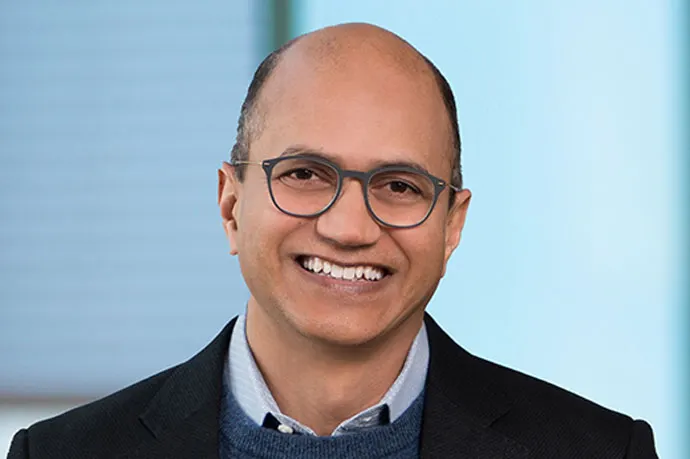
While Altera still plans to become a public company, it likely won’t happen next year, Altera CEO Raghib Hussain (pictured) told CRN in a September interview. Instead, he expects it to happen up to three years or so from now.
Earlier in July, Intel spun out its RealSense computer vision business, which raised $50 million in funding from investors, including Intel Capital and MediaTek Innovation Fund, to chase big opportunities in robotics and biometrics.
Later that month, the semiconductor giant informed customers that it planned to spin off its networking and communications business, most recently known as the Network and Edge Group, or NEX for short, CRN reported at the time.
However, Intel changed course in early December, saying that it would hold on to the networking and communications business after all.
“After a thorough review of strategic options for NEX—including a potential stand-alone path—we determined the business is best positioned to succeed within Intel,” an Intel spokesperson told CRN in a statement.
“Keeping NEX in-house enables tighter integration between silicon, software and systems, strengthening customer offerings across AI, data center and edge,” the representative added.
Shortly after Tan became Intel’s CEO in March, the leader made clear that he would seek to spin off businesses he considers not core to its strategy.
“I will evaluate other opportunities as we continue to sharpen our focus around our core business and strategy,” Tan said on Intel’s second-quarter earnings call.
9. Intel Boosts Partner Incentives With ‘Simplified’ Alliance Program
Intel said in August that it was increasing investments in partners in the second half of the year to give them “more value” and “more benefits” as part of a “simplified” Intel Partner Alliance program the semiconductor giant launched in October.
The comments were made by Andy Marsee, general manager of Intel Partner Alliance, in an exclusive interview with CRN, shortly before the company announced several changes coming to the partner program in an email to partners the prior week. Marsee didn’t specify by how much Intel is increasing partner investments relative to the first half of the year. Intel said in January that it had boosted partner funding by an unspecified amount over its 2024 investment level while cutting direct partner coverage.
The changes to the four-year-old Intel Partner Alliance program were unveiled before Intel Global Channel Chief Dave Guzzi days later announced that he is gaining additional responsibilities with his new title as vice president of global go-to-market, enterprise and partner. His previous title was vice president of global partner scale.
The Intel Partner Alliance changes included a move to a two-tier member system from the program’s traditional three-tier system, an increase in the number of points partners can earn on Intel products and other activities, the introduction of volume-based point multipliers for high-priority products as well as the removal or consolidation of some program elements, among several other things.
Intel’s Marsee emphasized to CRN that while it’s moving partners from a three-tier system that consists of Member, Gold and Titanium tiers to a two-tier system that will consist of the base Partner and premium Prestige tiers, no partner will lose benefits as a result.
He said “no partner left behind” is Intel’s mantra with these changes.
“Whether you were Gold or whether you were a Member in the current structure, in the new structure you’re going to get more benefits [and] more value, even if you’re in that second Partner tier,” Marsee said.
The chipmaker also announced marketing-related changes, such as a new MDF model going into effect next year and the availability of Intel’s brand to top-tier partners for co-marketing purposes. These changes are happening as the parent division of Intel’s global partner organization, the Sales and Marketing Group, begins to outsource many marketing functions to global consulting giant Accenture.
While Intel partners lauded the changes in the program, they told CRN they have been taking note of rivals like AMD and Qualcomm making significant investments in their own partner programs this year to ramp up competition in the channel.
8. Intel Loses Several Top Executives As Outsiders Move Into Key Roles
Intel lost several top executives this year as Tan appointed company veterans and outsiders to key leadership roles across its AI, data center and sales groups.
The most notable departure is Katti, Intel’s chief technology and AI officer, who left the company in November roughly six months after Tan appointed him to the role. Katti said at the time that he was taking a job at ChatGPT creator OpenAI.
When Tan announced Katti’s exit, the CEO said he was taking over the executive’s responsibilities for the company’s AI Group and Intel Advanced Technologies Group.
The most recent departure is Intel Chief Communications Officer Jeff Dahncke, who announced in late November that he left the company to take a job with the same title at data center infrastructure provider Equinix.
Katti and Dahncke were among the executives who Tan made direct reports in April as part of his move to flatten his executive team, which was the first of several major reforms Tan enacted over the past several months in Intel’s latest comeback attempt.
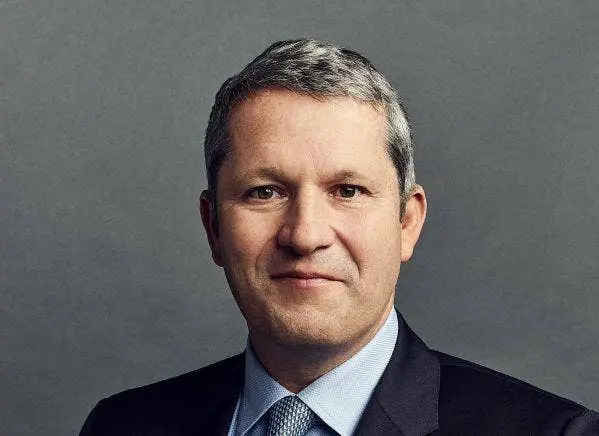
Other direct reports of Tan who have left Intel since he became CEO in March include Chief Commercial Officer Christoph Schell (pictured above), Chief People Officer Christy Pambianchi, Chief Strategy Officer Safroadu Yeboah-Amankwah, Intel Products CEO Michelle Johnston Holthaus and engineering leader Rob Bruckner.
Executive appointments made by Tan this year include former Arm executive Kevork Kechichian as the leader of Intel’s Data Center Group, company veteran Jim Johnson as the head of its Client Computing Group and Intel sales veteran Greg Ernst, who succeeded Schell as CRO in June.
Tan has also hired former Apple chip designers Jean-Didier Allegrucci and Shailendra Desai to lead AI silicon engineering efforts as well former Cadence Design Systems engineering leader Srinivasan Iyengar to lead a revitalized custom chip design initiative.
7. Intel Shares Details Of Upcoming Intel 18A Chips Key To Its Comeback
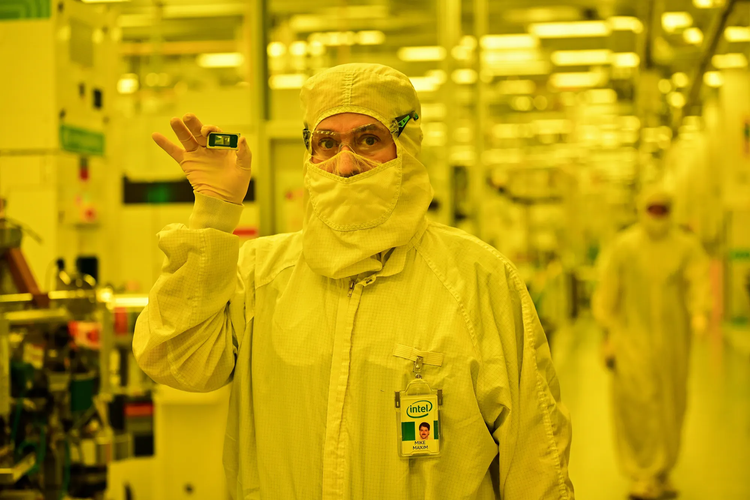
Intel in October shared a variety of details about its forthcoming Panther Lake PC system-on-chip and Clearwater Forest server CPU—two products that represent a critical and long-awaited step in its heavily scrutinized comeback plan.
The Panther Lake and Clearwater Forest chips represent the first to use the semiconductor giant’s Intel 18A advanced chip-making technology, which the company said will deliver 15 percent better performance per watt and 30 percent improved chip density compared with the last-generation Intel 3 node. Early production has begun in Oregon, with the company now ramping up high-volume manufacturing in Arizona.
The chipmaker has banked a great deal of its future success on Intel 18A, which will be used for at least the next three generations of Intel’s client and server chip products. The process was first pitched by former Intel CEO Gelsinger in 2021 as the last step in a multi-node plan to regain process performance leadership and build a competitive contract chip manufacturing business against Asian foundry giant TSMC.
The company’s new disclosures about Panther Lake, expected to ship later this year under the Core Ultra series 3 brand, and Clearwater Forest, which is set to launch in the first half of next year with the Xeon 6+ brand, provide the most detail yet about the performance and efficiency capabilities that are made possible by Intel 18A.
Compared with the Core Ultra 200V chips formerly known as Lunar Lake, Intel said Panther Lake will deliver greater than 10 percent better single-threaded CPU performance and more than 50 percent better multi-threaded CPU performance—both at similar power levels.
The company also boasted of Panther Lake featuring greater than 40 percent more NPU TOPS per area than Lunar Lake, whose NPU maxed out to 48 TOPS.
In addition, Intel said that Panther Lake will require more than 30 percent less power than the Core Ultra Series 2 desktop chips formerly known as Arrow Lake to provide a similar level of multi-threaded CPU performance.
At a system-on-chip level, Panther Lake will use up to 10 percent lower power than Lunar Lake and as much as 40 percent less power than Arrow Lake.
Representing the second generation of Xeon CPUs with E-cores, Clearwater Forest is being touted by Intel as “the most efficient server processor the company has ever created.”
Compared with the 144-core Xeon 6780E Sierra Forest processor, Clearwater Forest is expected to deliver up to 90 percent higher performance. The upcoming processor line will also feature up to a 23 percent improvement in efficiency across the load line.
As part of Intel’s ongoing data center consolidation push, the company said Clearwater Forest will enable data centers running on second-generation Xeon CPUs to consolidate servers by a ratio of 8 to 1. It said such a move would improve the data center’s performance per watt by 3.5 times and reduce space used by 71 percent.
6. Nvidia Invests $5B In Intel As Part Of Major Development Deal
Nvidia announced in September that it will invest $5 billion in Intel common stock as part of a joint development deal that will cover “multiple generations” of products.
In a shared announcement, Nvidia CEO Jensen Huang called the deal a “historic collaboration” that “tightly couples Nvidia’s AI and accelerated computing stack with Intel’s CPUs and the vast x86 ecosystem—a fusion of two world-class platforms.”
“Together, we will expand our ecosystems and lay the foundation for the next era of computing,” he said in a statement.
Tan said that his company’s computing platforms, combined with its process technology, manufacturing and advanced packaging capabilities, “will complement Nvidia’s AI and accelerated computing leadership to enable new breakthroughs for the industry.”
The joint development efforts will center around using Nvidia’s NVLink interconnect technology to “seamlessly” connect Intel and Nvidia’s respective chip architectures, according to the two companies.
For data centers, Intel plans to design a custom x86-based CPU that can integrate directly into Nvidia’s rack-scale platforms like the NVL72, which enables high-speed communication between 72 GPUs and the host CPUs using NVLink to allow them to act as if they’re “one giant computer,” according to Huang.
“In the future, we will buy x86 CPUs from Intel, and we would fuse it with NVLink into our rack-scale system, so we’re going to become a very large customer of Intel CPUs,” he said.
For the PC market, Intel plans to create a “giant” system-on-chip that fuses a custom Intel x86-based CPU and Nvidia RTX GPU chiplet using NVLink to create a “new class of integrated graphics laptops that the world’s never seen before,” according to Huang.
Tan said the joint product will also feature unified memory.
Huang said this will represent a new market for Nvidia because the company has largely focused on providing discrete GPUs for gaming laptops and mobile workstations in the PC world. Laptops outside those categories, on the other hand, mostly use integrated graphics, a “segment that has been largely unaddressed by Nvidia today,” he added.
“We’re going to be quite a large supplier of GPU chiplets into Intel x86 SoCs,” Huang said.
5. Intel CEO Unleashes New Major Wave Of Job Cuts
Intel said in late July that it “plans to end the year with a core workforce of about 75,000 employees” due to layoffs and attrition, which would amount to nearly one-quarter of its workers leaving in a matter of 12 months.
The company made the disclosure in its second-quarter earnings report, where it said it is laying off roughly 15 percent of its workforce as part of a previously announced plan to “create a faster-moving, flatter and more agile organization.”
Intel had 108,900 employees as of last December, according to an annual report the company filed with the U.S. Securities and Exchange Commission earlier this year. With 99,500 employees accounting for Intel’s core workforce at the end of last year, this reduction would amount to a 24.6 percent decrease.
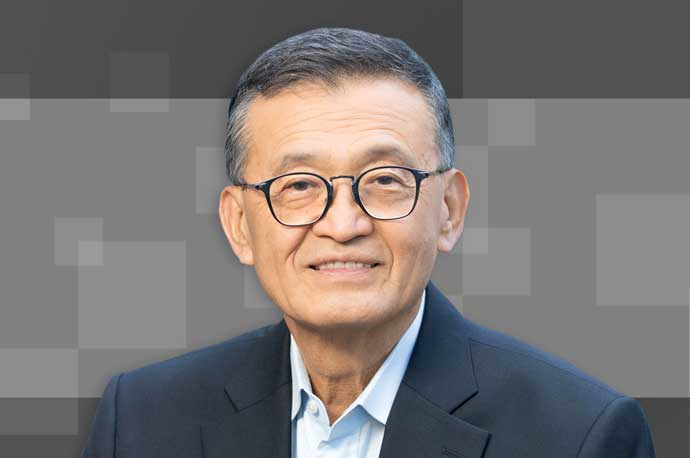
“We need to right-size and scale back the company while ensuring that we are retaining our best internal talents and hiring the best external talents from industry and universities,” Tan (pictured) said on Intel's second-quarter earnings call.
“These were hard but necessary decisions, and we reduced management layers by approximately 50 percent in the process,” he added.
Tan warned back in April that his push to drive improved execution and operational efficiency” for the company would result in job cuts.
4. Intel Loses AI Chief As It Retools AI Strategy
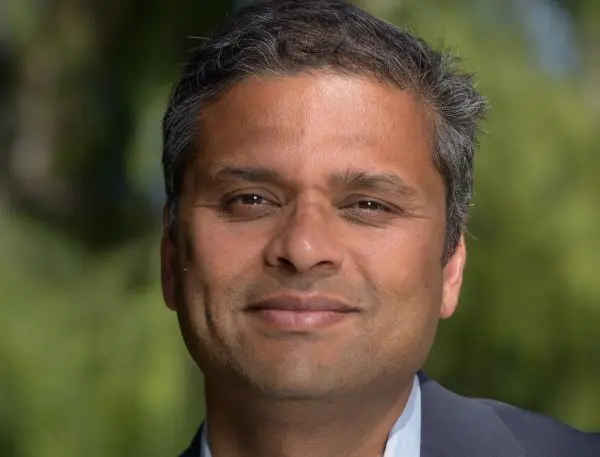
The leader of Intel’s AI strategy and road map, Katti (pictured), departed the company in November roughly six months after Tan appointed him to the job.
Katti, who held the title of chief technology and AI officer, announced on X at the time that he was taking a job building out compute infrastructure to power artificial general intelligence for ChatGPT creator OpenAI.
In a memo to employees announcing Katti’s exit, Tan said he will assume leadership of the AI Group and Intel Advanced Technologies Group that were previously led by Katti, explaining that his decision was motivated by recent changes felt by the teams.
“I recognize that these teams have experienced considerable change in the recent months. That’s why I’ll be working directly with the leadership teams to refine our AI strategy and ensure consistent execution of our advanced technology road map,” he wrote.
The departure came not long after Katti detailed Intel’s new strategy for challenging Nvidia’s dominance of the AI infrastructure market.
The chipmaker has struggled for more than a decade to define and execute a successful accelerated computing strategy, most recently reflected by its failure to meet a modest, $500 million revenue goal for its Gaudi chips last year.
Referring to AI as “one of Intel’s most important priorities and most exciting areas of opportunity,” Tan said these opportunities exist “not only in traditional general-purpose computing”—referring to CPUs—“but also in the emerging realms of inference workloads driven by agentic AI and physical AI.”
“To capture these opportunities, we must move decisively, leveraging our scale and ecosystem to establish Intel as the compute platform of choice for the next generation of AI-driven workloads,” Tan wrote in the memo.
While Tan’s memo did not discuss other changes to the AI and advanced technologies teams, the leadership shakeup came days after one of Katti’s direct reports, data center AI executive Saurabh Kulkarni, left Intel for a job at AMD, as CRN reported last Thursday.
Kulkarni, who had been vice president of data center AI product management since July of last year, announced on LinkedIn Monday that AMD hired him as an executive with a similar title that puts him in charge of GPU product management.
Anil Nanduri, vice president of AI go-to-market at Intel, has taken over Kulkarni’s leadership responsibilities for the chipmaker’s AI product management organization.
A few months earlier, Tan appointed two outsiders to lead AI engineering efforts amid restructuring efforts pushed by the CEO. Jean-Didier Allegrucci, a former longtime chip designer at Apple, was named vice president of AI system-on-chip engineering. Shailendra Desai, another former Apple chip designer who also worked at Google, was given the role of vice president of AI fabric and networking.
Roughly a month before Katti left Intel, the company revealed a 160-GB, energy-efficient data center GPU that is part of a new annual GPU release cadence to deliver on its strategy of providing open systems and software architecture for AI systems.
“That’s the strategy: We will be building scalable heterogeneous systems that deliver that zero-friction experience to agentic AI workloads and can deliver on the best performance-per-dollar for these workloads by leveraging this open heterogeneous architecture,” Katti said at a September press event.
Before Katti was appointed chief technology and AI officer by Tan in April, the company canceled Falcon Shores, which was supposed to succeed Gaudi 3 as its next-generation AI accelerator chip by the end of this year. At the time, the company said it was focusing on a “rack-scale solution” powered by a successor chip called Jaguar Shores.

3. TSMC Sues Former Executive Who Joined Intel In Trade Secrets Case
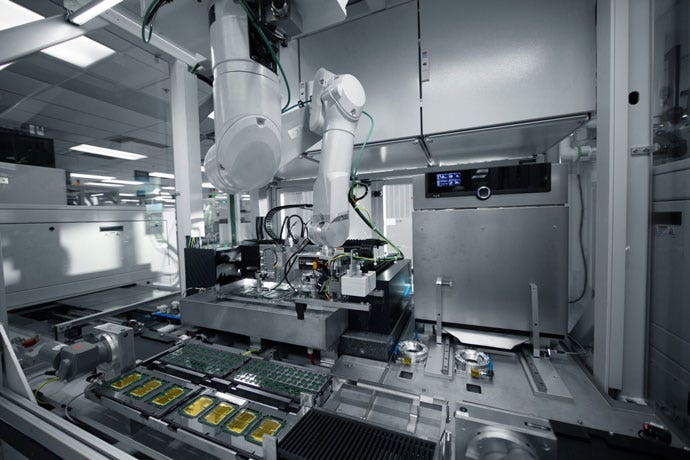
Taiwanese foundry giant TSMC alleged in late November that a former executive is at risk of sharing trade secrets with Intel after he took a job at the rival chipmaker this year.
TSMC, the world’s largest contract chip manufacturer, said it filed a lawsuit on Nov. 25 against Wei-Jen Lo, who became an executive vice president at Intel after retiring from TSMC, in Taiwan’s Intellectual Property and Commercial Court.
The legal dispute puts TSMC at odds with Intel, which seeks to build a competing contract chip manufacturing business as it relies on TSMC to fabricate some of its products.
“There is a high probability that Lo uses, leaks, discloses, delivers, or transfers TSMC’s trade secrets and confidential information to Intel, thus making legal actions (including claiming damages for breach of contract) necessary,” the company said in a statement.
TSMC said the lawsuit is “based on the terms of Employment Contract between TSMC and Lo, the Non-compete Agreement signed by Lo during his employment, and regulations such as the Trade Secrets Act.”
A TSMC spokesperson told CRN that the complaint is not yet public.
Two days after the lawsuit was filed, Taiwanese prosecutors raided Lo’s residences in the island nation and “seized evidence including at least one computer as part of an investigation into whether Lo improperly transferred technology related to national security,” The Wall Street Journal reported.
In a statement, Intel defended Lo and denied any knowledge of wrongdoing by the executive, who previously spent 18 years at Intel working on the company’s wafer processing technology development before joining TSMC to focus on the same area.
“Intel maintains rigorous policies and controls that strictly prohibit the use or transfer of any third-party confidential information or intellectual property,” an Intel spokesperson said. “We take these commitments seriously. Based on everything we know, we have no reason to believe there is any merit to the allegations involving Mr. Lo.”
The Intel representative said Lo returned to the semiconductor giant this year as part of a move by Tan to embrace an “engineering-driven, customer-first culture with a renewed focus on strengthening our x86 franchise, building a trusted U.S. foundry and accelerating our AI strategy.”
The company spokesperson added: “Freedom to work, to apply our skills, and to move between companies has been a cornerstone of innovation in the semiconductor industry since the earliest days. Talent movement across companies is a common and healthy part of our industry, and this situation is no different.”
In TSMC’s statement, the company said that Lo joined TSMC in 2004 before getting promoted to senior vice president in 2014 and then retiring in July of this year.
The Asian foundry giant alleged that Lo continued to meet with members of TSMC’s R&D departments in 2024 even though those employees no longer had a supervisory or subordinate relationship with Lo after he was moved to a different department that year.
In meetings with these R&D employees, Lo was provided with information about “the advanced technologies currently, and planned to be, under development by TSMC,” the Taiwanese company claimed in its statement.
TSMC said that its general counsel, Sylvia Fang, reminded Lo of his “non-compete obligation” in a July meeting and was told by the executive that he planned to join an academic institution after his retirement.
Lo did not mention his intent to join Intel, the company added.
2. Tan Sets ‘New Financial Discipline’ For Intel Foundry Investments
Tan in late July said that his decision to require volume commitments from customers before he makes further investments in Intel Foundry is part of a “new financial discipline” he has instituted for the contract chip-making business.
In Intel’s second-quarter earnings call, the CEO was referring in part to the company’s new disclosure that it may pause or discontinue its pursuit of the Intel 14A manufacturing node and successor nodes if the company can’t land a “significant external customer and meet important customer milestones” for Intel 14A.
A halt to development of advanced chip-making technologies would constitute the end of Intel’s traditional manufacturing model, which relies on introducing new technologies to improve the efficiency of computer chips over time. It could also threaten the U.S.’ ability to produce advanced logic chips from a domestic supplier.
However, Tan said he is confident that Intel will not need to end R&D for advanced chip manufacturing because of the progress the company is making with Intel 14A, which is the successor to the Intel 18A node that is set to enter high-volume production by year’s end.
Among the reasons fueling Tan’s confidence for Intel’s manufacturing future is its early engagement with customers on the development of Intel 14A.
“They’re going to enable us, and with clear milestone, to execute in terms of process development and with [process development kit], with all the different IP that we need to really put it together,” he said.
Tan also said the company has “learned quite a lot” from the mistakes it made on Intel 18A and is now applying those lessons to Intel 14A. In addition, Intel is working with partners to help it improve manufacturing yield for the node, which Tan said gives him “a lot of confidence” about prospects for Intel 14A.
Tan said his “new financial discipline” has also resulted in Intel canceling projects for big facilities in Germany and Poland in addition to shutting down assembly and test operations in Costa Rica, with sites in Vietnam and Malaysia expected to pick up the slack. The company is also slowing down construction for its future manufacturing site in Ohio.
“Perhaps most importantly, we need to build capacity smartly and carefully on a schedule that meets the needs of our customers and supports the economics of our business,” Tan said before criticizing Gelsinger’s expansion strategy.
“This approach is fundamentally different than the path we have been on for the last four years,” he added. “Unfortunately, the capacity investment we made over the last several years were well ahead of demand and were unwise and excessive. Our factory footprint has become needlessly fragmented.”
Instead, Intel will only grow its manufacturing capacity “based solely on the volume commitments” from customers and spend money in “lockstep with tangible milestones—and not before,” according to Tan.
“I do not subscribe to the belief that ‘if you build it, they will come’ under my leadership. We will build what customers need, when they need it, and earn their trust through consistent execution,” he said earlier in the call.
1. US Gets 10 Percent Stake In Intel After Trump Demands CEO’s Resignation
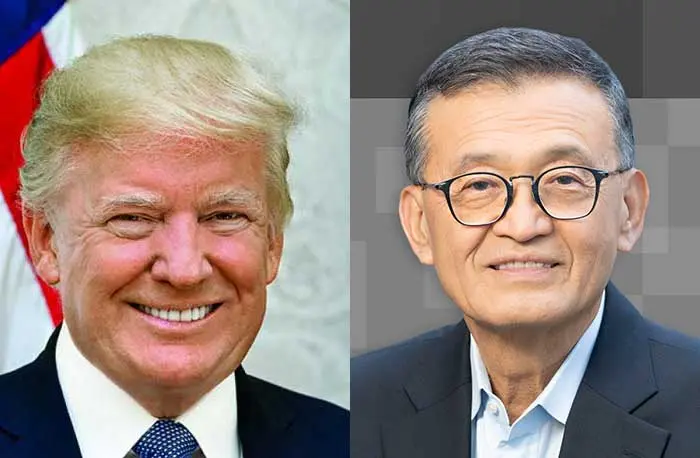
President Donald Trump announced in late August that the U.S. government is taking a 10 percent equity stake in Intel more than two weeks after he called for the chipmaker CEO’s resignation.
The semiconductor giant confirmed the deal two days later, saying that the agreement would give the U.S. government a 9.9 percent equity stake using $8.9 billion in previously allocated CHIPS and Science Act grants.
Intel called the move a “historic” agreement that will support the “continued expansion of American technology and manufacturing.”
“As the only semiconductor company that does leading-edge logic R&D and manufacturing in the U.S., Intel is deeply committed to ensuring the world’s most advanced technologies are American-made,” Tan said in a statement at the time.
The $8.9 billion the federal government is using to buy Intel common stock comes from two federal grants for which it received approvals last year from the CHIPS and Science Act under the Biden administration.
For the first grant, Intel had been awarded $7.9 billion as part of a direct funding agreement by the Biden administration last year to support the company’s expansion of U.S. chip manufacturing and advanced packaging plants.
Since Intel had already been awarded $2.2 billion for the federal grant by meeting certain milestones, the Trump administration is using the remaining $5.7 billion to help fund its purchase of Intel common stock.
Intel CFO David Zinsner later that August confirmed that the company had received the remaining $5.7 billion from the grant. This, he said, boosted Intel’s balance sheet and “eliminated the need to access capital markets in any other way in the near term.”
The other $3.2 billion the U.S. government is using to buy Intel common stock comes from a grant the company was awarded in the Department of Defense’s Secure Enclave program, which was created by the CHIPS and Science Act. The program aims to help the U.S. military improve its capabilities and secure a domestic supply chain.
Intel said it will “continue to deliver on its Secure Enclave obligations and reaffirmed its commitment to delivering trusted and secure semiconductors” to the Pentagon.
Trump said the U.S. equity agreement with Intel was reached after he demanded on Aug. 7 that Tan resign for being allegedly “totally conflicted” and then met with Tan at the White House four days later to discuss the president’s concerns.
Trump said the source of his issues with Tan was a letter sent by U.S. Sen. Tom Cotton earlier in the month to Intel Chairman Frank Yeary.
The letter raised concerns about “Intel’s operations and its potential impact on U.S. national security” in connection to Tan’s alleged investments in Chinese firms and a late July guilty plea by the previous firm Tan led, Cadence Design Systems, for selling software to a Chinese university on the U.S. Entity List.
In a letter Tan sent to Intel employees Aug. 8 after Trump’s call for him to resign, the CEO defended his integrity as a tech executive and investor and said the chipmaker was “engaging” with the Trump administration to address concerns it has.
Trump called Cotton’s letter a “pretty nasty story” and said he warmed up to Tan after meeting with the Intel CEO on Aug. 11.