The 10 Biggest News Stories Of 2025
This year’s leading news stories include the wave of agentic AI technology development, tariffs and economic uncertainty, the mixed fortunes of Nvidia and Intel, and Hewlett Packard Enterprise’s completed $13.4 billion acquisition of Juniper Networks.

Agentic AI Is The Industry Focus Amid Economic Uncertainty
For the IT industry and the channel, 2025 was marked by economic uncertainty. Much of that has been driven by the Trump administration’s ever-changing tariff plans, which have kept IT industry executives constantly guessing about the impact on the economy and their businesses.
All this, nevertheless, has failed to distract IT vendors from the frenzy of agentic AI development in 2025, the current focus of the broader AI wave that began sweeping through the IT industry in early 2023.
This year’s top stories include several mega-mergers, including HPE’s completed $13.4 purchase of Juniper Networks and Google’s still-pending deal to buy cloud security darling Wiz for $32 billion. Also making the list were significant layoffs at some of the industry’s biggest IT companies, a ransomware attack against a leading distributor, and continued aftershocks from Broadcom’s $69 billion acquisition of VMware in November 2023.
Here’s our look at the top 10 news stories of 2025, starting with No. 10 and counting down to No. 1. Take a look and see if you agree with our choices.

No. 10: The IT Industry Tangles With Tariff Uncertainties
Throughout 2025, especially in the early months, the IT industry and the channel at times found itself navigating a potentially treacherous minefield of the Trump administration’s ever-changing tariff policies that affected international trade.
The administration’s tariffs and retaliatory tariffs implemented by some countries created confusion for the IT industry and raised concerns about their impact on channel growth.
Many IT companies rely heavily on components and systems manufactured outside of the U.S. and many sell their products overseas. Research from IPED, the channel consulting arm of CRN parent The Channel Company, found that in the earliest days of the global tariff war some solution providers were already seeing vendor price increases and longer sales cycles.
“It's a very fast-moving, volatile, unstable environment where today the situation might be clear and tomorrow it might be different than what it is today,” said Mark Bakker, Hewlett Packard Enterprise executive president and general manager of operations, in an interview with CRN in April. “I think we are in a situation of continued uncertainty and volatility, which makes it hard for anybody in the supply chain to make any decisions about what to move, where and how quickly.”
Tariffs, whether actually implemented or just proposed by the Trump administration, disrupted global supply chains and raised component and product costs, depending on the specific countries involved.
Distributors were grappling with the possible impact of tariffs from early on. In March distributor Arrow Enterprise Computing Solutions said it had begun raising prices due to rising costs from tariffs against products imported from China, Canada and Mexico.
In mid-year Nvidia raised prices on some of its GPU processors, including RTX products, in response to tariffs and higher manufacturing costs. In August, Mike Bauer, CEO of distributor ScanSource, told CRN that customers appeared to be accelerating orders in the company’s fiscal 2025 fourth quarter (ended June 30) in response to tariff-driven uncertainty, potentially impacting sales in following quarters.
In April, Pure Storage blamed tariffs for its plan to reduce special pricing discounts that could increase hardware prices by 10 percent. Other companies, including PC maker Acer, vowed to try to avoid passing tariff costs along to customers for as long as possible.
Tariff uncertainty led some IT industry giants to rethink their manufacturing and supply chain strategies. Apple moved some product manufacturing from China to India and Vietnam and in August announced a $600 billion commitment over the next four years to bring more of its manufacturing and supply chain to the U.S.
In April, Nvidia announced that it was moving production of its Blackwell GPUs to TSMC manufacturing plants in Arizona. With great fanfare the chipmaker also announced plans to assemble complete AI supercomputers in Texas with partners TSMC, Foxconn and Wistron.
No. 9: Changing Of The Guard At Kaseya
The new year started off with a shock when Fred Voccola, the hard-charging Kaseya CEO who built the company into the dominant MSP platform, unexpectedly stepped down after more than 10 years leading the company to more than $1.5 billion in annual recurring revenue.
“With Kaseya coming off the strongest quarter and year in our history, now is the right time for me to step up into the role of vice chairman and hand over operating responsibilities to a new CEO,” Voccola said in a statement.
Kaseya partners expressed surprise at the news and called the change in leadership at the company a potential “sea change” for MSPs given the amount of growth they realized working with Miami-based Kaseya under Voccola’s management. But some partners also said his departure could open the door for building a better future for the company and its partners.
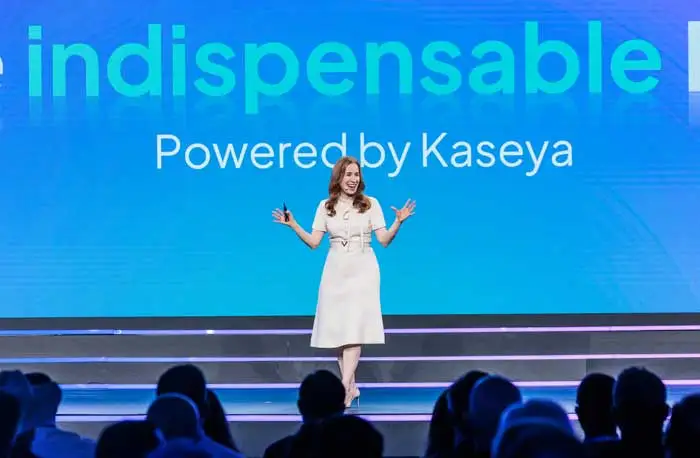
In June, Kaseya announced that it had hired Rania Succar (pictured), a former Google and Intuit executive, as its new CEO. Succar brought to the CEO post more than a decade of experience building innovative technology solutions for small businesses. In an interview with CRN, she outlined a bold vision for Kaseya’s future anchored on accelerating innovation, enhancing customer experience and strengthening company culture.
“I have spent the last nine years building innovative technology solutions for small businesses to fuel their success,” she told CRN. “Kaseya is incredibly well positioned to play a big role in small business success, given our deep partnership with MSPs. These providers are trusted advisors to small businesses and we’re here to supercharge their impact.”
Kaseya has made other changes and additions to its executive ranks including naming SaaS Alert co-founder Jim Lippie as the company’s new chief product officer in April. In September Kaseya named Anthony Anzevino, a Commvault, Veeam Software and Amazon Web Services veteran, as the company’s new chief revenue officer, and Pratik Wadher, previously with Intuit, Applatix and Data Domain, as chief technology officer. With those appointments Kaseya looks to accelerate innovation while reinforcing its commitment to keeping MSPs at the core of its vision.
All these leadership changes come as Kaseya faces increased competition from ConnectWise, N-able and other MSP platform upstarts.
Kaseya, meanwhile, has continued to push its technology offerings forward. Most notable was the company’s October acquisition of Inky, a trailblazing email security provider whose technology, tailored to the needs of MSPs, uses AI-powered capabilities to enable proactive cyber defenses and stay ahead of rapidly evolving phishing and social engineering threats.
That same week at Kaseya’s DattoCon event the company introduced new automation and cybersecurity innovations to its product portfolio, not to mention a more flexible, consumption-based pricing model and enhanced billing and transparency tools.
“Our AI and digital workforce initiatives are evolving fast,” Lippie told CRN in an interview later in October. “The way MSPs will be able to automate on-boarding, triage and password resets, without human intervention, will redefine operational efficiency.”
In November, Joe Smolarski, who had served as Kaseya’s president for nearly three years, left the company to become the new CEO at cybersecurity company WatchGuard. (Before becoming president, Smolarski had served as Kaseya’s chief operating officer.) In an interview with CRN, Smolarski said that in his new job he planned to drive significant profit margin increases for MSPs – just as he had accomplished at Kaseya.

No. 8: Rodney Clark Steps Down As Cisco Channel Chief, Company Readies New Cisco 360 Partner Program
On August 18, partners in the Cisco Systems universe were surprised when the tech giant disclosed that Rodney Clark (pictured), the company’s global channel chief for less than two years, was stepping down. Tim Coogan, previously senior vice president of Cisco’s U.S. commercial business, was named senior vice president overseeing the Global Partner Sales organization—effective immediately.
No reason for the management change was given. Clark stayed on as a strategic advisor through the end of the year.
Cisco partners applauded the appointment of Coogan, a 25-year Cisco veteran, to the global channel chief role and said the move had them energized about the future of Cisco’s channel strategy.
“Tim gets it,” Manak Ahluwalia, CEO of Aqueduct Technologies, a Canton, Mass.-based Cisco Gold partner, told CRN. “He understands where the partner provides value, the sales landscape, what it means to get down on the street. He has heard partners talk about profitability and operational challenges. He gets Cisco. That’s a great choice!”
The executive change came as Cisco was in the process of rolling out a major revamp of its partner program called Cisco 360. The program, designed under Clark’s direction, is scheduled to be fully live in February 2026.
The company revealed long-awaited details about Cisco 360 at its Cisco Partner Summit 2025 in November, including new partner specializations, incentives, and bonuses offered through the new program. The goal, company executives said, is to simplify the complex previous partner structure with a focus on profitability and predictability.
Cisco 360 makes some significant changes in how the company works with its partners, including rewarding partners more for the value they provide rather than on sales transactions. New features, such as the Partner Value Index (PVI) and the Cisco Partner Incentive (CPI), measure and reward the investments that partners are making in Cisco’s broad product portfolio.
“We’re expanding our value exchange with partners, looking to enhance and recognize the expertise that our partners bring to the table and increase the visibility into performance and metrics that are important through our partner value indexes and the partner experience platform,” Coogan told reporters ahead of Partner Summit 2025.
Cisco 360 is a significant break from the previous program that made the biggest payouts to partners landing large, capex infrastructure deals. The changes caused some anxiety among Cisco partners, especially those who have had strong past years with the tech giant, solution providers told CRN in June.
No. 7: Nvidia Exceeds $4 Trillion Market Cap; Intel Continues To Struggle
2025 was a year of contrasts for two of the industry’s leading semiconductor companies with Nvidia continuing its rapid ascent while one-time industry powerhouse Intel struggled to regain its stride.
AI infrastructure provider and chip designer Nvidia flourished in 2025 despite hurdles such as moves by the Trump administration to restrict its sales in China (resulting in a $4.5 billion write-off against first-quarter earnings) and increased competition from some rivals, most notably AMD.
Huge demand for Nvidia’s Blackwell processors (and the RTX Pro Servers powered by the GPUs) driven by the wave of AI systems being developed and implemented, has fueled Nvidia’s success. In August CEO Jensen Huang said that he sees “significant growth opportunities ahead” that could allow Nvidia to seize a large part of an AI infrastructure market the company forecasts to reach up to $4 trillion by the end of the decade.
In November, Nvidia reported that revenue in its fiscal 2026 third quarter (ended Oct. 26, 2025) grew to a record $57 billion, marking a 62 percent year-over-year increase that was largely driven by sales of the Blackwell and Blackwell Ultra GPUs.
Nvidia became the most valuable company in the world when its market capitalization first hit $4 trillion in July and then, briefly, exceeded $5 trillion on Oct. 29. As of mid-December, Nvidia’s market cap was hovering around $4.25 trillion. (The market caps of Apple and Microsoft also hit $4 trillion in 2025: Apple remained just above that threshold as of mid-December while Microsoft was below.)
Huang deftly navigated a complex relationship with the Trump administration through 2025. In mid-year Nvidia raised prices on some of its GPU processors, including RTX products, in response to tariffs (as well as higher manufacturing costs).
In April, Nvidia announced that it was moving production of its Blackwell GPUs to TSMC manufacturing plants in Arizona. With great fanfare the chipmaker also announced plans to assemble complete AI supercomputers in Texas with partners TSMC, Foxconn and Wistron.
Huang met with Trump in July over the issue of sales of advanced chips to China and in August Nvidia (along with AMD) struck deals under which the chip companies can export certain AI chips to China and will share 15 percent of the revenue from those sales with the U.S. government. In early December the U.S. government permitted Nvidia to sell its powerful H200 chips to China with 25 percent of the revenue going to the U.S. government.
In March Nvidia revealed details of Blackwell Ultra, the follow-up to the Blackwell GPUs. The new-generation processor began appearing in systems in the second half of 2025—Supermicro began volume shipments of Blackwell Ultra-based system in September—and helped fuel the third-quarter revenue growth.
Nvidia shows no signs of slowing down. The company’s product roadmap includes a new GPU architecture called Rubin that’s slated to appear in 2026. In March Huang offered a glimpse of a 576-GPU server rack for AI data centers. And beyond that is a new GPU called Feynman targeted for 2028.
Intel, meanwhile, struggled through 2025 to regain the momentum that once made it one of the IT industry’s most powerful companies. Through the year the company strove to overcome a steady stream of difficulties including slow revenue growth, widespread layoffs, executive turnover, discontinued products—and even conflict with the Trump administration.
In July, as part of its second quarter financial results, it disclosed plans to end 2025 with about 75,000 employees—down about 24,500 workers from the roughly 99,500 employees it had at the end of 2024.
Charged with the task of turning the chip maker around is Lip-Bu Tan who was named CEO on March 12. He took over from interim co-CEOs David Zinsner and Michelle Johnston Holthaus who had run the company since then-CEO Pat Gelsinger suddenly stepped down in December, 2024.
In January, Intel said it was canceling its next-generation Falcon Shores AI accelerator chip, focusing instead on developing a system-level solution at rack scale with a successor chip called Jaguar Shores. The company also took steps to shed some businesses, including its Network and Edge Group business unit, and spin off its RealSense computer vision business.
In February Intel, citing both market conditions and the need to manage its own financial capital, said it was slowing construction of its $28 billion semiconductor factory project in Ohio. In April the company announced a plan to reduce its operating expenses by $500 million this year and another $1 billion in 2026.
Throughout 2025 a steady stream of top executives left Intel. Perhaps the biggest loss was the departure of Sachin Katti, chief technology and AI officer, in November to take a job with OpenAI. Katti was seen as critical to Intel’s efforts to define and execute a new strategy to challenge Nvidia’s dominance of the AI infrastructure market.
Also in November CRN reported that Saurabh Kulkarni, vice president of data center AI product management, was leaving to take a job with rival AMD.
Other direct reports of Tan who left Intel after he became CEO included Chief Commercial Officer Christoph Schell, Chief People Officer Christy Pambianchi, Chief Strategy Officer Safroadu Yeboah-Amankwah, Intel Products CEO Michelle Johnston Holthaus and engineering leader Rob Bruckner.
In a bright spot for the company, Intel in October provided details about its upcoming Panther Lake PC system-on-a-chip and Clearwater Forest server CPU—two products that represent a critical and long-awaited step in its comeback plan.
To its credit Intel, amid all the turmoil, continued to support its channel partner base. In January Dave Guzzi, named Intel’s new channel chief in October 2024, said the company was boosting funding for partner investment and incentives. That was followed in August with news that Intel would boost partner incentives as part of a simplified Intel Partner Alliance program.
As with Nvidia, Intel at times found itself in the crosshairs of the Trump Administration. In early August U.S. President Donald Trump called for Tan to resign “immediately.” But the dustup cooled after Tan met with Trump on Aug.11 and on Aug. 22 Trump said Intel would sell the U.S. government a 10 percent stake in the chipmaker.
Despite their rivalry, Intel and Nvidia announced in September a joint development deal that couples Nvidia’s AI and accelerated computing stack with Intel’s CPUs and the vast x86 ecosystem. The deal included a $5 billion investment by Nvidia in Intel common stock. In a statement Huang called the unexpected alliance “a fusion of two world-class platforms.”
No. 6: Ingram Micro Hit By SafePay Ransomware Attack, Disrupting Business For The Channel
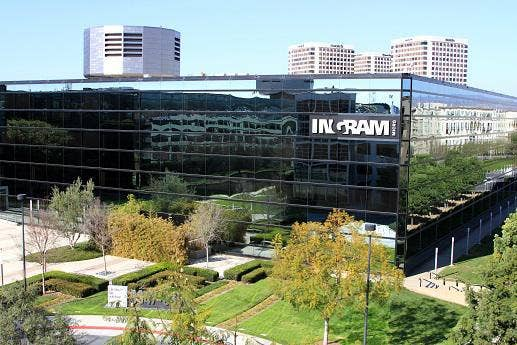
Ransomware attacks have been a growing threat for businesses and organizations of all types. But the danger was really brought home to the IT industry and the channel in July when distributor Ingram Micro was attacked, halting its ability to process orders and ship products.
The distribution giant was hit with the SafePay ransomware attack on July 3, taking down its web site and online ordering systems including Ingram’s AI-powered Xvantage platform and the Impulse license provisioning system.
Visitors to Ingram Micro’s website were greeted with the message: “Maintenance: We are currently experiencing technical difficulties. We apologize for the inconvenience and are working to resolve the issue as quickly as possible. If you have any questions, please contact us.”
“This is our worst nightmare come true,” said the CEO of one CRN Solution Provider 500 company, who had reached out to Ingram Micro but had not heard back on the extent of the outage. “If we can’t place orders or get quotes it stops our business. We are extremely concerned that this could last for some time and have reached out to Ingram. The lack of communication from them heightens our concern. We are thinking about options right now and have reached out to TD Synnex for help to process orders if this goes on for an extended period of time.”
On July 5 Ingram Micro confirmed that it had been hit by a ransomware attack and that it was “working diligently to restore the affected systems” so that it could process and ship orders.” The distributor also said it had notified law enforcement authorities about the attack and had launched an investigation with the assistance of cybersecurity experts.
On July 6, visitors to the distributor’s website were met with the message “Ingram Micro is currently experiencing a cybersecurity incident, for more information ‘click here,’” which directed users to their official statement about the incident. On July 7 a posted statement said the company was making “important progress” on restoring its transactional business.
On July 9 Ingram Micro issued a statement saying it was able to process and ship orders via EDI, phone or email. And on July 10 a statement from the distributor said that it had restored all global business operations.
There was some criticism of Ingram Micro’s lack of communications in the early days of the attack—it did not confirm the incident until roughly 36 hours after reports of the system outage had surfaced. But in a July 8 story on CRN, a number of solution providers expressed patience with the distributor’s efforts to recover and pledged their continued loyalty.
“How many times have I called Ingram and said, ‘I need this urgently,’ and they jump through flaming hoops like a poodle?” said Mark Essayian, president of Irvine, Calif.-based KME Systems. “They’ve earned credit on the ledger. You don’t walk away from that because of a bad week. They’re loyal to me and I’m loyal to them.”
In August, Ingram Micro CEO Paul Bay acknowledged that “certain data was exfiltrated from our systems” during the ransomware attack and said that an investigation was ongoing.
In a Q&A session at the XChange Best of Breed conference (held by CRN parent The Channel Company) in October, Bay gave a first-hand account of how the incident unfolded right after he returned from a two-week business trip through Asia. The Fourth of July weekend and the following days were taken up with efforts to get the distributor’s order processing systems back online and resume shipments to customers—including channel partners.
Despite initial assessments that recovery could take weeks or even months, most systems serving the U.S. were up within a couple of days and globally a few days beyond that. Bay attributed that, in part, to approaching the challenge as a business issue, not just a technology problem, with both sides of the house working together. The modular architecture of the distributor’s IT systems was also an advantage, he said.
And he expressed appreciation for the support Ingram Micro received from its vendor and channel partners. “I was so surprised at the amount of vendors and customer leadership that reached out to me with empathy and knowing that this is a challenge because you’re dealing with it on a daily basis,” Bay said, offering to provide anyone with information about the lessons Ingram Micro learned through the incident.
The Ingram Micro attack was just one of many high-visibility attacks in 2025. Companies and government agencies have been targeted by a seemingly nonstop series of cyberattacks — including both disruptive ransomware attacks and incidents focused on data theft and extortion.
In March Rob Allen, chief product officer of endpoint security vendor ThreatLocker, told attendees at the XChange March 2025 conference said that ransomware gangs had become “more persistent than they ever were” at finding ways to bypass security tools.
No. 5. Google Moves To Buy Cloud Security Startup Wiz For $32B
On March 18, Google parent Alphabet announced that it had inked a definitive agreement to acquire Wiz, a high-flying startup in the cloud security space, for a whopping $32 billion in an all-cash deal.
Alphabet and Wiz were first reported to be in acquisition talks in 2024 with a reported price tag of $23 billion. But those discussions broke off without a deal—reportedly because Wiz wanted to remain independent.
If the Wiz acquisition—the largest in Google’s history—is completed in 2026 as planned, Wiz will become part of Google Cloud, Google’s $48 billion cloud business. Google said the acquisition would accelerate two significant and growing trends in the AI era that Google Cloud is driving: improved cloud security and the ability to implement and use multi-cloud architectures.
“Wiz and Google Cloud share a vision to improve security by making it easier and faster for organizations of all types and sizes to protect themselves, end-to-end, across all major clouds,” Google Cloud CEO Thomas Kurian said in a blog post announcing the acquisition deal.
While the big price tag raised some eyebrows in the industry, CRN reported that Wiz has stood out as a highly unique and disruptive player in the red-hot category of cloud security. Wiz specializes in capabilities that rapidly improve visibility into cloud environments, enabling much faster fixes for misconfigurations and other security gaps in the cloud, and is now extending those capabilities to the increasingly crucial AI security space.
The company’s astronomical growth alone, going from zero to $100 million in annual recurring revenue during its first 18 months in the market and to $500 million in ARR over the following two-and-a half years.
Partners told CRN that the Wiz acquisition will boost Google Cloud’s competitive posture against cloud security rivals Microsoft and Amazon Web Services.
The acquisition faced potential hurdles from regulators: In June published reports said the U.S. Department of Justice was reviewing whether the acquisition would limit competition in the cloud security space.
But in October the DOJ ended its review of the deal and in November Wiz CEO Assaf Rappaport said Google and Wiz expect to complete the acquisition in 2026. Google faced the prospect of having to pay a $3.2 billion breakup fee, approximately 10 percent of the deal value, if regulators blocked the acquisition.
Wiz, meanwhile, isn’t sitting idle. On Dec. 1 the company unveiled a refreshed Wiz Partner Alliance program with a dedicated services track with the goal of deepening its channel engagement.
The Google-Wiz deal is just one of several multi-billion-dollar acquisitions in the cybersecurity space this year. Palo Alto Networks is in the process of acquiring acquire identity security powerhouse CyberArk for approximately $25 billion and AI observability platform developer Chronosphere for $3.35 billion. Proofpoint, meanwhile, acquired Microsoft 365 security specialist Hornetsecurity for $1.8 billion.

No. 4: The IT Industry Wrestles With Economic Uncertainty And Layoffs
The U.S. economy has sent mixed signals throughout the year in terms of growth, inflation and employment: It experienced its first contraction in three years in the first quarter with real gross domestic production (GDP) falling at an annual rate of 0.5 percent. But the country avoided a recession when growth rebounded in the second quarter to 3.8 percent and around 3.5 percent in the third quarter.
Unemployment hit a four-year high of 4.6 percent in November.
The economic uncertainties, combined with (or because of) the Trump administration’s constantly shifting tariff policies, have created major headaches for the IT industry and the channel. And it has led to a steady stream of layoffs from major IT companies through the year—the most since the massive wave of layoffs that hit the industry in late 2022 and early 2023.
Perhaps no company has made deeper cuts to its employee roster than chip maker Intel. In July, as part of its second quarter financial results, the company shocked the industry when it disclosed plans to end 2025 with about 75,000 employees—down about 24,500 workers from the roughly 99,500 employees it had at the end of 2024. (The main driver behind those cuts were the company’s efforts to restructure its business rather than a response to external business conditions.)
Microsoft has announced significant layoffs in multiple rounds this year, more than 15,000 in total, including cuts to sales and customer-facing positions. So far, Microsoft has portrayed the layoffs more as resource allocation and reduction in management layers than a sign of needing fewer people to do business in a generative AI world. But CEO Satya Nadella publicly revealed in April that AI already writes as much as 30 percent of the company’s code.
And perhaps in a sign of things to come, Amazon in October confirmed that it was laying off 14,000 employees, including managers, software engineers, scientists and recruiters, with “AI innovation” as a main driver—or enabler—of the cuts. Amazon reportedly laid off up to 15 percent of its human resources management staff with efficiency gains through the use of AI cited as a factor.
That company-wide round of layoffs was preceded by cuts of more than 18,000 in late 2024 and early 2025 throughout Amazon. Employees within Amazon Web Services were hit with layoffs in March and July with “reprioritization decisions” cited as the need for the cutbacks.
The job cuts in 2025 have taken place across a broad swath of the IT industry and for a variety of reasons.
On Feb. 5, cloud application giant Salesforce said it was cutting about 1,000 jobs including many in sales and marketing with manager and director titles. The very same day Workday disclosed that it was eliminating about 1,750 jobs, about 1.5 percent of its workforce, as part of a restructuring plan.
Just a few weeks later HP Inc. said it planned to lay off up to 2,000 workers “to balance costs amid tariff unknowns.” In early March Hewlett Packard Enterprise said it would reduce its workforce by 5 percent, about 2,500 employees, citing server margin pressure and the impact of tariffs. And in April NetApp began a round of layoffs that could impact up to 700 employees or about 6 percent of its workforce.
In November, telecommunications giant Verizon said it was preparing to cut 15,000 jobs—about 15 percent of its total workforce—with wireless subscriber losses cited as a major reason. The restructuring marked the largest round of job cuts for the company.
Also in November, IBM confirmed that it planned to layoff thousands of employees during the year’s final quarter with workers in artificial intelligence, marketing, software engineering and cloud technology among the LinkedIn users confirming that they had been cut from the tech giant.
CrowdStrike said in May that it would cut 500 jobs. On July 17 Lenovo said it was cutting 3 percent of its U.S. workforce, one day after Jamf said it was laying off 6 percent of its staff.
No. 3: Broadcom’s Acquisition Of VMware Continues To Reverberate Through The Channel
More than a year after Broadcom completed its $61 billion acquisition of virtualization leader VMware in November 2023, the impact of the blockbuster deal continued to send aftershocks through the IT industry and the channel in 2025.
Broadcom executives who lead VMware and its channel strategy around the VMware Cloud Foundation (VCF) platform have made it clear that partners who want to remain relevant must double down on professional services and technical certifications to help customers unlock VCF’s value.
In March, CRN reported that starting in April Broadcom was increasing the cost of VMware for some customers by boosting the minimum purchase from 16 cores to 72 cores. Additionally, Broadcom was implementing a penalty equivalent to 20 percent of the price of a first-year subscription for customers that did not renew their subscription licenses by their anniversary date.
One VMware partner told CRN that the change would particularly hurt partners that are only selling VMware licenses but not offering value beyond the transaction. Another partner said the Broadcom changes would increase costs and push customers to seek alternatives.
In June Broadcom-VMware global channel chief Brian Moats disclosed in a blog post the company’s plan to cut partners in its lowest channel tier from their ability to resell VMware products as the company looked to slim down its partner base. The elimination of the lowest “Registered” tier from the Broadcom Advantage Partner Program for VMware Resellers reduced the number of partners authorized to resell VMware solutions in the Americas, and the Asia-Pacific and Japan regions.
(Broadcom appointed Moats as its new senior vice president of global commercial sales and partners in early January. He replaced Cindy Loyd who announced in December 2024 that she was taking a different job within the company after presiding over sweeping VMware channel changes through 2024.)
But the biggest changes for Broadcom VMware partners came later in 2025. A new VMware Cloud Service Provider program went live Nov. 1 with hundreds, if not thousands, of VMware solution providers enrolled in the earlier program not invited back into the new VCSP.
Other changes: Broadcom VMware partners can no longer be both a cloud service provider and a reseller. The company also ended its white label model for the channel. And Broadcom wants former VCSP partners who were not invited into the new program to turn their customer support deals to current VCSP partners.
Also in November, Broadcom revamped its flagship Broadcom Advantage Partner Program with new requirements that determine where partners sit in the new three-tier (Pinnacle, Premier and Select) program. The program overhaul also included changes to VMware deal registration and incumbency protection, partner incentives to attack the public cloud market with the VCF 9.0 private cloud platform, and a plan to pass all professional services opportunities to partners.
The impact of Broadcom VMware’s moves extend beyond the company’s partners. In November Dell Technologies CEO Michael Dell told CRN that VxRail, a hyperconverged infrastructure offering that combined Dell storage with VMware’s virtualization technology, was “no longer a thing” and Dell was providing incentives to partners to move VxRail customers to Dell Private Cloud.
In August Nutanix CEO Rajiv Ramaswami told CRN that former VMware channel partners have been bringing their customers to Nutanix. The company added 2,700 new customers to its platform during its fiscal 2025—some of whom were former VMware customers flipped by channel partners.

No. 2: HPE Resolves DOJ Opposition, Completes $13.4B Juniper Networks Acquisition
On July 2, Hewlett Packard Enterprise ended its long road to complete its $13.4 billion acquisition of networking products provider Juniper Networks. HPE CEO Antonio Neri declared that day the start of a “new era” for HPE as Juniper became a wholly owned subsidiary of the company.
HPE announced the deal to buy Sunnyvale, Calif.-based Juniper on Jan. 9, 2024, setting up a competitive battle with Cisco Systems for dominance in the AI networking arena. Juniper was especially strong with its service provider and campus networking businesses as well as its acclaimed Juniper Mist AI portfolio.
But the acquisition plan ran into problems in January of this year when the U.S. Department of Justice sued to halt the deal, claiming the acquisition would “reduce competition and weaken innovation.” What seemed to be a straightforward acquisition deal through 2024 as the two companies ground through the acquisition process was suddenly thrown into doubt in 2025.
HPE and Juniper called the lawsuit “fundamentally flawed,” setting off about five months of legal wrangling between the companies and the DOJ. All the while CEO Neri expressed confidence that the acquisition would get done.
On June 27 the DOJ agreed to settle the case under an agreement that requires the combined HPE-Juniper to license the source code for Juniper’s Mist AIOps software used in Juniper’s WLAN products and to divest HPE’s Instant On wireless networking business.
“We are not just building a stronger company,” Neri told industry analysts and the press in a conference call just days after the company announced the completion of the deal. “We are establishing an industry powerhouse with the vision, scale and innovation to define and lead the future, one that will serve our customers and partners better than ever and reimagine what is possible.”
HPE and Juniper, the latter now under the name “HPE Juniper Networking,” are now taking steps to leverage the combination of the two companies. Former Juniper Networks CEO Rami Rahim is now president and general manager of HPE’s $9.6 billion networking business and Juniper channel chief Gordon Mackintosh was named vice president, worldwide channel and partner ecosystem networking sales for HPE.
In an interview with CRN, HPE Networking Senior Vice President of Products Sudheer Matta, one of the executives leading the charge on the HPE-Juniper Networks integration, said the newly combined company is not going to “repeat the mistakes of other large vendors who left customers confused by internal competition.”
In September, CEO Neri announced new sales incentive plans to boost sales of both the Aruba and Juniper Networks product portfolios and eliminate potential sales conflict. In anticipation of a networking sales charge the company tapped Aruba veteran Phil Mottram to oversee the sales and channel teams that will sell the combined Aruba-Juniper Networks portfolio.
The stakes are high for HPE: In September Pat O’Dell, HPE Partner Advisory Council chief, said a poll from the advisory group showed that successfully integrating HPE and Juniper was the number one issue for the organization’s 25 elite partners.
On Dec. 3, at the HPE Discover Barcelona event, HPE unveiled the first new products combining technologies from the Juniper Mist and HPE Aruba Networking portfolios, including a dual platform Wi-Fi 7 Access Point. The combined HPE Aruba and Juniper product barrage moves key AI networking capabilities from Juniper Mist to HPE Aruba Networking Central and at the same time moves HPE Aruba AI technology to Mist.
Also in early December, HPE raised its revenue forecast for its networking business to $11 billion for the current fiscal year, recognizing what the company described as the momentum in the wake of the Juniper Networks acquisition.
“In the five months since closing the transaction we have brought together our teams, technologies and go-to-market strategies and the response from our employees, customers, partners and the industry at large has been overwhelmingly positive,” Neri said during an earnings call. “They are already seeing the benefits of our combined portfolio, the innovation we are driving and the cohesive customer experience we now deliver. Across the industry, stakeholders have expressed enthusiasm for the combined companies’ ability to accelerate innovation, deliver greater value and help organizations build secure, modern and high-performance networks for the future. The new combined networking team is performing exceptionally well.”
HPE partners, meanwhile, are ready to take the new product portfolio to market with the goal of capturing market share from Cisco Systems.
“The AI networking war is on,” said Patrick Shelley, chief technology officer at PKA Technologies, a Montvale, N.J. solution provider, reacting to the combined Juniper-Aruba networking lineup. “HPE is seizing the opportunity and putting on a full-court press to grab share against Cisco with products that are market disruptors. HPE has done an incredible job getting product out so quickly. Now it’s up to partners like PKA to educate our customer base and go out and sell it.”

No. 1: Agents Of Change: The AI Wave Focuses On Agent Technology Development
Since OpenAI launched ChatGPT in late 2022, the IT industry has been locked in a frenzy of developing new AI software and incorporating AI capabilities into their products.
In 2025, those development efforts focused on developing AI agents, autonomous AI systems that can perform tasks and respond to—and learn from—their environment and new data. AI agents are seen as a key component for applying AI technology to mainstream business processes and tasks.
In a forecast released in September market researcher Gartner said global spending on AI would reach nearly $1.5 trillion in 2025 and top $2 trillion in 2026. That included spending for AI services, AI-optimized servers, AI processing semiconductors, AI application software, AI infrastructure software and GenAI smartphones.
AI was, no doubt, a huge business driver in 2025.
In August, in reporting its fiscal 2026 second quarter results, Dell Technologies said the company’s enterprise AI business was booming with sales split about 50-50 between new and returning customers. “Customers are getting real value out of AI. They have deployed it into real, difficult problems. There is a return on those investments,” Dell COO Jeff Clarke said on an earnings call.
Accenture CEO Julie Sweet, on a fourth quarter earnings call in September, said that just two years after the IT services giant committed to a $3 billion multi-year investment in generative AI, the company had tripled its revenue with advanced AI year over year, reaching $2.7 billion for all of fiscal 2025 and GenAI bookings nearly doubling to $5.9 billion.
And in reporting its 2025 third-quarter financial results in October, IBM said its generative AI book of business in the quarter, including hardware, software and services, stood at $9.5 billion, up from $7.5 billion in the second quarter.
“I think we’re seeing a really profound opportunity and change occurring in the industry with AI, and Dell has obviously thrown our engineering and innovation engine into that to enable it and lead,” Dell Technologies CEO Michael Dell said in an interview with CRN in November. “It is the largest market opportunity that we’ve seen in our lifetimes, and certainly our partner ecosystem is key to that. It drives about half of our revenues and enables all sorts of unique, transformative solutions across the world with our customers.”
AI in general—and agentic AI in particular— was the focus of many product announcements and technology initiatives in 2025.
Some agentic AI initiatives are tightly linked with IT companies’ broader AI efforts. Microsoft rolled out a series of AI agents that work with its Copilot software and Azure AI Foundry Agent Service, pitching agents as an alternative to applications from Salesforce and other competitors. In March Amazon Web Services launched multi-agent collaboration capabilities within Amazon Bedrock, the company’s generative AI and foundational model service.
Other AI agent efforts are intended to bring the benefits of agentic technology to a broad range of tasks. In March Microsoft unveiled a set of six AI agents that work with the company’s Security Copilot program and provide automated capabilities to overworked security teams. In June HPE debuted its GreenLake Intelligence agentic AI framework that brings autonomous, self-learning AI agent assistants to IT operational management. And in July Kyndryl launched the Kyndryl Agentic AI Framework that aims to ease the deployment of agentic AI to work alongside human teams.
In August Google Cloud debuted a series of new data engineering and data science AI agents that work with such flagship products as BigQuery, Spanner, Google Data Cloud and Gemini. It also launched a new “code interpreter” agent that translates complex natural language questions into executable python code.
AI agent technology is even being applied to more mainstream business tasks. In August startup Drata launched an AI agent for vendor risk management, the first of a planned series of AI agent assistants for governance, risk and compliance tasks.
Some IT vendors have focused on providing technology that makes it easier to develop, implement and manage AI agents. Informatica, in addition to developing its own line of data management AI agents, unveiled an agentic AI engineering service in May that can link and manage AI agents throughout an IT network. In June data and AI platform giant Databricks debuted Agent Bricks, a unified workspace for building production-scale AI agents. And agentic AI was the focus of Snowflake Summit 2025 that same month where the company introduced Snowflake Intelligence for building and using AI agents for automating data science tasks.
One of HPE’s first moves following the completion of the company’s $13.4 billion acquisition of Juniper Networks was to unveil new agentic AI capabilities for the HPE Juniper Networking Mist platform for creating more autonomous, self-driving enterprise, branch, and data center networks.
In September CrowdStrike debuted the Falcon Agentic Security Platform, which provides an AI-ready data layer to expand the agentic functionality of the CrowdStrike platform and automate more cybersecurity functions. Later in October Palo Alto Networks launched Cortex AgentiX for building and governing AI agents that automate cybersecurity threat investigation and remediation.
Microsoft provided agentic AI updates for Windows 11 in October while Salesforce announced the general availability of its Agentforce 360 platform, which the company says unifies employees, AI agents and data.
The AI tsunami in 2025 spurred business deals with huge price tags. In November Amazon Web Services and OpenAI signed a blockbuster deal for the AI superstar to buy a whopping $38 billion worth of cloud capacity from the world’s largest cloud company. That was preceded in October by the news that OpenAI will deploy 6 gigawatts of AMD Instinct GPUs in a deal that AMD CEO Lisa Su said was worth “tens of billions of dollars” over the next several years.
AI also was a major driver of merger and acquisition activity this year, many involving large established companies acquiring startups with leading-edge AI technology. In January ServiceNow struck a deal to buy Cuein, a developer of AI-based data and insights technology, in a move to improve the ability of ServiceNow agents to understand, processes and transform data from customer interactions. In May ServiceNow said it would buy data.world to help customers leverage agentic AI to automate customer workflows.
Cloudflare is counting on its April purchase of developer database company Outerbase to boost the AI and agent development capabilities of its connectivity cloud service platform. Also in April, observability platform provider Datadog struck a deal to buy startup Metaplane, which develops AI-powered data observability software.
In July, global business and technology services provider Capgemini announced that it was acquiring India-based WNS for $3.3 billion in a move to build scale in the business process services needed to provide agentic AI capabilities. And in November Cisco Systems said it was buying AI startup NeuralFabric, which develops technology for getting proprietary data into generative AI applications.
AMD was especially active on the AI acquisition front in 2025. The chip designer acquired startup MK1, a developer of inference and enterprise AI software in November. That followed its May acquisition of startup Enosemi and its silicon photonics technology needed to meet the data movement needs of AI models. And in June the chip designer acquired the employees behind Untether AI, a developer of AI inference chips.
The AI-driven acquisition activity went beyond just startups and was a factor in several of the year’s biggest acquisition deals. On a conference call with Wall Street analysts in November Nikesh Arora, CEO of cybersecurity giant Palo Alto Networks, said his company’s pending $25 billion acquisition of CyberArk and its $3.3 billion deal to buy Chronosphere were both intended to provide a stronger foundation for enabling AI and agentic AI adoption. Data protection and resilience giant Veeam announced in October that it would buy AI data cybersecurity tech developer Securiti for $1.72 billion.
As AI agent development accelerated, leading IT companies sought better ways to bring the technology to market.
In March Salesforce launched a new online marketplace for its Agentforce AI platform to help partners build and monetize agentic AI components. In April Google Cloud fired up a dedicated section, the AI Agent Marketplace, within the Google Cloud Marketplace where partners can sell agents developed for specific industries and tasks.
In July AWS launched a new AI agents category inside the AWS Marketplace that the cloud giant said would make it easier for partners to sell—and customers to buy—agentic AI solutions. The category had 800 agentic AI offerings at the time of launch. And in September Microsoft released in the U.S. a new marketplace that aimed to simplify artificial intelligence application and agent discovery, purchasing and deployment.
The wave of AI agent technology is also changing how IT vendors work with the channel and creating opportunities for partners.
At a sales kickoff meeting in January, for example, ServiceNow executives said channel partners would be a key component of the company’s increased focus on AI agents. In June Snowflake CEO Sridhar Ramaswamy told CRN that he and his executive team have ongoing conversations with the global and regional systems integrators the data cloud giant works with about how their business models will change in the agentic AI era.
Google Cloud executives have emphasized how providing partners with greater access to specialized AI agents around such products as BigQuery will aid solution providers who look to leverage the tech giant’s technology as part of their service offerings and in customer conversations around Google Cloud’s value proposition in data and AI.
Distributor TD Synnex in November launched an agentic AI-based addition to its Digital Bridge sales tool that provides sales insights and recommendations about specific customers. On December 1 AWS launched a new AI Competency for partners focused on agentic AI.
And in June HR and financial management application giant Workday launched a new partner program, the Agent Partner Network, for channel and technology partners who build AI agents that connect with Workday’s Agent System of Record platform.
While AI developments continued nonstop through 2025, questions began to arise later in the year about whether the AI wave, including huge IT system buildouts by major vendors, was in danger of becoming a bubble that could burst at some point. Oracle’s underwhelming financial results in its recently reported fiscal 2026 second quarter were one example.
Jensen Huang, CEO of AI infrastructure provider Nvidia—which some people point to as being at the center of an AI bubble—pushed back against comparisons to the dot-com bubble crash at the turn of the century. He pointed to “massive platform shifts” driven by AI (from CPUs to GPUs, the transformation of existing applications and the creation of entirely new ones) as evidence the AI wave is real.
“The fastest-growing companies in the world today—OpenAI, Anthropic, xAI, Google, Cursor, Lovable, Replit, Cognition AI, OpenEvidence, Abridge, Tesla—are pioneering agentic AI,” Huang said on an earnings call.